 Business Recorder
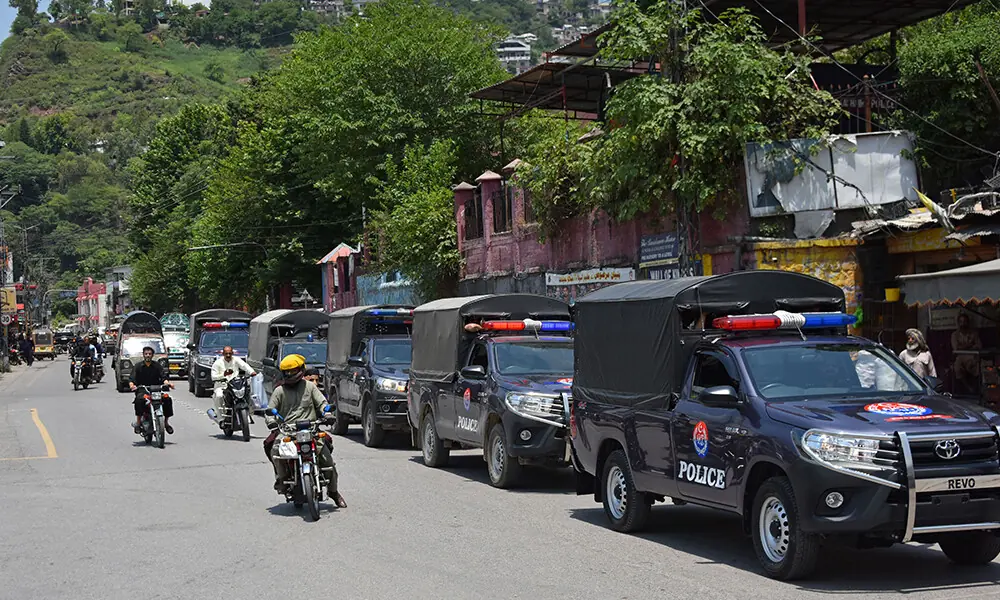
Four police personnel, including a sub-inspector, were killed in clashes between law enforcement agencies and protesters belonging to the banned Joint Awami Action Committee (JAAC) in Rawalakot, Azad Jammu and Kashmir (AJK), Aaj News reported on Monday. Rawalakot Commissioner Sardar Waheed said that, according to a police report, 13 police officials from the Azad Kashmir Police were injured by gunfire during the clashes. He also confirmed that civilians injured during the unrest were affected by shelling. However, he said the situation had since returned to normal and clashes between police and protesters had ceased. The tensions erupted after the government declared the Jammu and Kashmir Joint Awami Action Committee a banned organisation on Friday night and launched a crackdown against it. Those arrested include prominent committee leaders Anjum Zaman and Raja Sohaib Javed. The Awami Action Committee has called for a long march and protest on June 9. In anticipation of the demonstration, Section 144 has been imposed in Muzaffarabad, internet services have been suspended, and heavy contingents of Rangers and Frontier Corps personnel have been deployed at sensitive locations, including the High Court, Legislative Assembly and the Presidency. The banned committee’s primary demand is the abolition of the 12 seats reserved in the Legislative Assembly for refugees residing in Pakistan. Meanwhile, a two-member bench of the Azad Kashmir Supreme Court headed by the chief justice has issued its opinion on a presidential reference filed by the government regarding the matter. In its ruling, the court stated that abolishing the 12 refugee seats—or taking any similar measure—would require an amendment to Section 33 of the Constitution. It added that such a constitutional amendment could only be undertaken by the newly elected Legislative Assembly that will emerge from the elections scheduled for July 27. The court observed that holding elections is the responsibility of the government and that political disagreements cannot be allowed to obstruct the electoral process. The court further remarked that constitutional amendments should be decided in the elected legislature, not on the streets. It said that while individuals have the right to protest for their causes, such protests should not infringe upon the rights of others. Constitutional change, it said, must come through votes and elected representatives rather than street demonstrations. While recognising protest as a democratic right, the Supreme Court clarified that neither the law nor the Constitution permits road blockades that disrupt the daily lives and movement of ordinary citizens. Separately, Federal Minister for Parliamentary Affairs Dr Tariq Fazal Chaudhry, addressing a press conference in Islamabad, presented the government’s position, saying that almost all provisions of the agreement reached with the JAAC last year had been implemented, making the current protest call unjustified. Providing details of the negotiations, he said a high-level committee had been formed on the prime minister’s instructions last year and held talks with the JAAC, resulting in the acceptance of many of its demands. As a result, electricity is being supplied in Azad Kashmir at Rs3 per unit, while subsidies are also being provided on flour. Emphasising a peaceful resolution, Tariq said violence was never the answer and that issues could be resolved through dialogue. Regarding the dispute over the 12 refugee seats, he noted that the Supreme Court had already made it clear that no action could be taken without a constitutional amendment, especially since the term of the current assembly had already ended.
Go to News Site