 GB News
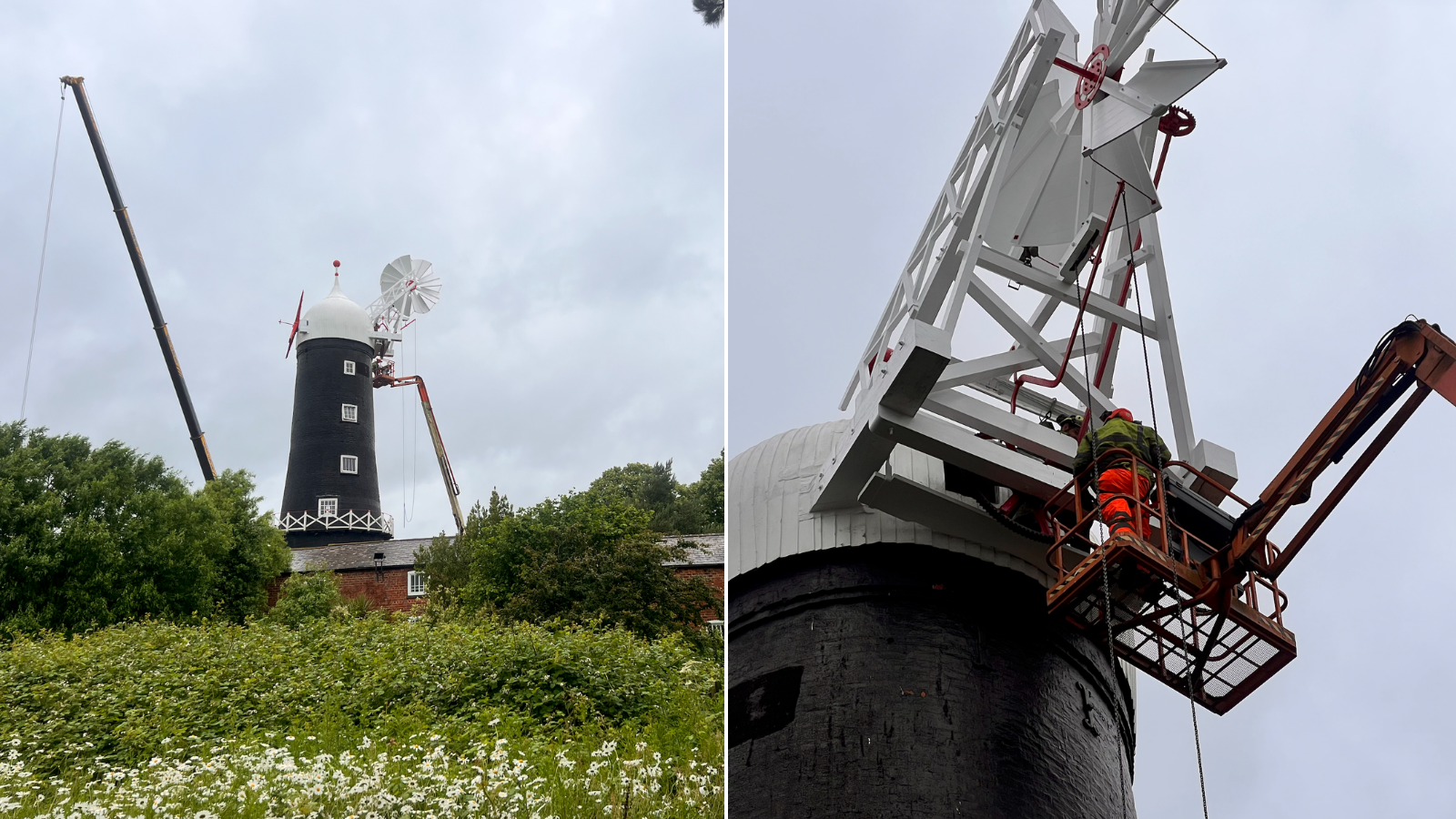
Major restoration works are underway at a historic East Yorkshire windmill to preserve one of few last workable mills left in the region. Skidby Mill , a grade two star listing with Historic England, that was originally constructed in 1821, has long stood as a symbol of East Yorkshire’s cultural heritage. The sails were originally removed in 2019 after rot was discovered in the support beams. The mill closed in 2020 for restoration work, but the site has seen delays due to additional damage to the timber structure cap. TRENDING Stories Videos Your Say Its four different sails are now being reinstated and lifted into position throughout today, and will remain stationary and without shades as the site is no longer a working mill. This will protect the sails’ structure and ensure their longevity for years to come. Tim Whiting, the Millwright from Suffolk Millwrights, told GB News why restoration work is so important for mills like the one in Skidby. "Everyone generally has someone who they know from a village where they remember the windmill and all these mills have been around for hundreds of years," he said. "If we don't save them, we'll lose them, and it is our heritage. There's only a handful of millwrights left now - our role is really unique, but it's very few businesses that have the range of skills that we do, it's a really specialist trade. "There was originally about 1,200 mill sites across the UK and just before Covid, there was over 300 mills open. I don't know the the amounts now, but hopefully it's fairly similar. "I grew up in the grounds of a windmill and they're in your blood once they're in, but it is just for the whole not knowing of what you'll be doing next, because honestly, every single day is different stuff." Skidby Mill is more than 200 years old and stopped commercial grinding in the 1960s, but has remained "a beloved symbol" of the region's rural identity, according to council officials, and it remains a museum for people to visit to this day. LATEST DEVELOPMENTS Historic Grade-II listed Big Mill 'fully alight' as locals told to stay away 'It's a mark of respect': Council vows to fly Union Jack from Halifax Town Hall all year round Council boss hails nationalisation of British Steel in Scunthorpe: 'We need soveriegn steel' Unusual to most surviving mills around the UK, is that Skidby Mill still has all of its original outbuildings around the courtyard. It is in these converted buildings you will find the Museum of East Riding Rural Life. Operating a fully working windmill requires a specialist millwright to be present to manage the sails safely - which has not been practical for some time - therefore the mill will not return to active milling and the sails will only be turned for maintenance reasons. The restoration works are funded by East Riding of Yorkshire Council and part of a broader initiative to safeguard local heritage, ensuring the mill continues to educate and inspire future generations. Councillor Nick Coultish is cabinet member for culture, leisure and tourism at East Riding of Yorkshire Council. He told GB News: "We're putting the sales back on Skidby Mill after a restoration project - it's quite important for the council to maintain our assets, especially the ones that are important to local history and local heritage, and this is something that the residents have been asking us to do for quite a long time. "It's took a while and that's because of the specialists you need and the cost is about £215,000, give or take a few thousand. "The council owns, owns and manages Skidby Mill - it's part of our assets in our museums and archives team, so it's an important historic building for us, because we're all custodians of history, past and future. "This was an important building back in the day for local jobs, for local industry, for creating the food that people eat. So it's important that we keep this so that we can remember what our ancestors did." From the Middle Ages through to the Industrial Revolution, there were an estimated 10,000 working windmills in England at their wheat, barley and out-grinding peak. They were common in the flatter, drier counties of the East Midlands, East Anglia and the South East, as well as around Cheshire and Lancashire. Britain’s windmills harnessed the power of nature to grind grain for centuries, but many of these historic structures now face ruin. The last windmills in Britain stopped working commercially in the 1970s, most long before that. Those that remain standing are deeply evocative of the past. In 1931, the Society for the Protection of Ancient Buildings formed a special Mills Section to campaign for preservation and restoration. It still operates today and many historic windmills like Skidby Mill have been restored. Our Standards: The GB News Editorial Charter
Go to News Site
 The Independent
 Birmingham Live
 Evening Standard

 BuzzFeed News