 Dawn Business
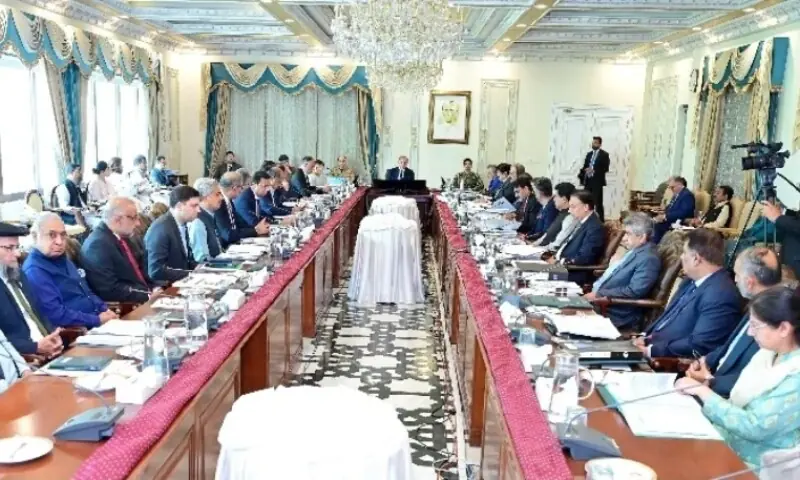
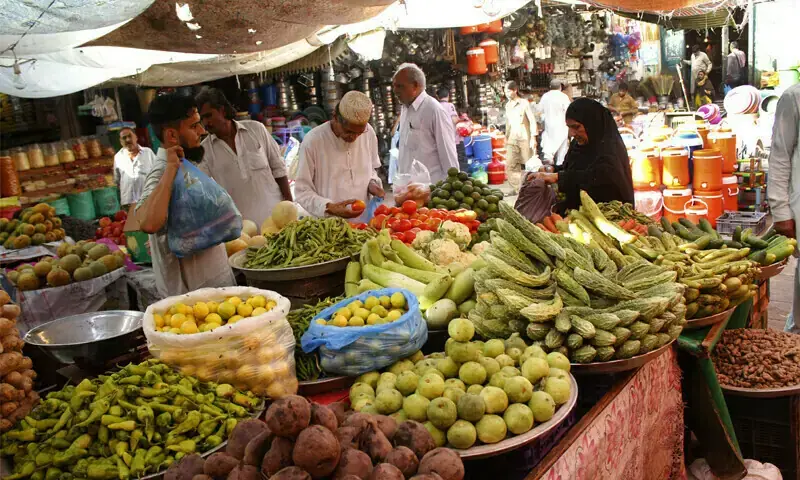
KARACHI: The federal government is directly injecting cost-push inflation through the petroleum levy, while the State Bank of Pakistan (SBP) has raised interest rates, increasing borrowing costs and suppressing credit growth, thereby discouraging fixed investment, said a research paper prepared by the Policy Research and Advisory Council (PRAC) and issued on Tuesday. “The most damaging dimension of the current situation is the cross-purpose dynamic between fiscal and monetary policy,” the report said, adding that the federal government, through the petroleum levy (PL), directly injects cost-push inflation. “The fiscal instrument creates inflation; the monetary instrument then tries to suppress it, at real economic cost to firms and households that have no control over either lever,” the paper stated. Cost-push inflation generated through administered prices is unresponsive to higher interest rates, it said, adding that the conventional monetary transmission mechanism works by compressing aggregate demand; however, this channel is weak when inflation originates from a per-litre levy imposed on fuel prices. PRAC says SBP policy rate hikes are increasing economic pressure “In such a setting, policy-rate increases do not address the source of inflation. Instead, they raise debt-servicing costs for firms already facing elevated energy and input costs, further compressing margins and delaying the recovery in private investment,” the research noted. The design of the petroleum levy also creates an asymmetric and potentially perverse transmission mechanism. When international oil prices decline, the resulting fiscal space allows the government to raise the levy without fully breaching politically sensitive pump-price thresholds. As a result, falling crude prices may not translate into disinflationary relief for consumers; instead, they may be offset by higher taxation and become inflationary through administered pricing. The State Bank’s inflation assessment must explicitly account for this asymmetric fuel-price transmission, rather than treating fuel prices as purely exogenous, it suggested. Re-emergence of double-digit inflation According to the research, Pakistan’s CPI moderated to 0.3 per cent year-on-year in April 2025, marking its lowest level in decades and enabling a 150-basis-point easing cycle through December 2025 (12-10.5pc). Inflation then accelerated steadily: 5.8pc in January 2026, 7pc in February, and 7.3pc in March, tracking closely with petroleum levy increases to Rs105.4 on March 1.“The decisive break came in April and May, when CPI jumped to 10.9pc and 11.7pc respectively, coinciding with the petroleum levy reaching Rs117.4 on May 9,” the report said. Transport CPI reached 36.8pc year-on-year in May, becoming the single largest contributor to the inflation surge at 2.5 percentage points. Housing, water, electricity, gas and fuels rose to 16.8pc year-on-year, contributing 3.5 percentage points. Together, these two energy-linked categories accounted for 6.0 percentage points of the 11.7pc headline inflation — more than half. The miscellaneous category at 15pc reflects secondary-round fuel cost embedded in consumer services. The SBP’s April policy rate hike occurred precisely as this levy-driven surge was materialising, the report added. In February, diesel carried a levy of Rs76.2 per litre, higher than petrol’s Rs84.40 in absolute terms but proportionally moderate at 28.4 per cent of the pump price. In March, the levy was reduced to Rs55.2 as global crude surged, requiring the subsidy mechanism to hold the retail price at Rs335.9. Then, in early April, as ex-refinery prices spiked to an extraordinary Rs496.97 per litre — the highest in the dataset — the government waived the diesel levy entirely. “Even with zero levy, the diesel price reached Rs520.4 on April 4 and remained there for eight days,” the research said. As global crude retreated, the government reintroduced the levy from May 1: Rs28.7, then Rs42.6, then Rs52.0, then Rs58, then Rs68.9 by May 30 — five consecutive increases in 29 days. Published in Dawn, June 10th, 2026
Go to News Site
 Dawn.com
 Business Recorder

 Geo Super
 Independent Urdu