


 Ruptly
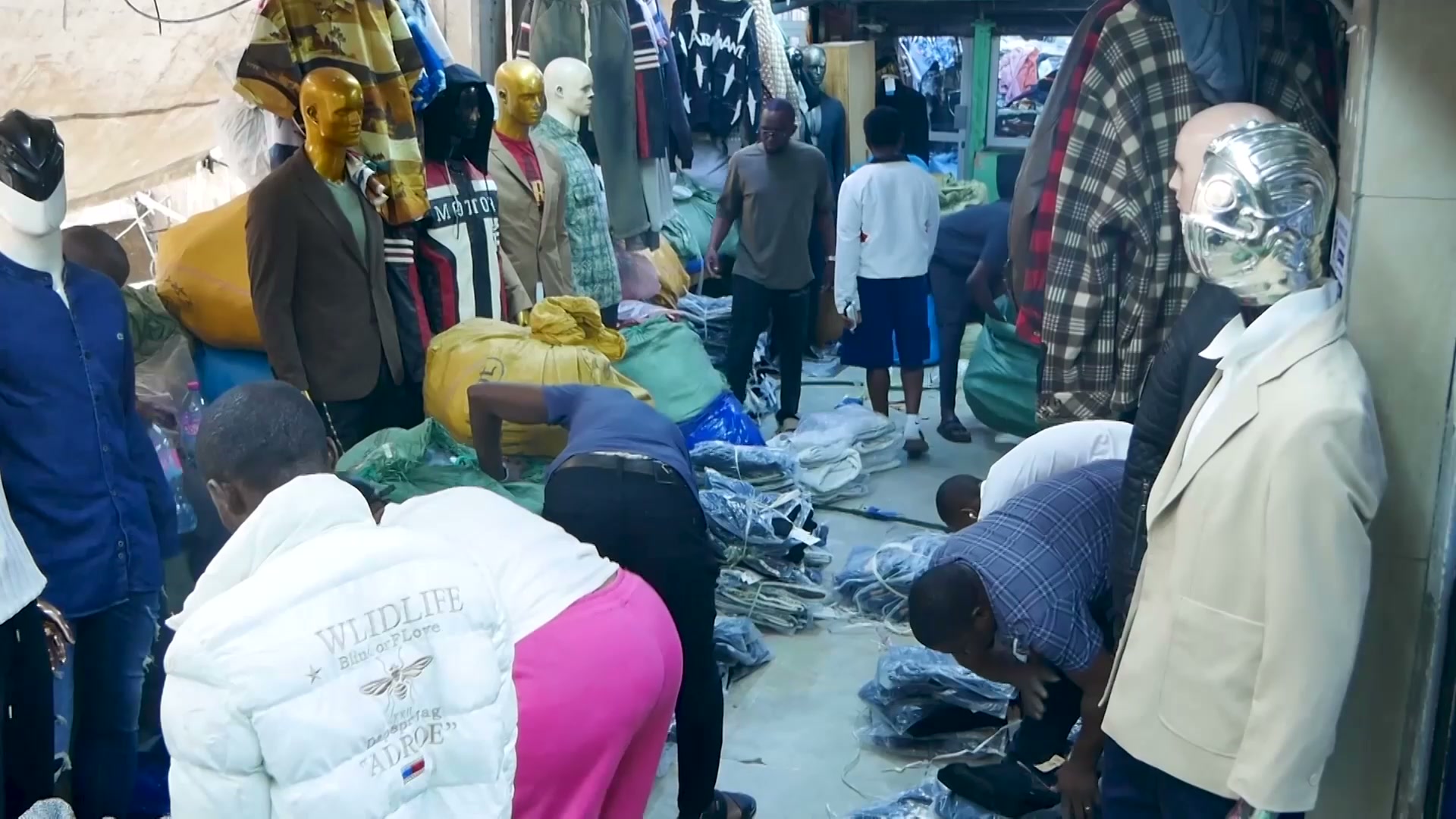
"Traders and economists warn that Cameroonian businesses are grappling with mounting losses as disruptions to transit through the Strait of Hormuz push up sea freight costs and strain supply chains. Footage from Friday shows merchants at work as locals browse the market in Douala. Footage also shows scenes from the World Trade Organization's 14th Ministerial Conference in Yaounde, where attendees and journalists can be seen gathering at the venue. Economist Dr Jean Marie Biada explained that shipping routes have been rerouted by roughly 5,000 kilometres due to Iran's partial blockade of the Strait of Hormuz, forcing ships around the Cape of Good Hope. "Shipping companies have decided to increase the cost of sea freight," he noted. "In the case of Cameroon, [...] in the past it might have been, say, $1,500, you now have to pay $3,500 for a 20-foot container and add another $1,000, making it $4,500 for a 40-foot container." "As for the second impact, perhaps I should have looked beyond Africa to take the case of Europe, for example, where soaring petrol prices at the pump are no longer a figment of the imagination; over there, it is a reality. Prices have skyrocketed," he added. Business owners like Edwige Leutchang Tchoumy report that economy class tickets have reached nearly two million CFA francs, making it difficult for merchants to travel for stock procurement. "Flights have become so expensive that we can't make ends meet," she stressed. "When it's like that, there's no way we can get by, no matter what we do. Even if we raise the prices per kilo, we can't make a profit - it's impossible." Merchants say that goods previously sold for 1,000 CFA francs must now be priced at 1,500 just to break even, but customers lack the purchasing power to meet these prices. "We've got nothing left; we just go out like this and come home in the evening, and we can't even import goods because it's not worth it. Given the crisis, we're not getting by, so there's no point in importing goods if we're not making a profit," said Fabrice. Dr Biada identified a structural vulnerability in African economies - a reliance on the primary sector. He noted that by failing to win the 'technology race,' these nations remain unable to process their own resources. "If Africa does not win the technology race, it will remain stuck in what is known as the 'primarisation' of the economy," he emphasised. "So Africa must fight to win the technology race, as this will enable it to process its raw materials. The Strait of Hormuz is a critical global chokepoint, with approximately 20 per cent of the world's total oil and liquefied natural gas (LNG) supplies passing through it daily. Amid the Middle East conflict, Iran's de facto blockade of the 21-mile-wide waterway has disrupted the transit of goods and about 20 million barrels of daily oil flow, pushing international oil prices up to $100 per barrel."
Go to News Site