


 GB News
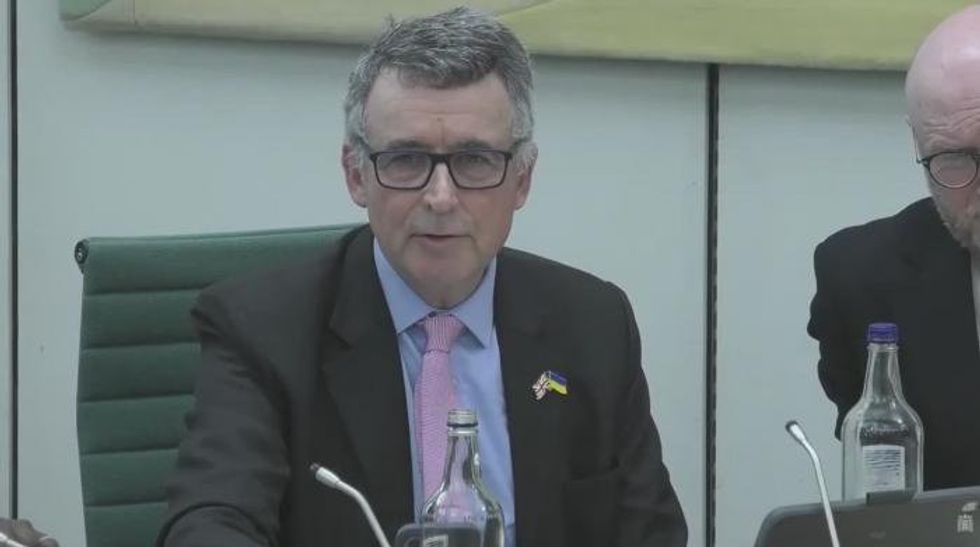
Nato's latest Annual Report has revealed the UK has plummeted from the top of the defence alliance's official rankings, with Britain now languishing in 13th place. Think-tank Facts4EU has uncovered shocking evidence of "how the mighty have fallen" under Sir Keir Starmer. Under the Prime Minister, Britannia no longer rules the waves with Sir Keir being accused of "complacency" while Britain's allies surge ahead. The analysis of Nato's report has also revealed how Britain's fall has accelerated in dramatic fashion under Labour. TRENDING Stories Videos Your Say The report shows how other Nato members have responded urgently since Russia's illegal invasion of Ukraine and the more recent war in Iran by increasing their defence expenditure. Meanwhile, the UK’s recommendations for doing the same are sitting on Sir Keir’s desk, and are six months overdue in being released. As a result, Britain is now 26th out of 30, 12 places below Montenegro, in the rankings for increases in expenditure in response to the rapidly developing threats to its security. The UK’s defence spending has fallen as a percentage of GDP, which began after the Cold War ended. UK’s response to threats, by change in defence spend as percentage of GDP, compared to NATO non-US average What has happened in the last two years, however, has been dramatic in comparison with allies and has eclipsed the slow decline over decades. Many predicted threats have now turned out to be real: from Russian activities in the North and Arctic Seas, to Russia’s continued aggression against Ukraine, to Iran’s attacks on sovereign UK bases on Cyprus and in the Chagos Islands. The chart above clearly shows whilst other Nato European allies have responded by dramatically increasing their defence spending as a proportion of GDP, the UK has barely moved. In fact, the average increase by European allies is over seven times that of the UK. Sir Bernard Jenkin is on the Commons Liaison Committee and is co-author of the Civitas report "Understanding the UK’s Transition to Warfighting Readiness". The Tory MP speaking exclusively to GB News, commented: "Why does the Treasury not seem to realise we are already at war and we need to be in a warfighting mentality to deal with the emergencies we are facing? "Listening to the Prime Minister, it sounds as though he is at peace while we are actually at war." For 10 years, Facts4EU has been providing a UK summary of Nato's Annual Reports. Below is a chart from Nato’s 2016 Report, showing EU members' spending as a proportion of GDP towards Nato. Under that is the ranking of the UK today among the same Nato members. LATEST DEVELOPMENTS: Ed Miliband is misleading the public on North Sea gas - Kwaku Boakye-Adjei GB News' question to Donald Trump exposed an unbearable truth for Keir Starmer 'Slavery reparations are a form of moral blackmail that Britain must resist' – Colin Brazier Over a year ago, Sir Keir announced his plans for defence expenditure. No10 said at the time: "As the UK faces a period of profound change, with conflicts overseas undermining security and prosperity at home, the Prime Minister has set out his commitment to increase spending on defence to 2.5 per cent of GDP from April 2027. "As we enter this new era for national security, Britain will once again lead the way." This policy has remained unchanged despite all the events in the meantime. The plan is still to spend 2.5 per cent of GDP (2.6 per cent including the security services) and this very modest increase will still not start until April next year. This will put the UK even further down the Nato rankings. Even in February last year, when the statement was made, it was obvious Britain would not "lead the way", or even come close to doing so. The policy was questioned most recently by Sir Bernard when the PM appeared in front of the House of Commons Liaison Committee last week. It resulted in Sir Keir losing his temper in a most un-Prime Ministerial way - WATCH THE CLIP ABOVE. After being accused by Sir Bernard of "enormous complacency", the PM responded: "This smacks of the fact that for years there was under-investment by the last Government and the stripping out and hollowing out of our armed forces." Instead of recognising the dramatic change in the threat levels affecting the United Kingdom from a variety of hostile actors, the PM is still intent on blaming previous Governments for not investing more before his tenure, when threat levels were rising but were not at current levels. After the increase to 2.6 per cent of GDP (from the current 2.3 per cent), which will place the UK as one of the worst-performing members of Nato, the PM is leaving the next change to the next Government. "He has also set an ambition to spend 3 per cent of GDP on defence in the next parliament, as economic and fiscal conditions allow, in order to keep the British people safe and secure for generations to come," a statement from No10 read. What’s the DIP, why is it so important, and why has it been delayed for six months by the PM? Firstly, there was a Defence Strategic Review commissioned under the previous Government to set out overall objectives. This is worth absolutely nothing, however, without what is known as the Defence Industrial Strategy (DIP). This "puts the meat on the bones" and crystallises the overall strategy into deliverables which are costed. It is this final point which appears to have caused the delay in the current Government releasing it. There is no question but that the defence budget will have to be increased dramatically. The DIP will require Rachel Reeves to make significant savings in benefits, for example, or to raise taxes yet again, which would further break manifesto promises. Other countries have reduced expenditures to fund their increase in defence spending, but Sir Bernard suggests Labour has been reluctant to do that. Sir Bernard said: "It’s misleading for the Government to suggest they have started to restore defence spending. "The actual increases they have in their plans are minimal. Their 2.6 per cent of GDP commitment is inflated by adding in things like the costs of the security services. "Their promise to get to 3.5 per cent is an empty gesture. The Treasury have published no plans to get to that figure. It is just an aspiration. "The 10-year Defence Investment Plan is therefore being resisted by the Treasury, because they have not committed the money. "Twenty-one months since the election, and the Government have still not got a plan for defence, while the UK is now under attack from Russia and Iran. "The PM thinks that is OK. It’s hard to comprehend the scale of this complacency." Our Standards: The GB News Editorial Charter
Go to News Site