


 Business Recorder
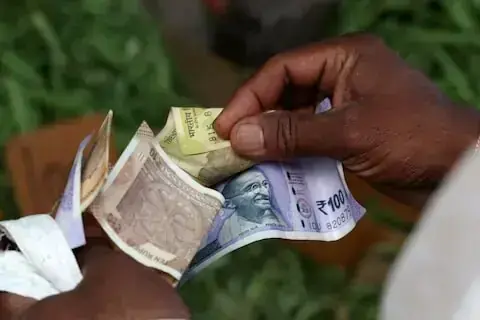
Battered by foreign outflows, an oil shock from the Iran war and fading investor conviction, the Indian rupee is closing the fiscal year with its worst annual performance in over a decade. And, India’s largest private lender HDFC Bank is facing questions from investors after the sudden exit of its chairman. Scroll down for more on that. The outsized losses came despite a late intervention by the central bank, which directed banks on Friday to cut net open rupee positions. The order triggered a sharp rebound on Monday as banks rapidly unwound trades, but looks unlikely to bring lasting relief. Foreign investors have largely stayed away from India - even with its world‑beating 7.6% economic growth over the past 12 months - deterred by a mix of high equity valuations, lack of AI‑linked stocks and punitive U.S. trade tariffs. The already fragile backdrop has been further strained by the oil shock triggered by the Iran war, which has driven record monthly outflows from Indian equity and bond markets. Bernstein expects the rupee to fall to 98 per dollar in its base case scenario, where the conflict in the Middle East concludes in less than a month. However, the investment research firm warned that if it lasts for all of 2026, the rupee will slide to 110. India’s currency sank to a record low of 95.21 on Monday. The rupee has also weakened versus regional peers, most notably the Chinese yuan, against which it has declined nearly 14% in the past 12 months. Investment banks are recommending positions betting on further rupee underperformance versus Asian rivals, Reuters reporters Nimesh Vora and Jaspreet Kalra wrote. Already weighed on by capital outflows, the oil shock means the rupee now faces a widening current account deficit, expected at 0.9% of GDP in the upcoming fiscal year. J.P. Morgan forecasts this will widen to 1.5% of GDP if oil prices average $80 per barrel this year, and to 2.6% if they average $100. THE CRISIS PLAYBOOK Indian officials are dusting off crisis playbooks from 2013, when the rupee came under pressure from the so-called taper tantrum triggered by the U.S. Federal Reserve. The government cut excise duties on petrol and diesel this month to shield consumers from an immediate rise in costs and to curb a potential spike in inflation, while protecting state-run fuel retailers from steep losses. However, the expected hit to government revenues triggered the biggest spike in bond yields in nearly four years, adding to the list of negatives for the rupee. Tough decisions on “burden sharing” between the government, consumers and businesses may be needed, India’s chief economic advisor V. Anantha Nageswaran said in the monthly economic review published on Saturday. He suggested that if higher prices are not passed through to end consumers at all, their continued strong demand could exacerbate inflationary pressures and force the central bank to tighten monetary policy. “Higher interest rates burden the entire economy,” he said. The central bank will announce its next monetary policy decision on April 8. The monetary authority has so far managed market volatility with active but not unusual intervention in the currency and bond markets, although that has eaten into India’s forex reserves. Reserves are currently enough to cover about 9.2 months of imports, adjusted for the central bank’s forward book, IDFC First Bank economist Gaura Sen Gupta said in a report last week. That could fall to 7.2 months by March 2027 if the crisis persists, but would remain above the 6.5 months seen during the 2013 currency crisis, the report said. Sen Gupta said the central bank may initially focus on measures to attract dollar flows - such as the recently liberalised rules for foreign borrowings by corporations - but a 2013-style subsidised swap scheme to draw deposits from non-resident Indians is not yet on the cards. Veteran Indian banker Uday Kotak appeared to take the opposite view, posting on X: “If things get worse geopolitically, is there an opportunity for a new version of a foreign currency non-resident deposit scheme?” India is once again diversifying its sources of oil due to supply disruptions in the Middle East. Traders have offered Iranian oil to Indian refiners at a premium to ICE Brent after Washington temporarily removed sanctions to ease the energy crisis caused by the Iran war, Reuters reported. India has not bought Iranian crude since May 2019. The South Asian nation, which had pared imports of Russian oil during negotiations on a trade pact with the U.S., is also re-engaging with Moscow on energy purchases including liquefied natural gas. THIS WEEK’S MUST-READ The unexpected resignation of HDFC Bank Chairman Atanu Chakraborty this month triggered a $16 billion rout in shares of India’s largest private lender, but the story doesn’t end there, Reuters reported. Frictions between Chakraborty and CEO Sashidhar Jagdishan had emerged publicly, but divisions within the bank’s management run deeper. And those fissures, along with slow gains following a 2023 merger with its parent HDFC Ltd, have ramped up pressure on management.
Go to News Site