


 Dawn.com
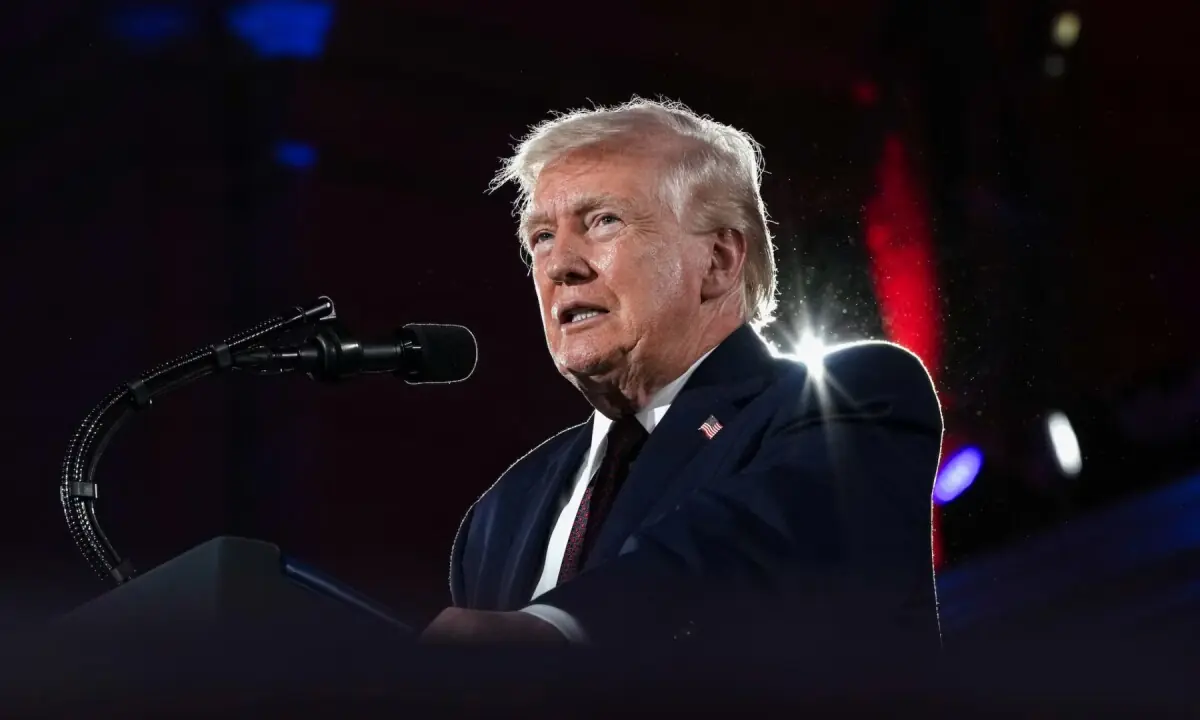
As the 33rd day of the US-Israel war against Iran drew to a close, all eyes were on US President Donald Trump’s speech later tonight, which diplomats and military analysts alike foresee as a defining moment that could set the next trajectory of the conflict, even as developments on the ground pointed less to de-escalation and more to an impending shift toward a higher risk escalation likely centred on control of critical maritime arteries. Speculation around the speech dominated the information space, with Trump’s public messaging about a possible “two-to-three-week” exit widely interpreted as tactical ambiguity rather than a genuine off-ramp; particularly in light of parallel military movements that suggested preparation for escalation, including the deployment of 18 A-10 Thunderbolt II aircraft which are designed for close air support of ground troops, heightened alert status for elements of a Marine Expeditionary Unit , and sustained heavy lift air traffic involving C-17 and C-5 transports, alongside the forward positioning of carrier strike groups led by the USS Abraham Lincoln in the Arabian Sea. A photo of US Navy FA-18 fighter jets being prepared for combat operations in Iran, published by US Central Command on April 1. — Photo via X/@CENTCOM Leaked deliberations from the Israeli leadership further indicated a continued push for expanded strikes on Iranian national infrastructure, with Prime Minister Benjamin Netanyahu advocating attacks on power stations to induce systemic collapse. Israeli assessments acknowledged that Iran, despite the sustained allied military pressure, still retains a significant residual missile capability, estimated at several hundred ballistic missiles and a substantial portion of its launcher network. The two broad scenarios that have emerged for the likely direction of the war are either a transition to a limited ground campaign aimed at forcibly reopening the Strait of Hormuz, potentially involving temporary occupation of key Iranian islands with logistical support from Arab countries, or a continuation of the current narrative of imminent victory masking ongoing preparations for deeper kinetic engagement. Tehran, however, showed no sign of recalibrating its stance, with senior officials reiterating categorical rejection of negotiations under continued attack, declaring the Strait of Hormuz a red line, and warning that any attempt to reopen it by force would transform the Gulf into an active battlefield. This comes at a time when coordination across the Axis of Resistance has reached an unprecedented level, with Iran, Hezbollah, the Houthis, and Iraqi groups operating in a synchronised manner. Signals from Western allies of the US have reinforced expectations of a prolonged conflict. The coordinated messaging from European and allied governments aimed at effectively preparing their domestic audiences for sustained economic disruption, while distancing themselves from direct involvement in the conflict and warning of extended energy shocks. Oil prices have already surged past $100 per barrel, and European gas markets have recorded sharp increases, amid reported refusals by several European states to provide overflight or basing support for US operations — actions being described as a notable strain within the Western alliance. On the battlefield, the past 24 hours saw continued high intensity exchanges, with Iran launching successive waves of ballistic missiles, cruise missiles and drones, striking targets in Israel including the Tel Aviv area where structural damage and civilian injuries were reported, while expanding its target set to include Gulf assets, notably a strike on telecommunications infrastructure in Bahrain hosting major international data facilities and a drone attack on fuel storage installations at Kuwait International Airport. Smoke rises from an area of Kuwait’s international airport after a reported drone strike on April 1. — AFP Iranian forces also claimed multiple shoot-downs of US MQ-9 Reaper drones over the Gulf of Oman, while dispersing remaining naval assets and shifting oil production to more hardened and decentralised facilities. The Iranian moves suggested that they were taking up an adaptive posture for preserving core capabilities under sustained attack. US and Israeli operations, meanwhile, continued at a steady tempo, with precision strikes reported on residential buildings, Bandar Abbas port, industrial complexes in Isfahan, including steel and pharmaceutical facilities, missile production nodes, and command infrastructure, alongside targeted assassinations of senior Hezbollah and IRGC figures in strikes in and around Beirut. Cumulative US air operations were, meanwhile, assessed to have crossed 12,000 sorties since the start of the campaign. The Lebanese front remained the most active secondary theatre, with Hezbollah forces regaining ground in northern Khiam and engaging Israeli troops in intense street fighting across multiple axes, including Qantara. Hezbollah claimed armoured losses and casualties on the Israeli side, even as Israeli authorities signalled intent to extend operations south of the Litani River in a manner that would effectively prevent the return of large numbers of displaced Lebanese civilians. In Iraq, militias aligned with Iran issued explicit warnings against the use of territory by any of the regional countries as a launch platform for any US ground operations against Tehran as they signalled their readiness to expand the conflict horizontally. In Yemen, the Houthis confirmed joint operations with Iran and Hezbollah, reinforcing the sense of a unified command structure across multiple fronts. A photograph shows damaged buildings following an overnight Israeli airstrike in the Al Hadath neighbourhood of Beirut’s southern suburbs, in Lebanon on April 1. — AFP Taken together, developments on Day 33 pointed to a conflict transitioning from a primarily air and missile campaign into a broader contest over maritime chokepoints and potential ground incursion. The US and allied force posture looked increasingly aligned toward seizing energy routes, while Iran prepared for corresponding escalation across the Gulf and beyond. With diplomatic channels still active but producing no tangible convergence, and with both sides maintaining maximalist positions, the immediate post-speech environment was widely expected to determine whether the conflict remains within the current pattern of calibrated pressure or moves decisively into a more overt and expansive phase of multi-domain warfare. Header image: US President Donald Trump speaks during the National Republican Congressional Committee (NRCC) annual fundraising dinner in Washington, DC, the US on March 25. — Reuters
Go to News Site