


 Daily Finland
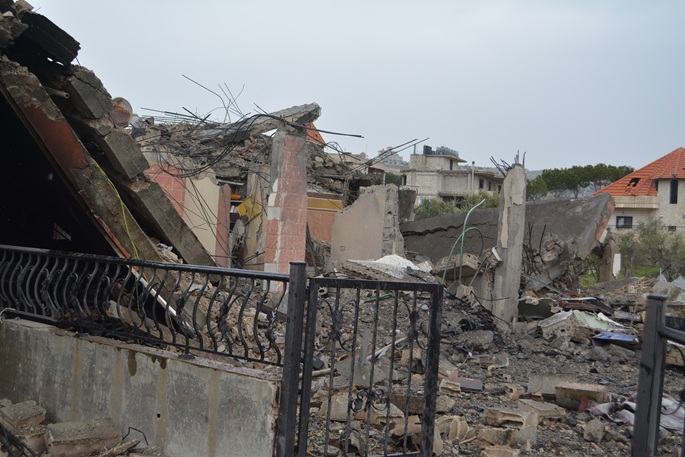
At least eight civilians were killed and 95 others wounded in U.S. and Israeli attacks on a bridge in Iran's northern Alborz province on Thursday, reported Xinhua, quoting Iranian official news agency IRNA. According to the report, the B1 bridge, located in the provincial capital Karaj, is one of the highest bridges in the Middle East and among the most complicated projects in Iran. It was targeted twice with missiles on Thursday. IRNA cited Qodratollah Seif, the province's deputy governor for political, security and social affairs, as saying that among those killed and injured were the inhabitants of Bileqan village, passengers and the families who had gathered in the nearby areas for the Nature Day, a traditional Iranian holiday marking the end of the Nowruz holidays. He added that there were no military activities in the areas surrounding the bridge, stressing that the structure was under construction and scheduled to be inaugurated in the coming days. Seif said those injured in the strikes were immediately transferred to nearby medical centers, and some of them were hospitalized. Condemning the attacks in a post on social media platform X, Iran's Foreign Minister Seyed Abbas Araghchi said, "Striking civilian structures, including unfinished bridges, will not compel Iranians to surrender." He added, "It only conveys the defeat and moral collapse of an enemy in disarray. Every bridge and building will be built back stronger. What will never recover: damage to America's standing." Meanwhile, Yemen's Houthi group said on Thursday that it had launched a fourth wave of coordinated ballistic missile attacks targeting Israel, saying the move is part of an escalating regional confrontation involving multiple allied forces. In a statement aired by the group's al-Masirah television, Houthi military spokesperson Yahya Sarea said the group had carried out a joint operation alongside Iran and Hezbollah against what he described as "vital enemy targets" in the Jaffa area in Israel. "Our military intervention in this important and exceptional battle is gradual," Sarea said, adding that the group would continue to respond based on developments on the ground. "We will not stop here and will respond to developments according to whether the enemy escalates or de-escalates," he said. Sarea noted that the missile attacks were part of ongoing support for allied forces across the region, including those in Iran, Iraq, Lebanon, and Palestine, as tensions continue to rise in the Middle East. The Houthis, who have controlled Sanaa and much of northern Yemen since late 2014, previously supported Iran during last year's 12-day conflict with the United States and Israel. Meanwhile, Iran's Islamic Revolution Guards Corps (IRGC) said Thursday it has targeted and destroyed Amazon's cloud computing operation center in Bahrain in its first action against U.S. and Israeli "espionage" firms in the region in retaliation for the "assassinations" of Iranians. In a statement on its official news outlet Sepah News, the IRGC said it had issued a warning in the past concerning possible attacks on such firms given more U.S. and Israeli strikes, and that the attack in Bahrain was in response to U.S. and Israeli disregard of the warning by continuing to strike Iranians on Wednesday. It vowed to "punish" more firms as such "more severely" if U.S. and Israeli attacks on Iranians continue. It said it also struck seven U.S. and Israeli airbases, two U.S. steel companies in Abu Dhabi, an aluminum plant in Bahrain, factories operated by Israeli arms firm Rafael, and a hideout of U.S. troops near Bahrain's capital Manama, causing casualties among U.S. forces. Israeli airstrikes kill 10 in S. Lebanon At least 10 people were killed by Israeli airstrikes on southern Lebanon at dawn and in the morning on Thursday, according to Lebanon's official National News Agency and the country's Public Health Ministry. Meanwhile, Hezbollah said in separate statements that it launched multiple attacks on Israeli military targets and positions along the border, including an Israeli helicopter, a Merkava tank, several troop positions and Israeli settlements. It also fired rockets at the Israeli army's Northern Command headquarters at the Dado base north of the Israeli city of Safed. Cross-border fighting has intensified since March 2, when Hezbollah launched rockets toward Israel for the first time since a ceasefire took effect on Nov. 27, 2024, triggering Israeli airstrikes across southern and eastern Lebanon, as well as on Beirut's southern suburbs. Since March 2, Israeli attacks have killed 1,345 people and injured 4,040 others in Lebanon, the Lebanese Public Health Ministry said Thursday. The ministry reported 95 direct Israeli attacks on healthcare, ambulance, and medical teams in Lebanon, which have killed 53 health sector workers and injured 137 others. Also on Thursday, local news website Elnashra reported that Lebanon has informed the UN in a letter that it has classified Hezbollah's military wing as an illegal organization in line with recent government decisions, and that it has banned the activities of Iran's Islamic Revolution Guard Corps on its territory. Drone hits US diplomatic support center at Baghdad int'l airport Two booby-trapped drones attacked the Victoria Base at Iraq's Baghdad International Airport on Thursday, sparking a fire, a security source said. An Interior Ministry source told Xinhua on condition of anonymity that two drones attacked the Victoria Base in the evening, where the U.S. Embassy's Baghdad Diplomatic Support Center is located, causing a fire. The details regarding casualties or the extent of the damage remain unavailable, the source added. The attack followed a security warning issued by the U.S. Embassy in Baghdad earlier Thursday, noting that "Iraqi terrorist militia groups aligned with Iran may intend to conduct attacks in central Baghdad in the next 24 to 48 hours." The warning further stressed that they may intend to target U.S. citizens, businesses, universities, diplomatic facilities, energy infrastructure, hotels, airports, and other locations perceived to be associated with the United States, adding that "U.S. citizens should leave Iraq now." The attacks came amid heightened regional tensions following joint U.S.-Israeli strikes on Iran starting on Feb. 28, to which Iran and its regional allies responded with attacks on Israeli and U.S. interests across the Middle East. Major Iranian steel plant halts operations after US-Israeli attacks One of Iran's largest steel plants, recently targeted by the United States and Israel attacks, has ceased operations due to severe damage to its production units, the company said Thursday. Mobarakeh Steel Company in the central Isfahan province said in a statement that the facility has been hit twice since the U.S.-Israeli attacks on Iran began in late February, most recently on Tuesday. The damage has led to a complete shutdown of production lines, and personnel have been told not to come to the complex until further notice. Another major steel complex in southwestern Khuzestan province has also sustained substantial damage. Mehran Pakbin, deputy director for operations of the Khuzestan Steel Company, said that it will take six months to one year to rebuild the damaged units, according to Nour News affiliated with Iran's Supreme National Security Council. Pakbin added that all modules and steelmaking furnaces have been damaged extensively. Iran will be hit "extremely hard" over next 2-3 weeks: Trump US President Donald Trump on Wednesday (local time) warned that Iran could face severe military action in the coming weeks amid the ongoing conflict in the region, stating that Washington's action against the Islamic Republic is "on the cusp" of ending what he described as Tehran's "sinister threat" to the US and the world, reported ANI. Delivering his address to the nation, Trump said that Iran would be hit "extremely hard" amid ongoing diplomatic talks between the two sides in order to sign a deal to end the conflict, which has been going on for over a month. "We are going to hit them extremely hard over the next two to three weeks. We are going to bring them back to the stone ages, where they belong. In the meantime, discussions are ongoing," the US President said. He further claimed that there has been a "regime change" following the ongoing US and Israeli military action in Tehran but clarified that change was not an official objective of Washington, noting that the military action had already led to significant leadership losses for the Islamic Republic. "Regime change was not our goal. Regime change was not our goal. We never said regime change, but regime change has occurred because of the deaths of all of their original leaders. They're all dead," Trump said. The US President further asserted that military operations would continue until Washington's objectives are achieved. "We will continue until our objectives are fully achieved. Thanks to the progress we've made, I can say we are on track to complete all of America's objectives shortly, very shortly," he added. Trump further resorted to his warning against the Islamic Regime that if a deal was not made during the period of time, then the US would target critical energy infrastructure in Iran. "If during this period of time no deal is made, we have our eyes on key targets. If no deal is reached, we are going to hit every one of their electric generating plants very hard, and probably simultaneously," he stated. "Tonight, every American can look forward to a day when we are finally free from the wickedness of Iranian aggression and the spectre of nuclear blackmail. Because of the actions we have taken, we are on the cusp of ending Iran's sinister threat to America and the world," the US President added. Iran vows unrelenting war until "enemies" surrender Iran's main military command, Khatam al-Anbiya Central Headquarters, said on Thursday the war will continue until the "enemies" surrender, according to the semi-official Fars news agency, reported Xinhua. The headquarters spokesman Ebrahim Zolfaghari warned of "more crushing, expanded and devastating actions" in response to the U.S. and Israeli attacks. Zolfaghari accused the United States and Israel of possessing incomplete intelligence on Iran's military power and capabilities, stressing, "You know nothing of our very expanded and strategic capacities." He added that the "enemies" do not have any information of and would never be able to target Iran's strategic military production sites and "must pay the price" for their "aggression." Echoing the sentiment, Iran's Defense Ministry spokesman Reza Talaei-Nik said on Thursday that the "enemy" has failed to "divide (Iran), topple the establishment, weaken the Iranian armed forces, sow discord in the country's national sovereignty, incite internal unrest, open the Strait of Hormuz and make the people abandon their resistance and defense." Talaei-Nik vowed that Iranian forces, people, and the resistance front will continue punishing "enemies" until they secure reparations, destroy U.S. military bases in West Asia, force American troops to flee, achieve full surrender, and receive guarantees that wars will not be repeated against Iran.
Go to News Site