


 Business Recorder
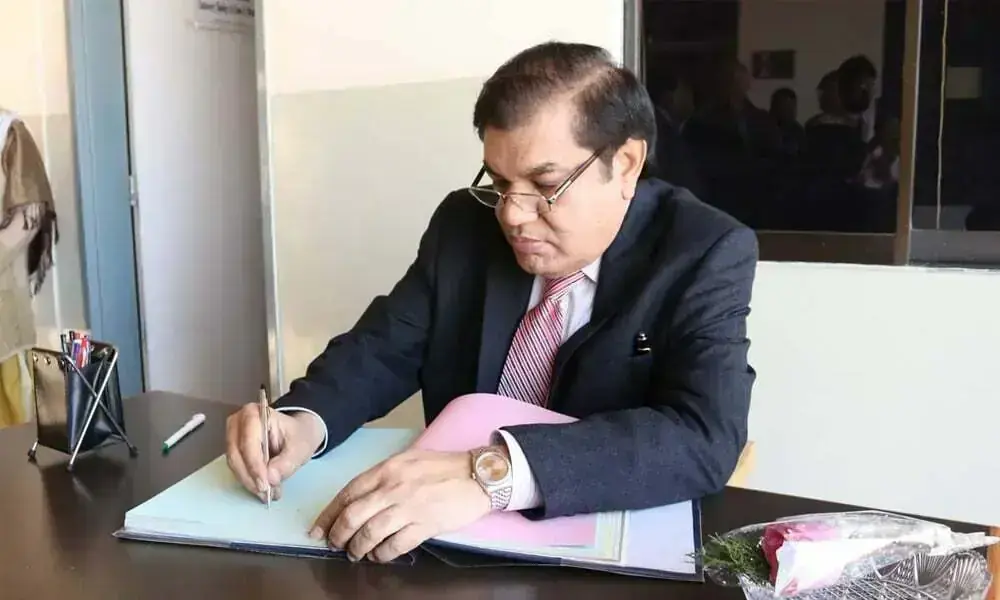
KARACHI: Mian Zahid Hussain, President Pakistan Businessmen and Intellectuals Forum & All Karachi Industrial Alliance and Chairman National Business Group Pakistan, Chairman Policy Advisory Board FPCCI, has expressed deep concern over the ongoing competitiveness emergency facing the country’s export-oriented textile sector. While acknowledging the positive trajectory of the domestic manufacturing base and the modernization of financial markets, the former provincial minister warned that the backbone of Pakistan’s economy is under severe threat from exorbitant input costs, shifting regional trade alliances, and mounting geopolitical tensions. Addressing the business community, Mian Zahid Hussain noted that the national economy is currently navigating a highly volatile stabilization-to-growth phase. He appreciated the robust performance of the Large-Scale Manufacturing sector, which recorded a remarkable 10.54 percent year-on-year growth in January 2026, largely driven by a 67.3 percent surge in automobile production and an 11.5 percent increase in cement dispatches. He also commended the government for the historic job creation witnessed in February in manufacturing sector and the successful transition of the Pakistan Stock Exchange to a T+1 settlement cycle, even as the KSE-100 index faces a corrective phase down to 148,743 points due to the Iran war and Strait of Hormuz crisis. Furthermore, he welcomed the operationalisation of the Export Development Fund (Amendment) Act 2026, transferring control to a private-sector-led board, and the recent relaxation of land-route trade rules with Iran for essential food items and pharmaceuticals. However, the seasoned business leader strongly cautioned that these domestic victories will be eclipsed if the government does not urgently address the red alert in the textile industry, which accounts for around sixty percent of National exports. He pointed out that textile exports witnessed a sharp 7.22 percent decline in February 2026, plummeting to 1.31 billion dollars and reversing earlier nominal gains. Value-added products, particularly knitwear, have suffered steep declines across traditional markets in the United Kingdom, the European Union, and the United States. He attributed this collapse directly to a fatal cost trap, identifying exorbitant industrial energy tariffs hovering between 11 and 13 cents per kilowatt-hour, which are nearly double the rates enjoyed by regional competitors like Vietnam and India. Mian Zahid Hussain highlighted the impending catastrophe posed by the recent trade agreement between EU and India, on Pakistan’s textile exports, projecting a devastating potential export loss of up to 3-4 billion dollars if the government fails to negotiate effectively or offset the burden. Additionally, he appreciated the amendments in EFS through SRO 1435(I)/2025 dated August 5, 2025, which have excluded cotton, yarn, and grey cloth from zero-rating, making local market players competitive. Mian Zahid Hussain urged federal policymakers to immediately decouple the export sector from domestic energy inefficiencies. He demanded the swift introduction of a comprehensive Energy Support Package to rationalize electricity tariffs at a globally competitive 7 to 8 cents for export-oriented units. He emphasized that without immediate diplomatic and fiscal intervention to counter the global fuel crisis and tariff pressures, Pakistan risks a significant loss of its industrial base and international market share. Copyright Business Recorder, 2026
Go to News Site