


 Ruptly
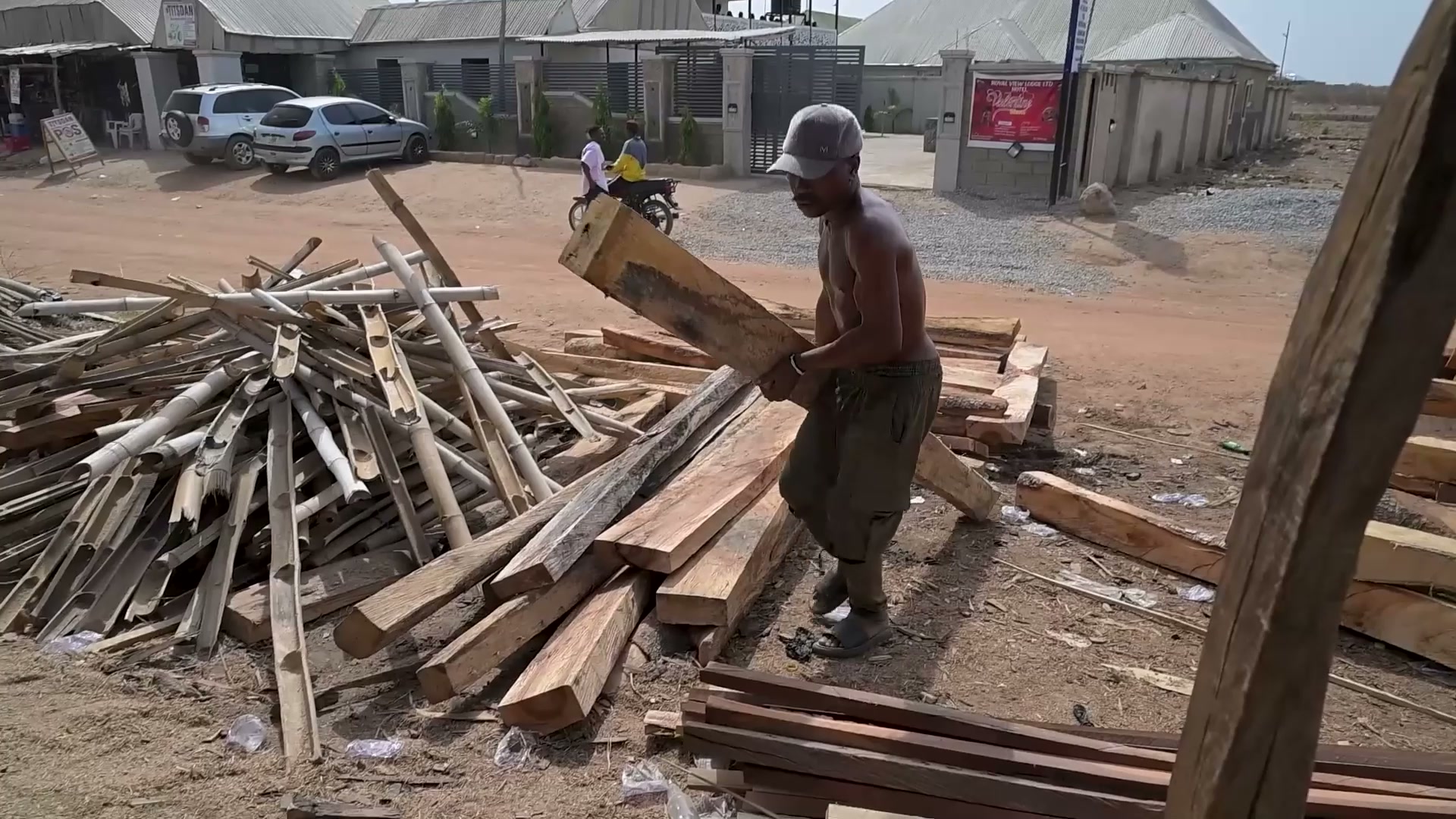
"Despite the launch of Africa’s largest refinery, the Dangote Petroleum Refinery, a sharp price surge has engulfed Nigeria, drawing the local business to the brink of survival. "We buy our diesel in the black market at the rate of N2,500 [...] We hardly have electricity. You don't make much profit. The money we get is just to bear the high cost of diesel," welder Abdul Olatunbosun commented. As the Middle East war rages on, the prices have skyrocketed by a record 65 percent in Nigeria. Many businesses rely on fuel-powered generators due to the nation's inconsistent energy supply, making them particularly vulnerable to price spikes. The majority of us, as artisans, lose our tanks from the main body of the generator so as not to run our generators on a large volume of diesel," Olatunbosun said. "We construct jerrycans, which we use to replace the tanks. We hang the jerrycans and connect them to our generators, so that we can still be sustaining,'' he continued. Manager of the local water factory, Jimba Moses, shared that the drastic reduction in fuel availability forces them to double the price of their product. "An increase in the price of fuel has really cost us much. Then, I used N15,000 (10,5 USD) worth of fuel to produce 3,500 bags of water. Now I must use N47,000 or N50,000 (34-36 USD) worth of fuel to get that same amount of bags of water," he said. "Due to this price increase, customers have withdrawn from patronising us." Some residents called for unity among African nations to manage and solve the crisis collectively. "We have crude oil underneath us in Nigeria, so why must we allow what is happening in another country to affect our oil?" sawmill business operator Jato Richard said. "Let's just do what we can to solve the problem as Africans, because we don't have the capability to keep bearing this hardship," he continued. To curb the soaring prices, the Nigerian government plans to introduce market reforms and several relief measures, but it rejected using fuel subsidies to keep prices below market rates. In response to the attacks on its territory, Tehran had closed the Strait of Hormuz, a crucial waterway that carries about 20 percent of the world's oil and liquefied natural gas output. The Hormuz blockage saw international oil prices soaring to 100 USD per barrel. Tensions escalated across the Middle East since the US and Israel launched a joint military operation against Iran on February 28, while diplomatic talks aimed at 'limiting Iran's nuclear and missile programmes' were ongoing."
Go to News Site