


 Dawn.com
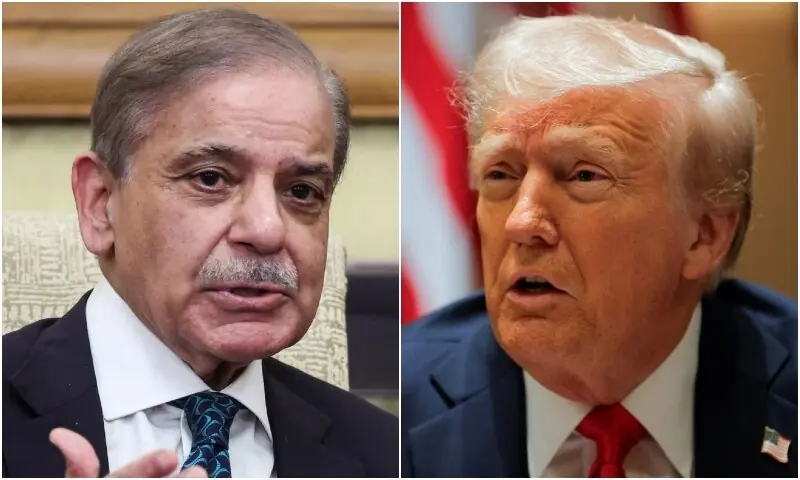
Following a request by Pakistan, US President Donald Trump said early on Wednesday he had agreed to suspend the bombing of Iran for two weeks if Tehran completely reopened the vital Strait of Hormuz. The statement came less than two hours before his ultimatum (8pm ET on April 8) for Iran to make a deal and reopen the Strait of Hormuz was set to lapse. On Tuesday, he had renewed his threat to Iran, saying “a whole civilisation will die tonight”, as Tehran showed no sign of accepting his ultimatum. With hours left for the deadline to end, Prime Minister Shehbaz Sharif took to the social media platform X to say, “Diplomatic efforts for peaceful settlement of the ongoing war in the Middle East are progressing steadily, strongly and powerfully with the potential to lead to substantive results in the near future. “To allow diplomacy to run its course, I earnestly request President Trump to extend the deadline for two weeks,” he said. He also requested Iran to open the Strait of Hormuz — a key maritime corridor through which 20pc of the world’s oil and liquefied natural gas flowed before the Middle East war began — for a corresponding period of two weeks. “Pakistan, in all sincerity, requests the Iranian brothers to open the Strait of Hormuz for a corresponding period of two weeks as a goodwill gesture. “We also urge all warring parties to observe a ceasefire everywhere for two weeks to allow diplomacy to achieve conclusive termination of war, in the interest of long-term peace and stability in the region,” he said. Shortly thereafter, Trump took to his Truth Social platform to say that he had spoken with PM Shehbaz and Chief of Defence Forces and Chief of Army Staff Field Marshal Asim Munir. “Based on conversations with Prime Minister Shehbaz Sharif and Field Marshal Asim Munir, of Pakistan, and wherein they requested that I hold off the destructive force being sent tonight to Iran, and subject to the Islamic Republic of Iran agreeing to the COMPLETE, IMMEDIATE, and SAFE OPENING of the Strait of Hormuz, I agree to suspend the bombing and attack of Iran for a period of two weeks,” he said. He added that “this will be a double sided CEASEFIRE!” “The reason for doing so is that we have already met and exceeded all Military objectives, and are very far along with a definitive Agreement concerning Longterm PEACE with Iran, and PEACE in the Middle East. “We received a 10-point proposal from Iran, and believe it is a workable basis on which to negotiate. Almost all of the various points of past contention have been agreed to between the United States and Iran, but a two week period will allow the Agreement to be finalised and consummated,” he added. Trump further stated that on behalf of the US, as the president, “and also representing the Countries of the Middle East, it is an Honour to have this Longterm problem close to resolution”. Subsequently, Iranian Foreign Minister Abbas Araghchi shared a statement on behalf of Iran’s Supreme National Security Council declaring that if attacks against the country were halted, it would cease its defensive operations. “On behalf of the Islamic Republic of Iran, I express my gratitude and appreciation for my dear brothers Prime Minister of Pakistan Sharif and Field Marshal Munir for their tireless efforts to end the war in the region,” he said. “In response to the brotherly request of PM Sharif in his tweet, and considering the request by the US for negotiations based on its 15-point proposal as well as announcement by POTUS about acceptance of the general framework of Iran’s 10-point proposal as a basis for negotiations, I hereby declare on behalf of Iran’s Supreme National Security Council: If attacks against Iran are halted, our powerful armed forces will cease their defensive operations,” he said. “For a period of two weeks, safe passage through the Strait of Hormuz will be possible via coordination with Iran’s armed forces and with due consideration of technical limitations,” he said. Pakistan has positioned itself as a facilitator in the peace process between Tehran and Washington for an end to ongoing hostilities in the Middle East that began with the US and Israel launching strikes in Iran on February 28. Dar’s engagements Following PM Shehbaz’s post, Deputy Prime Minister and Foreign Minister Ishaq Dar held four phone calls with the foreign ministers of Morocco, Saudi Arabi, Turkiye and Egypt in a span of around half an hour, according to the Foreign Office (FO). In all these engagements, Dar exchanged views on the latest developments in the Middle East and the wider region and highlighted the current status of Pakistan’s sustained efforts to promote dialogue and diplomatic engagement aimed at fostering peace and stability, the FO said. The foreign ministers of Saudi Arabia, Turkiye and Egypt were also in Islamabad last week and participated in a quadrilateral moot focused on de-escalation efforts in the Middle East. Dar had said after the quadrilateral moot that Iran and US had expressed confidence in Pakistan to facilitate talks and Islamabad would be honoured to host dialogue “in coming days”. A day after the moot, Dar was in Beijing where Pakistan and China issued a five-point initiative for restoring peace and stability in the Gulf and the Middle East. Prime Minister Shehbaz Sharif had initially also offered on March 24 that Pakistan stood “ready and honoured” to host “meaningful and conclusive talks” between the US and Iran. On March 25, Iran’s state-owned broadcaster Press TV reported that Tehran had “responded negatively” to an American proposal aimed at ending the US-Israeli war on the country. The report cited a senior political-security official. It further stated that the official had outlined five conditions under which Tehran would agree to end the ongoing conflict. These included a complete halt to “aggression and assassinations” by the enemy; the establishment of concrete mechanisms to ensure that the war is not reimposed on the Islamic Republic; guaranteed and clearly defined payment of war damages and reparations; the conclusion of the war across all fronts and for all resistance groups involved throughout the region; international recognition and guarantees regarding Iran’s sovereign right to exercise authority over the Strait of Hormuz. On Monday Iranian media reported that Iran had conveyed its response to a US proposal for ending the war to Pakistan, again rejecting a ceasefire and emphasising the necessity of a permanent end to the war. The Iranian response consisted of 10 clauses, including an end to conflicts in the region, a protocol for safe passage through the Strait of Hormuz, lifting of sanctions, and reconstruction, the agency added. Both rejection preceded warning by Trump of wider attacks on Iran if Tehran refused to enter a deal with Washington. More to follow
Go to News Site