


 Ruptly
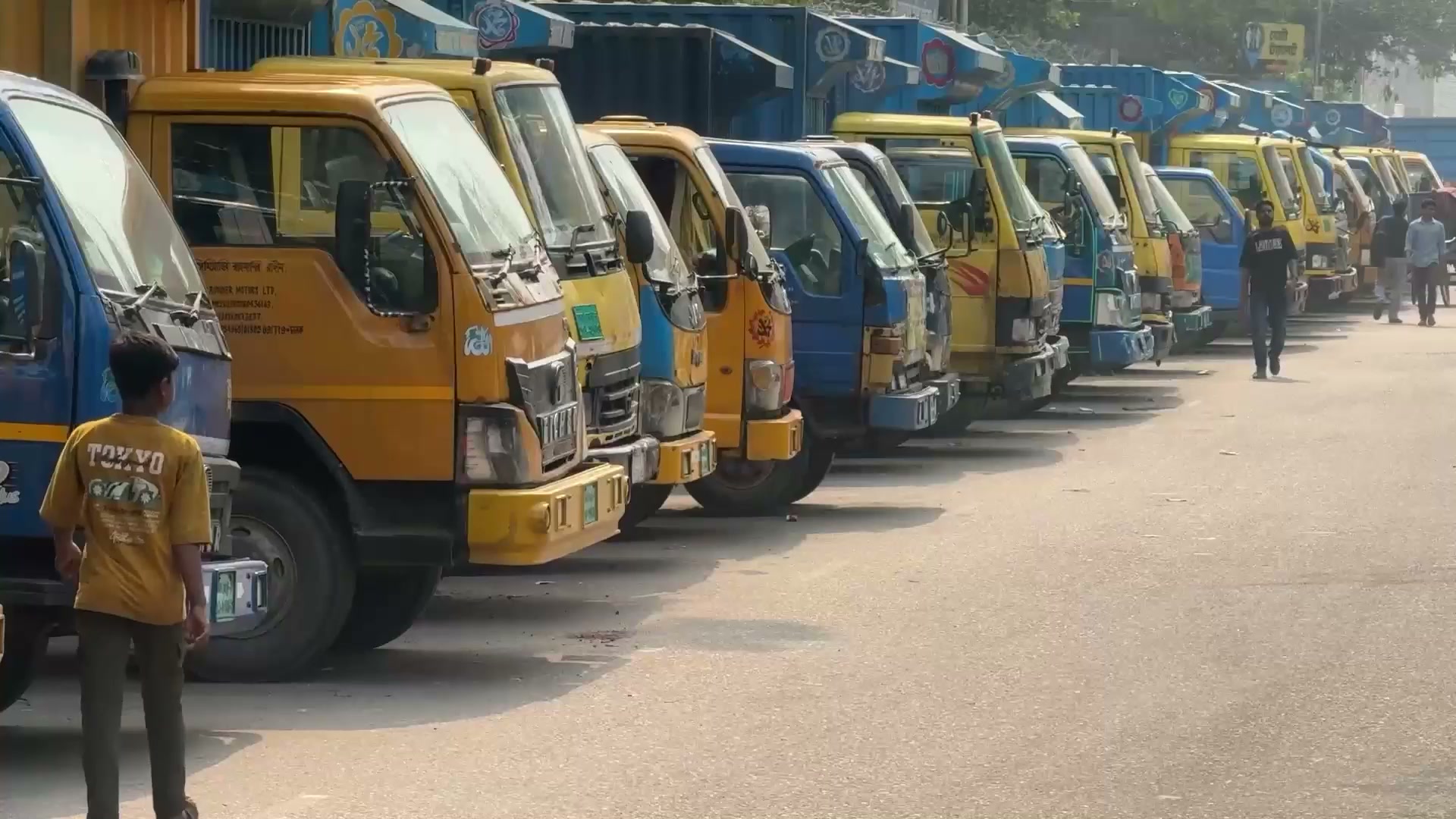
"Bangladesh's logistics sector is buckling under extreme pressure as a persistent fuel shortage drives up fares for vans and pickups amid the ongoing energy crisis linked to the Iran war. Footage shows trucks parked at the capital’s largest truck and covered van stand, with thousands unable to transport goods due to limited fuel availability. "We have many problems with fuel; we do not get the right amount of it [...] Some stations give 10 litres, others 20, but we need 60 to 100 litres. How many stations can we go to get fuel like this? [...] If goods don’t reach on time, we face various problems,” said Alauddin, a pick-up truck owner. Drivers reported that they were forced to queue for hours at stations, sometimes receiving only minimal fuel allocations, which prevents them from completing deliveries on time. “After trying for five days, I still couldn’t get fuel for my vehicle and suffered a lot. Eventually, I managed to get just 10 litres after waiting in line,” added driver Abdul Jalil. “Without fuel, how can I go anywhere? Sometimes I get 10 to 20 litres, which lets me drive for a day, but when I don’t get any, I just sit at the stand. If I don’t get trips for four or five days, I end up going without food,” said another driver, Amir Hossain. The crisis is linked to disruptions caused by the closure of the Strait of Hormuz, which has stranded global energy supplies, particularly impacting countries in Asia reliant on Gulf imports. Bangladesh sources roughly 63 percent of its fuel from countries including Saudi Arabia, the UAE, and Iraq. In total, the country imports roughly 95% of its fuel. “I travelled across the Barisal division to Dhaka and couldn’t find fuel anywhere along the way. I don’t have the strength to keep standing in those lines, so I brought the vehicle back to the stand,” said Billal Hossain, another pick-up driver. According to reports, authorities maintain that sufficient fuel stocks exist in the country and have approved purchases of 300,000 tonness of diesel to meet urgent demand. Tensions in the Middle East escalated after the United States and Israel launched joint military operations against Iran on February 28, prompting retaliatory strikes across the region."
Go to News Site