


 Dawn.com
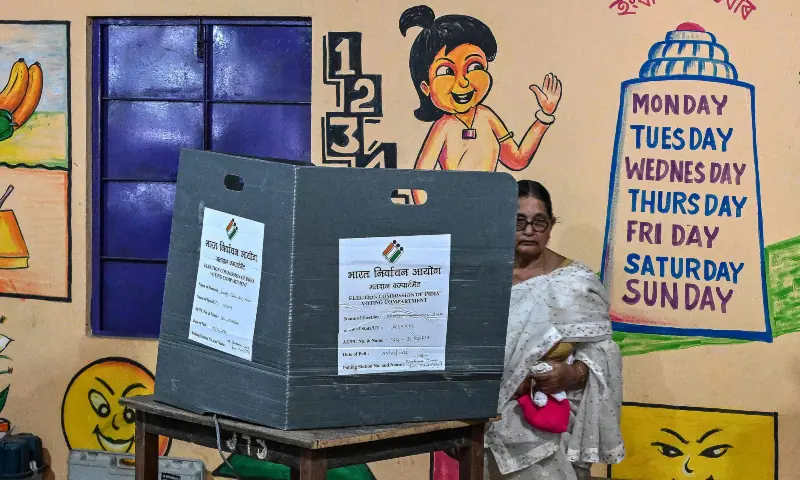
A key opposition Indian politician has threatened legal action against the election commission after millions of people were struck off electoral rolls, the latest flashpoint over a contentious voter clean-up drive. A sweeping voter registration overhaul — known as the Special Intensive Revision (SIR) — meant to remove ineligible voters but which critics say is skewed against marginalised and minority communities, kicked off last year in several states and territories. Many of these regions voted on Thursday to elect local governments, with two other states slated to go to polls later this month. That includes West Bengal, a state with roughly 100 million people led by Mamata Banerjee of the Trinamool Congress party, where it has run into furious opposition. West Bengal is also a crucial election battleground, which Prime Minister Narendra Modi’s Bharatiya Janata Party (BJP) has never governed. Voting was under way in Assam and Kerala, along with the federally administered territory of Puducherry, while West Bengal and Tamil Nadu will vote later this month. Results from all the elections are due on May 4. Move to court Banerjee, the state’s chief minister, accused India’s Election Commission of “working at the behest of the BJP” to strike off her supporters from the state’s electoral rolls. “We will move court again to resist the exclusion of names,” she told her supporters at an election rally on Wednesday. A previous challenge by Banerjee, one of Modi’s most formidable opponents, is pending in the Supreme Court. Members of Modi’s BJP have long claimed that large numbers of undocumented Muslim migrants from neighbouring Bangladesh have fraudulently entered India’s electoral rolls. West Bengal shares a 2,217-kilometre-long border with Bangladesh. The Election Commission, in its defence of the SIR, has said it is in part to avoid “foreign illegal immigrants” from voting. The SIR drive in West Bengal was carried out in two phases. In the first, around 6.3m names were deleted, with officials citing routine reasons such as deaths or voters having moved out of the state. A second, more controversial phase flagged another 6m voters for “adjudication”, a category introduced for the first time in West Bengal, which relied on software to identify anomalies such as spelling mismatches. Muslims, who make up a quarter of the state’s population, were disproportionately flagged for this extra scrutiny, according to at least two independent analyses of Election Commission data. Of those flagged, about 2.7m were finally found to be ineligible to vote, the Election Commission’s data released earlier this week, raising the total number of exclusions to over 9m — or roughly 12 per cent of the electorate. The 2.7m left out after the second phase can still appeal their exclusion. But with the tribunals set up to adjudicate such matters still not fully operational, a decision is unlikely before voting begins on April 23. Millions vote in Assam, Kerala Meanwhile, millions of Indians queued to vote in local elections in the Assam and Kerala states on Thursday, kicking off four key contests this month amid a war in the Middle East that has triggered some fuel shortages. Voters stand in queues to cast their ballots to vote at a polling booth amid rainfall on an island in the middle of the river Brahmaputra during the Assam Legislative Assembly election in the Darrang district on April 9, 2026. — AFP State elections do not directly affect the stability of India’s federal government but are closely watched as a test of voter sentiment toward the ruling coalition. A BJP-led alliance has ruled Assam for two successive terms and is expected to win again, according to public opinion platform Vote Vibe, while the opposition is set to retain Kerala. In West Bengal, where the removal of large numbers of names from voter rolls during a revision exercise has become a major issue, the ruling regional party is ahead in a tight race, a Vote Vibe survey for broadcaster CNN-News18 showed. In Tamil Nadu, a coalition that includes the BJP is expected to mount a close challenge against a ruling regional party, Vote Vibe said. Vote Vibe founder Amitabh Tiwari said it was unclear what role global energy disruptions would play in the elections, but surveys by his agency showed voters broadly praised the Modi government’s handling of energy security since the Iran war began in late February. India has not raised retail prices of regular petrol and diesel despite higher global prices and has diverted cooking gas for household use from some industries. India typically relies on the Middle East for more than 40 per cent of its crude oil imports and over 90pc of its cooking gas imports.
Go to News Site