


 Business Recorder
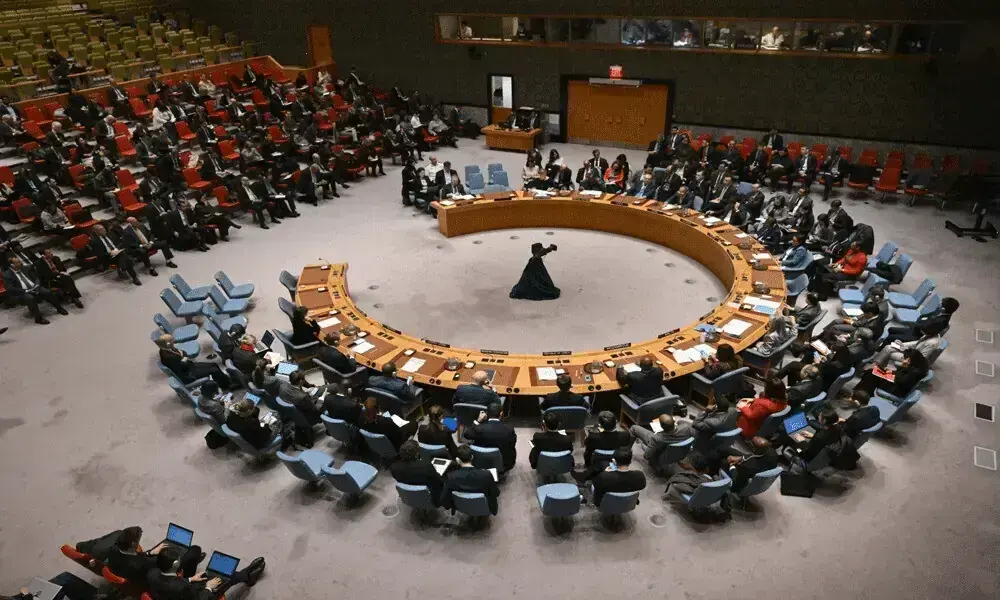
EDITORIAL: The killing of United Nations peacekeepers in southern Lebanon has crossed a line that international law was meant to protect unequivocally, and Pakistan’s call at the UN Security Council for accountability reflects the gravity of a situation that risks normalising attacks on those mandated to preserve peace. The deaths of three Indonesian personnel serving under UNIFIL, in the context of ongoing Israeli military operations, demand more than routine expressions of concern. These were not incidental casualties in an ambiguous battlefield environment. UN peacekeepers operate under clearly defined mandates, their positions known, their neutrality established, and their role explicitly protected under international humanitarian law. When such personnel come under artillery fire, airstrikes or drone attacks, the implications extend beyond the immediate loss of life. It signals a breakdown in respect for the very frameworks that govern conflict and protect non-combatants. Pakistan’s intervention at the Security Council rightly framed the issue within this broader context. Attacks on peacekeepers undermine not only individual missions but the credibility of the UN system itself. If personnel deployed to stabilise conflict zones can be targeted with impunity, the foundation of international peacekeeping begins to erode. That concern is not theoretical. Pakistan, as one of the largest contributors to UN peacekeeping missions, has lost 182 personnel in the line of duty and understands the risks these operations entail. Indonesia’s demand for a direct and transparent investigation reinforces the same principle. The insistence on an independent inquiry reflects a lack of confidence in explanations that do not fully account for the circumstances of the attacks. In situations where facts remain contested, credibility hinges on the integrity of the investigative process. Anything less risks reducing accountability to a procedural formality. The wider situation in Lebanon adds urgency to these demands. Israeli military operations have already resulted in significant civilian casualties, widespread displacement and extensive damage to infrastructure. The expansion of hostilities into areas where UN peacekeepers are deployed increases the likelihood of further incidents, whether through direct targeting or the spillover effects of sustained military activity. In either case, the responsibility to ensure the safety of peacekeepers remains clear. There is also a pattern that cannot be ignored. Reports of repeated restrictions on UNIFIL’s freedom of movement and operational challenges do point to a deteriorating environment for peacekeeping missions; and, when such constraints are combined with incidents involving loss of life, the question shifts from isolated events to systemic risk. The international community cannot afford to treat these developments as routine consequences of conflict. The legal implications are equally serious. Under international law, attacks against peacekeepers can constitute war crimes. This is not a matter of interpretation but a defined standard intended to safeguard those operating under UN mandates. Pakistan’s call for a prompt, thorough and impartial investigation is therefore consistent with established legal norms. The emphasis on accountability is essential, not optional. Beyond the legal framework, there is a strategic dimension to consider. The targeting of peacekeepers complicates efforts to stabilise already volatile regions. It weakens mechanisms designed to contain escalation and increases the burden on diplomatic channels that are already under strain. In the absence of credible peacekeeping, the risk of broader confrontation rises. For Pakistan, the issue carries both principle and interest. As a country that has consistently supported UN peacekeeping efforts, its position reflects a commitment to maintaining the integrity of international mechanisms that contribute to global stability. Supporting Indonesia’s demand for accountability is part of that commitment, as is the insistence that attacks on peacekeepers must not become normalised. The response from the international community will be a test of its resolve. Condemnations must be matched by concrete steps to establish facts and assign responsibility. Failure to do so would signal that even the most fundamental protections in conflict zones are subject to erosion. The protection of peacekeepers is not an abstract ideal; it is a practical necessity for managing conflict in an increasingly unstable world. When those tasked with maintaining peace become targets themselves, the consequences extend far beyond a single incident. They challenge the credibility of the system designed to prevent conflict from spiralling further. Ensuring accountability in this case is therefore about more than justice for those who lost their lives. It is about reaffirming the principles that allow international peacekeeping to function at all. Copyright Business Recorder, 2026
Go to News Site