


 Forbes India
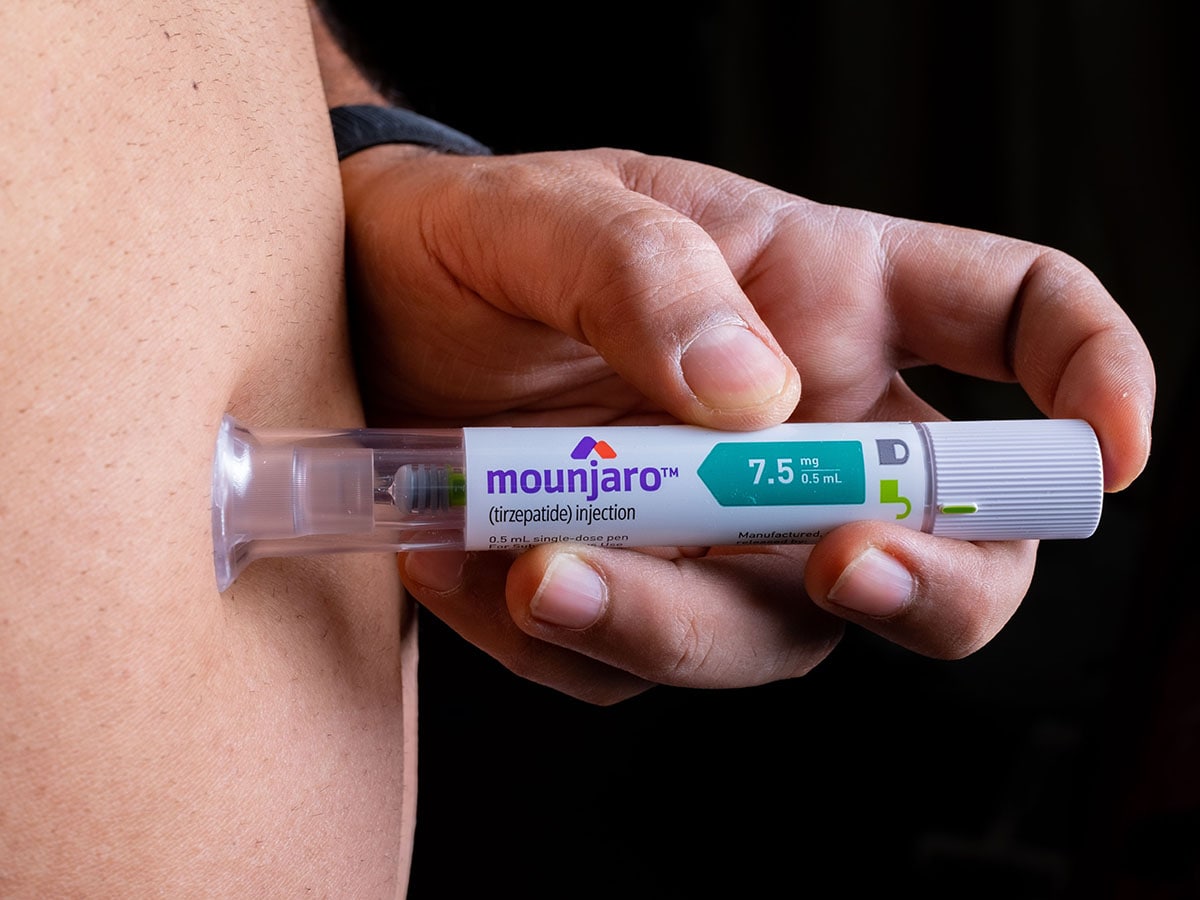
Eli Lilly's Mounjaro posted its first monthly sales drop in India in March—a Rs 20-crore decline, from roughly Rs 135 crore in February to Rs 114 crore—just days after a clutch of Indian generics entered the country's booming GLP-1 market. The timing was not coincidental.The sales data, from market tracker PharmaTrac, marks an inflection point. Sales of semaglutide, on the other hand, rose to Rs 59 crore in March from Rs 48 crore in February.For months, Mounjaro had dominated India's GLP-1 segment, riding strong demand from urban diabetics and weight-loss patients.Mounjaro became India's highest-selling drug by value in October 2025, posting nearly Rs 100 crore in sales for the first time since its March launch. It pushed out long-standing top performers—Augmentin (Rs 80 crore) and Glycomet (Rs 78 crore)—to second and third place.But the arrival of branded generics from Torrent, Dr. Reddy's, Zydus, Lupin and Sun Pharma—all launched on March 21—hit the market hard, and hit it fast. Torrent alone grabbed 3 percent of the Rs 1,600-crore GLP-1 agonist market within days of its launch, in part because it was the only company to also offer an oral formulation.The price gap tells the story. A month's supply of Mounjaro—a dual-agonist that acts on both GLP-1 and GIP receptors—costs around Rs 13,000. Novo Nordisk's Ozempic and Wegovy now start at Rs 5,660, a price the Danish company cut aggressively from Rs 8,800 and Rs 10,848 respectively from April 1. The new domestic generics of semaglutide came in lower still: Rs 1,300 for vials, Rs 1,800 for injectable pens. When a product goes from Rs 13,000 to Rs 1,300, prescribing and patient usage patterns shift overnight.That is the central tension India's GLP-1 market now faces: Demand is strong and growing, but price determines everything.Also Read: India’s GLP‑1 moment is here—the weight‑loss drug wars beginAnshul Gupta of Avendus Capital frames the opportunity plainly. "Addressing even one crore patients translates to a Rs 3,000–4,000 crore opportunity," he says, "but the market will only expand meaningfully at lower price points, especially beyond metros." He expects the GLP-1 category to surpass Rs 2,000 crore within a year, led by generics driving down entry barriers.Eli Lilly was not caught entirely off guard. In a conversation with Forbes India late last year— before the March correction—Winselow Tucker, president and general manager of Eli Lilly India, had already flagged the generic question, even as he downplayed it as a direct threat. "We recognise that there will be generic semaglutide in the market," he said. "Given the scale of unmet need, we welcome options that help improve access for patients." But he added, "I'm not saying that I'm not concerned about market share. Physicians having choices, including generics, is not a bad thing."To stay competitive beyond India's major cities, Lilly had already moved: A distribution tie-up with Cipla, and the launch of a second tirzepatide brand, Yurpeak, at the same price as Mounjaro. As Tucker put it, "It's a large country. With Cipla and its distribution network… we can reach second-grade towns, even beyond the cities where Eli Lilly already has a strong presence."Also Read: No prescription, no problem: Weight-loss drugs sold dodging regulationsWhat March's numbers make clear is that distribution depth alone may not be enough.Mounjaro remains the category leader—clinically differentiated as a dual agonist, still the highest-value brand by absolute sales, and well ahead of its rivals. But its first dip, timed precisely with the arrival of cheaper alternatives, signals that the Indian market has moved from a launch-led boom into something more structurally competitive.The question for Lilly, and for every innovator playing in India's weight-loss drug sector is: How much of the global model needs to be rebuilt for a market where innovation opens the door, but price decides who walks through it?
Go to News Site