


 Business Recorder
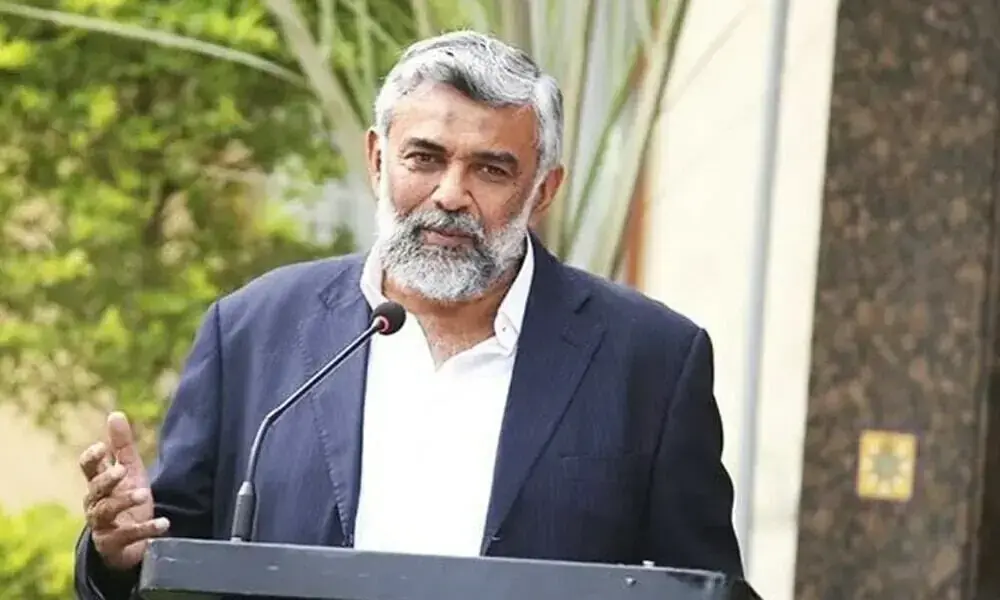
KARACHI: Political parties and leaders often talk about the welfare state, but making Pakistan a true welfare state would be a pipe dream till the constitution is practically implemented, said Pasban Democratic Party (PDP) Chairman Altaf Shakoor here Saturday. He said in every election season, Pakistan’s leaders dust off the phrase “welfare state” like a well-worn slogan. They promise justice, equality, and prosperity, invoking the Medina model or pledging modern reforms. Yet for ordinary citizens, the dream remains painfully out of reach. The irony is stark: Pakistan’s Constitution already sketches the blueprint of a welfare society, but successive governments have treated it as decorative text rather than binding obligation. He said until those constitutional directives are made enforceable, the welfare state will remain a pipe dream. He said Pakistan’s Constitution is unambiguous in its commitment to welfare: Article 37 directs the state to promote social justice and eradicate social evils; Article 38 calls for eliminating inequality, ensuring equitable distribution of wealth, and providing citizens with food, clothing, housing, education, and medical relief, and Article 25 guarantees equality before law, the foundation of any welfare system. Altar Shakoor said these provisions outline a clear path toward a welfare society. But they are non-justiciable, meaning citizens cannot demand them in court. This loophole has allowed governments to ignore them with impunity, reducing welfare to rhetoric rather than enforceable rights. He said the Islamic parties frame welfare around zakat, charity, and the Medina model. Secular parties promise subsidies, health cards, or cash transfers. Yet in both cases, welfare is reduced to episodic populism. There is little effort to build the institutional scaffolding — progressive taxation, universal healthcare, pensions, and strong local councils — that makes welfare sustainable. “The result is a cycle of promises without permanence. Welfare becomes a political tool, not a social contract. Citizens are left with slogans, not systems.” He said the countries like Germany, Sweden, France, and Finland demonstrate that welfare is achievable when constitutional commitments are treated as enforceable rights. “Germany’s Basic Law guarantees dignity and social security, producing a robust social insurance system. Sweden’s constitutional principles of equality underpin universal healthcare and education. France and Finland embed welfare into their national identity, ensuring continuity across governments.” He said these examples prove that welfare is not a dream — it is a matter of political will and institutional design. Where constitutions are taken seriously, welfare becomes reality. He said Pakistan’s tragedy is that the vision exists on paper, but the state has failed to act. Instead of embedding welfare into enforceable rights, governments have treated constitutional directives as aspirational text. The result is deepening inequality, fragile safety nets, and a society where the promise of social justice remains unfulfilled. He said the absence of continuity is particularly damaging. Welfare programs collapse when governments change, leaving citizens vulnerable. Without institutional permanence, welfare remains hostage to political cycles. Altaf Shakoor said if Pakistan’s political parties truly believe in the welfare state they so often invoke, they must move beyond rhetoric. What is needed is an alliance across party lines — Islamic and secular alike — dedicated to enforcing constitutional welfare guarantees. “A Charter of Welfare could commit parties to making Articles 37 and 38 enforceable, to building institutions that deliver healthcare, education, pensions, and housing, and to ensuring continuity across governments.” He said such an alliance would transform welfare from a slogan into a binding social contract. It would signal to citizens that welfare is not charity or populism, but a constitutional right. Without collective will, the welfare state will remain a pipe dream — written in the Constitution, but absent from the lives of citizens. With it, Pakistan could finally turn aspiration into reality. Copyright Business Recorder, 2026
Go to News Site