


 Daily Finland
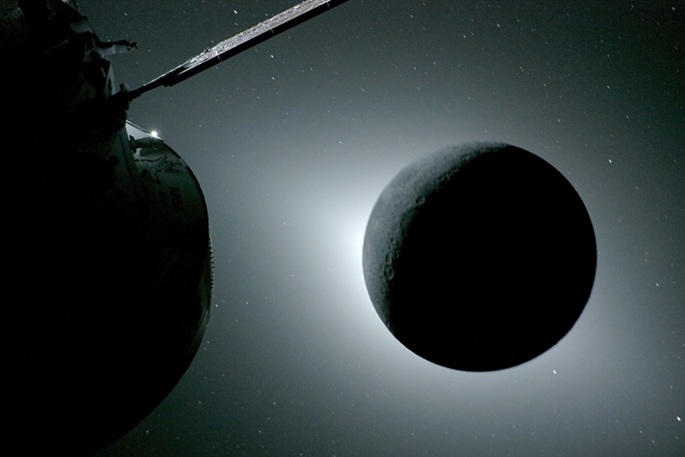
Europe played a key role in the recent Artemis II Moon mission from the USspace agency NASA and is also planning to explore Earth's natural satellite, a European Space Agency (ESA) director said. "We are back in the game," said Daniel Neuenschwander, ESA's director of human and robotic exploration. On Friday the three US and one Canadian astronaut splashed down off the coast of southern California after completing the first Moon mission since 1972. "The current flight to the Moon would not have been possible at all without ESA's propulsion system," Neuenschwander told dpa. ESA supplied the so-called European Service Module (ESM) for the mission, which provided the astronauts with oxygen, water and electricity, among other things. It also provided propulsion for the Orion capsule, which housed the crew on its Moon flight. Overall, some 100 companies from 13 European countries took part in the recent NASA mission. Plan for German astronaut on theMoon European astronauts are also expected to take part in an Artemis mission soon but not until Artemis IV, due to launch in 2028. ESA chief Josef Aschbacher recently announced that Germany would be first in line when it comes to ESA astronauts for Moon missions. ESA itself wants to send equipment to the Moon in 2030 with the crewless Moon lander Argonaut. Vehicles brought along should then move across the lunar surface, Neuenschwander said. The first flight is planned on board an Ariane 6 rocket. Argonaut is to deliver up to 1.5 tons of cargo such as a rover or scientific equipment to the lunar surface. "The goal is to increase our understanding of the Moon," Neuenschwander said, adding that ESA wants to reach the Moon's South Pole to explore its resources. Sunlight there is also optimal for generating energy, he said. ESA has long-term plans "We want to go there to stay," the ESAscientist said. "The long-term goal is a European research station with astronauts." He outlined the timetable: "By 2030, show that we can do it. From 2031, we build up capacities and before 2040 a permanent European presence on the Moon." The United States would remain important as a partner. "We need the US for crewed transport to the Moon." More work before people can live on theMoon "To stay on the Moon, we have to keep working on life-support systems," the space expert said, ,including figuring out how to "extract water from the Moon" and also generate oxygen and protect the crew from radiation. "How can you survive the lunar night, which lasts 14 Earth days?" Findings on radiation protection in particular would also be useful for a possible flight to Mars, he said. Moon projects have major scientific benefits, Neuenschwander added. "We also understand Earth better and the interaction of the Moon and Earth in the climate. It is also about resources when we are there." Spaceflight also offers technological innovation that could be used in other areas, such as robots that help in disasters. He said it is also about cooperation within Europe and with the US, Japan, Canada and other countries. "The important thing is that it needs flagship projects that inspire young people across Europe," Neuenschwander said.
Go to News Site