


 Business Recorder
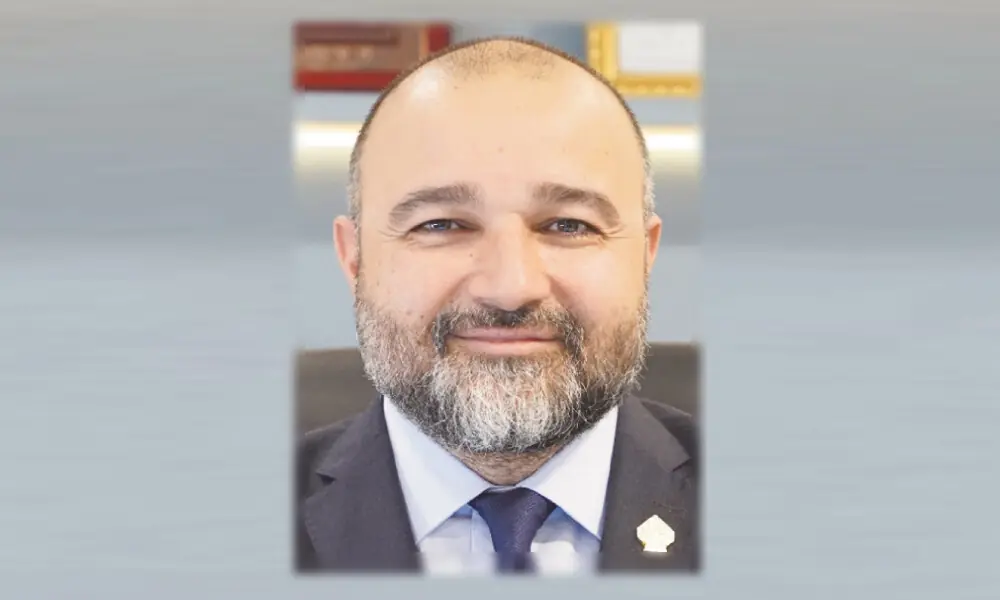
‘Mechanization has to be a central part of the food security conversation’ Yasin Seker is the Chief Executive Officer of Al-Ghazi Tractors Limited. He brings over 18 years of international leadership experience across the automotive, agricultural machinery, and heavy equipment sectors, with expertise in business transformation, strategic growth, and operational excellence across Africa, the Middle East, and Europe. Before joining Al-Ghazi Tractors Limited, he served as Group Managing Director – East Africa at CMC Motors, part of Al-Futtaim Automotive, where he led commercial and operational restructuring across the region. He has also held senior leadership roles at Trelleborg Group, CNH Industrial – New Holland Agriculture, Timac Agro International Groupe Roullier, and Michelin. He holds a master’s degree in Law, Economics and Management with a specialization in International Business Administration, and a bachelor’s degree in Economics from Université Lumière (Lyon II), France. Following are the edited excerpts of a recent conversation BR Research had with him: BR Research: Pakistan’s agriculture sector is under increasing pressure to feed a rapidly growing population. In this context, how critical is agricultural mechanization in improving productivity and safeguarding the country’s long-term food security? Yasin Seker: I think it is absolutely critical. When you look at the pressures on Pakistan’s agriculture sector, a growing population, limited land, and increasing input costs, improving productivity is not optional anymore. Mechanization is one of the most effective ways to do that. It allows farmers to carry out operations on time, with more precision, and with better consistency. And in agriculture, timing alone can make a significant difference to yield. At Al-Ghazi, we see this firsthand. Farmers who adopt mechanization are able to improve both their productivity and efficiency in a very tangible way. It also helps reduce dependency on manual labor, which is becoming less reliable, and improves overall efficiency across the system. If we are serious about long-term food security, then mechanization has to be a central part of that conversation. It’s one of the few levers that can deliver both higher productivity and more sustainable outcomes at scale. BRR: Compared to many other agricultural economies, mechanization levels in Pakistan remain relatively low. What are the key barriers preventing wider adoption of modern agricultural machinery, particularly among small and medium-sized farmers? YS: The biggest challenge is affordability, especially for small and medium farmers. For many of them, owning machinery is simply not viable.Beyond that, there are other factors like limited access to financing, lack of awareness, and in some cases, very small land holdings which make large pieces of equipment less practical. We also have to look at the ecosystem, trained operators, service availability, and aftersales support. Mechanization is not just about selling a tractor; it is about enabling its effective use. BRR: How can mechanization help farmers improve efficiency across the agricultural value chain—from land preparation and sowing to harvesting—while also reducing post-harvest losses? YS: If you look at the full farming cycle, mechanization improves efficiency at almost every stage. Starting with land preparation, it ensures better soil conditioning. During sowing, it helps with uniform seed placement, which directly impacts yield. And at the harvesting stage, it allows farmers to complete operations quickly and at the right time, which is critical. But one area that often doesn’t get enough attention is post-harvest losses. In Pakistan, a significant portion of crops is lost after harvesting due to delays, poor handling, or lack of proper equipment. Mechanization, whether through better harvesting tools, threshing, or handling equipment, helps reduce these losses quite meaningfully. So, it’s not just about doing things faster, it’s about doing them right, at the right time, and ensuring that more of what is grown actually makes it to the market. BRR: With climate change affecting crop cycles, water availability, and farm labor dynamics, what role can modern agricultural machinery and precision farming technologies play in helping farmers adapt to these challenges? YS: Farmers today are dealing with a lot more uncertainty than before. Weather patterns are changing, water is becoming scarcer, and labor availability is also shifting. Modern machinery, especially when combined with precision technologies, helps farmers respond better to these challenges. It allows more efficient use of water, better soil management, and more timely interventions. In a way, it gives farmers more control in a very unpredictable environment. BRR: Access and affordability remain major concerns for farmers. What innovative models—such as financing solutions, machinery leasing, or shared service platforms—can help accelerate mechanization across Pakistan’s farming sector? YS: Access and affordability are really at the heart of the issue. For many farmers, especially small and medium ones, owning machinery outright is simply not feasible. So, we need to move beyond the idea that ownership is the only path. Leasing models can play a big role, where farmers can use machinery without the upfront capital burden. Similarly, pay-per-use or shared service platforms, where equipment is available on demand, can make mechanization much more accessible. You’re already starting to see early versions of this in the market, and there is strong potential to scale. Financing is another critical piece. Tailored financial products, aligned with crop cycles and cash flows, can make adoption much easier. Ultimately, it will take a combination of these models, supported by both the private sector and policy frameworks, to really accelerate mechanization at scale. BRR: As a leading player in Pakistan’s agricultural machinery industry, how is AGTL contributing to the modernization of farming practices, and what policy support would further help accelerate mechanization and strengthen national food security? YS: At Al-Ghazi, we see our role as going beyond just manufacturing tractors. We are part of a larger effort to modernize how farming is done in Pakistan. That means providing reliable, efficient machinery, but also supporting farmers through strong after-sales service, availability of parts, and on-ground engagement. A big part of modernization is confidence. Farmers need to know that the equipment will perform, that support is available when they need it, and that the investment will translate into better outcomes for them. That is where we focus a lot of our effort. At the same time, accelerating mechanization requires the right policy environment. Access to financing is critical, especially solutions that are aligned with farmer cash flows. Incentives for mechanization, support for localized manufacturing, and a stable, predictable regulatory framework can all help drive adoption. If the public and private sectors move in alignment, we can significantly improve productivity and build a more resilient agricultural system that supports long-term food security. BRR: Pakistan’s tractor market has historically been influenced by farm economics, financing conditions, and policy support. What is your outlook for tractor demand, and what would it take to make mechanization adoption more stable and widespread? YS: Tractor demand in Pakistan has always been closely linked to farm economics, liquidity in the system, and policy signals. So naturally, it tends to be cyclical rather than stable. In the near term, I think demand will continue to respond to factors like crop prices, farmer income, and access to financing. When those are strong, demand follows. When they are constrained, we see a slowdown. If we want to make mechanization more stable and widespread, the key is consistency. That means predictable policies, better access to financing aligned with crop cycles, and a long-term approach to supporting farmers rather than short-term interventions. At the same time, we need to shift the mindset from viewing tractors as a one-time purchase to seeing mechanization as an ongoing productivity investment. That is when adoption becomes more sustained. BRR: Mechanization today is about more than just tractors. How important is it for Pakistan to build a broader farm mechanization ecosystem—implements, services, training, and precision technologies—and how is AGTL positioning itself in that space? YS: You’re absolutely right, mechanization today goes far beyond tractors. A tractor on its own has limited impact unless it is part of a broader ecosystem that includes implements, services, operator training, and increasingly, technology. For Pakistan, building this ecosystem is critical. Implements drive actual productivity outcomes, services ensure uptime, and training ensures that farmers are able to use equipment effectively. Precision technologies will also become more relevant over time as farming practices evolve. At Al-Ghazi, we are very conscious of this shift. While tractors remain our core, we are focused on strengthening the surrounding ecosystem, whether that is through aftersales support, farmer engagement, or enabling the use of implements and better farming practices. Mechanization only delivers real value when it works as a system, not as a standalone product. BRR: Has Pakistan’s mechanization policy become too tractor-centric? What would it take to shift from simply increasing tractor sales to building a productivity-led mechanization model that actually improves yields, efficiency, and farm incomes? YS: I think historically, the focus has understandably been on increasing tractor penetration, because that was the first step in mechanization. But today, the conversation needs to evolve. Simply increasing the number of tractors does not automatically translate into higher productivity. What matters is how effectively that machinery is used and how it integrates into the broader farming process. A productivity-led approach would look at outcomes, yields, efficiency, cost per acre, rather than just volumes. That means encouraging the use of the right implements, improving farmer training, and supporting better farm management practices. It also requires alignment between policy, private sector, and farmers. If we get that right, mechanization can move from being equipment-driven to impact-driven, and that is where we will see real improvements in farm incomes and national food security.
Go to News Site