


 Daily Finland
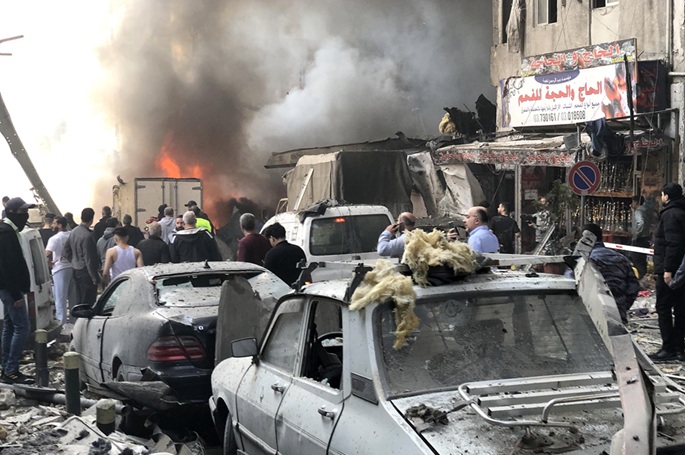
U.S. President Donald Trump said his administration received a call from Iran on Monday morning, claiming that Tehran "would like to make a deal very badly" but also signaling Washington's eagerness to reach a deal to end the conflict, reported Xinhua. Trump did not reveal whether Washington has agreed to another round of talks before the ceasefire expires on April 21, though multiple U.S. media outlets, citing U.S. officials and regional sources, said both Washington and Tehran leave room for further talks. "We've been called by the other side," Trump told reporters at the White House. "They'd like to make a deal very badly." If a deal is not reached with Iran to end the war by the end of the ceasefire, "it won't be pleasant for them," Trump threatened. He insisted that the sticking point in talks with Iran "was over nuclear" and a priority for the United States is to retrieve Iran's enriched uranium. "We're going to get the (uranium) dust back. We'll get it back. Either we'll get it back from them or we'll take it," Trump reiterated. "We agreed to a lot of things, but they didn't agree to that, and I think they will agree to it. I'm almost sure of it. In fact, I am sure of it. If they don't agree, there's no deal. There will never be a deal," he said of U.S.-Iran talks in Pakistan on Saturday. The United States and Iran are still engaged in talks as the two sides work toward a diplomatic off-ramp for the war, a U.S. official told CNN on Monday. Mediators from Pakistan, Egypt and Türkiye are working to revive negotiations between the United States and Iran before the current ceasefire expires, according to reports. "We are not in a complete deadlock. The door is not closed yet. Both sides are bargaining. It's a bazaar," a regional source has told U.S. online media outlet Axios. Local analysts say Washington has pressed Tehran to freeze uranium enrichment and relinquish its stockpile of highly enriched uranium, while Iran is seeking the release of frozen funds and broader sanctions relief. The Turkish and Egyptian foreign ministers held separate phone calls with their counterpart in Pakistan. Both then spoke to White House envoy Steve Witkoff and Iranian Foreign Minister Seyed Abbas Araghchi, according to the Axios report. Trump's latest remarks came hours after the U.S. military imposed a naval blockade on Iranian ports and his threat that the U.S. military will "eliminate" any ship of Iran if it comes close to the U.S. blockade in the Strait of Hormuz. He claimed on Truth Social on Monday that as many as 34 ships went through the Strait of Hormuz on Sunday, asserting it is by far the highest number since the closure of the crucial global energy waterway days after the United States and Israel launched massive attacks on Iran on Feb. 28. However, the maritime data firm Kpler reported only 14 on Sunday. U.S. officials have indicated that military pressure, partly aimed to prevent Iran from using the crucial global energy waterway as leverage in the talks, remains part of the negotiating strategy, said the Axios report. Meanwhile, Iran's main military command, Khatam al-Anbiya Central Headquarters, has said that if the security of Iranian ports in the country's southern waters is threatened, no port in the Gulf or the Sea of Oman will be safe, according to the official news agency IRNA. Ebrahim Zolfaghari, the headquarters' spokesman, issued the warning on Monday, one day after U.S. President Donald Trump, in reaction to the failure of the peace talks between the Iranian and U.S. delegations in Pakistan, said in a post on Truth Social that the U.S. Navy would begin blocking ships trying to enter or leave the Strait of Hormuz. Zolfaghari said the Iranian armed forces announced "explicitly and decisively" that the ports' security in the Gulf and the Sea of Oman is ensured either for everyone or no one. Zolfaghari said Iran's armed forces consider defending Iran's lawful rights a "natural and legal duty," adding that exercising Iran's sovereignty over its territorial waters is among the Iranian nation's "natural" rights. He noted that Iran's armed forces will decisively continue to ensure security in the country's territorial waters with determination, stressing that, as announced repeatedly, the "enemy-affiliated" vessels do not and will not have the right to pass through the Strait of Hormuz. Zolfaghari added that other vessels will continue to be allowed to pass through the waterway in compliance with the Iranian armed forces' regulations. Iran says to use new capabilities if conflict continues Iran's Islamic Revolution Guards Corps (IRGC) has vowed to use new military capabilities if the war with the United States and Israel continues, the semi-official Fars news agency reported Monday, said Xinhua. "We have not yet used our capabilities, and if the war continues, we will unveil capabilities that the enemy has no idea about," IRGC spokesperson Hossein Mohebbi said. Meanwhile, Iran's Defense Ministry spokesperson Reza Talaeinik said Monday that the Iranian armed forces' capabilities are increasing, with sufficient missiles, drones, weapons, ammunition and other military equipment to continue offensive and defensive operations in the future, Iran's official news agency IRNA reported. Also on Monday, Iran's Foreign Ministry spokesperson Esmaeil Baghaei wrote on social media platform X that the U.S. attempt to impose a blockade on the Strait of Hormuz is a "revenge of choice" against the global economy. Delegations from Iran and the United States held extended negotiations in Islamabad on Saturday and early Sunday to ease tension in the Middle East. The talks, which failed to produce an agreement, took place after a ceasefire was announced on Wednesday between Iran, the United States and Israel, following 40 days of fighting. Earlier on Monday, the U.S. military announced the start of its blockade of all Iranian ports and coastal areas, saying it will only allow ships traveling between non-Iranian ports to transit the Strait of Hormuz. U.S. President Donald Trump also warned on Truth Social that the U.S. military will "eliminate" any Iranian ship if it comes close to the U.S. blockade on the strait. Hezbollah, Israeli forces locked in fierce fighting in Lebanon Fierce fighting continued Monday between Hezbollah and the Israeli army in the border city of Bint Jbeil in southern Lebanon, according to Lebanon's state-run National News Agency. The agency reported fierce, close-quarter combat for a fifth day, as Israeli forces encircled the city under air cover. Hezbollah fighters confronted the advance, causing casualties. Hezbollah employed mobile defenses, striking troops and supply lines, notably near the municipal stadium and al-Baraka neighborhood, as Israeli warplanes and artillery carried out heavy bombardment. Separately, Israeli bulldozers entered the town of Naqoura in southern Lebanon and began demolishing homes and parts of the town. In a series of statements, Hezbollah said it targeted key Israeli military bases and numerous troop concentrations along the Lebanese-Israeli border. Hezbollah entered the current conflict on March 2, launching rockets from southern Lebanon toward Israel for the first time since the 2024 ceasefire. Israel responded with an intensified military campaign targeting multiple areas across the country, killing more than 2,000 people. Hezbollah rejects Israel talks, vows continued resistance Hezbollah leader Naim Qassem declared Monday that the militant group rejects direct talks with Israel and will continue its "resistance" as ambassadors from Lebanon and Israel prepared for talks in Washington. "We will stay on the battlefield until our last breath," Qassem said in a televised speech on al-Manar TV. Qassem said the "U.S.-backed Israeli aggression" was against Lebanon as a whole, not only Hezbollah. He said the group and its supporters had shown "steadfastness" despite heavy losses and destruction. He accused Israel of failing to uphold a November 2024 ceasefire agreement meant to halt the fighting and secure a withdrawal from Lebanese territory. The 2024 deal ended a 15-month conflict between Israel and Hezbollah. While major hostilities ceased, the two sides have frequently accused each other of violations. Israel said Hezbollah had failed to disarm, while Hezbollah said Israeli forces remained in Lebanon despite a ceasefire deadline for withdrawal. Qassem said diplomacy has failed to halt the violence and that international efforts have produced "no tangible results" while strikes continue. He called on Lebanese authorities to enforce existing agreements, including an Israeli withdrawal, the return of displaced civilians, reconstruction efforts, and the release of detainees. Qassem rejected current diplomatic initiatives, saying proposed negotiations with Israel amount to "submission and surrender" and lack national consensus. He warned that such talks, as described by Israeli officials, aim to disarm Hezbollah and normalize relations with Israel. He also criticized "outside pressure" on Lebanon to confront Hezbollah, saying efforts to strengthen the Lebanese army should not undermine internal stability. He urged unity among Lebanese factions and warned against actions that could deepen divisions. Qassem reiterated that Hezbollah will continue its military campaign, saying resistance remains the only option in the face of continued attacks. He said the group is prepared for a long confrontation and aims to stop the fighting and "liberate the land." Ambassadors from Lebanon and Israel are set to begin rare direct talks in Washington on Tuesday, with U.S. officials participating. US, Iran leave room for deal as mediators try for further talks Mediators from Pakistan, Egypt and Türkiye are working to revive negotiations between the United States and Iran before the current ceasefire expires on April 21, as it appears both Washington and Tehran signal that a deal to end the conflict remains within reach, local media reported on Monday quoting U.S. officials and regional sources. "We are not in a complete deadlock. The door is not closed yet. Both sides are bargaining. It's a bazaar," a regional source told U.S. online media outlet Axios. The Turkish and Egyptian foreign ministers held separate phone calls with their counterpart in Pakistan. Both then spoke to White House envoy Steve Witkoff and Iranian Foreign Minister Seyed Abbas Araghchi, sources said. The latest push follows a 21-hour round of talks on Saturday in Pakistan, where U.S. Vice President JD Vance led the U.S. delegation and met Iranian officials. A U.S. official said that an agreement could still be reached if Iran shows greater flexibility and accepts the framework discussed in Islamabad, said the report, adding that the current focuses are on narrowing remaining differences in time for another round of talks in the coming days. The main sticking points center on Iran's nuclear program and financial demands, according to the report. Washington has pressed Tehran to freeze uranium enrichment and relinquish its stockpile of highly enriched uranium, while Iran is seeking the release of frozen funds and broader sanctions relief, the report said. U.S. President Donald Trump threatened on Monday that the U.S. military will "eliminate" any Iranian ship if it comes close to the U.S. blockade in the Strait of Hormuz. However, U.S. officials indicated that military pressure, partly aimed to prevent Iran from using the crucial global energy waterway as leverage in the talks, remains part of the negotiating strategy, said the report.
Go to News Site