


 Ruptly
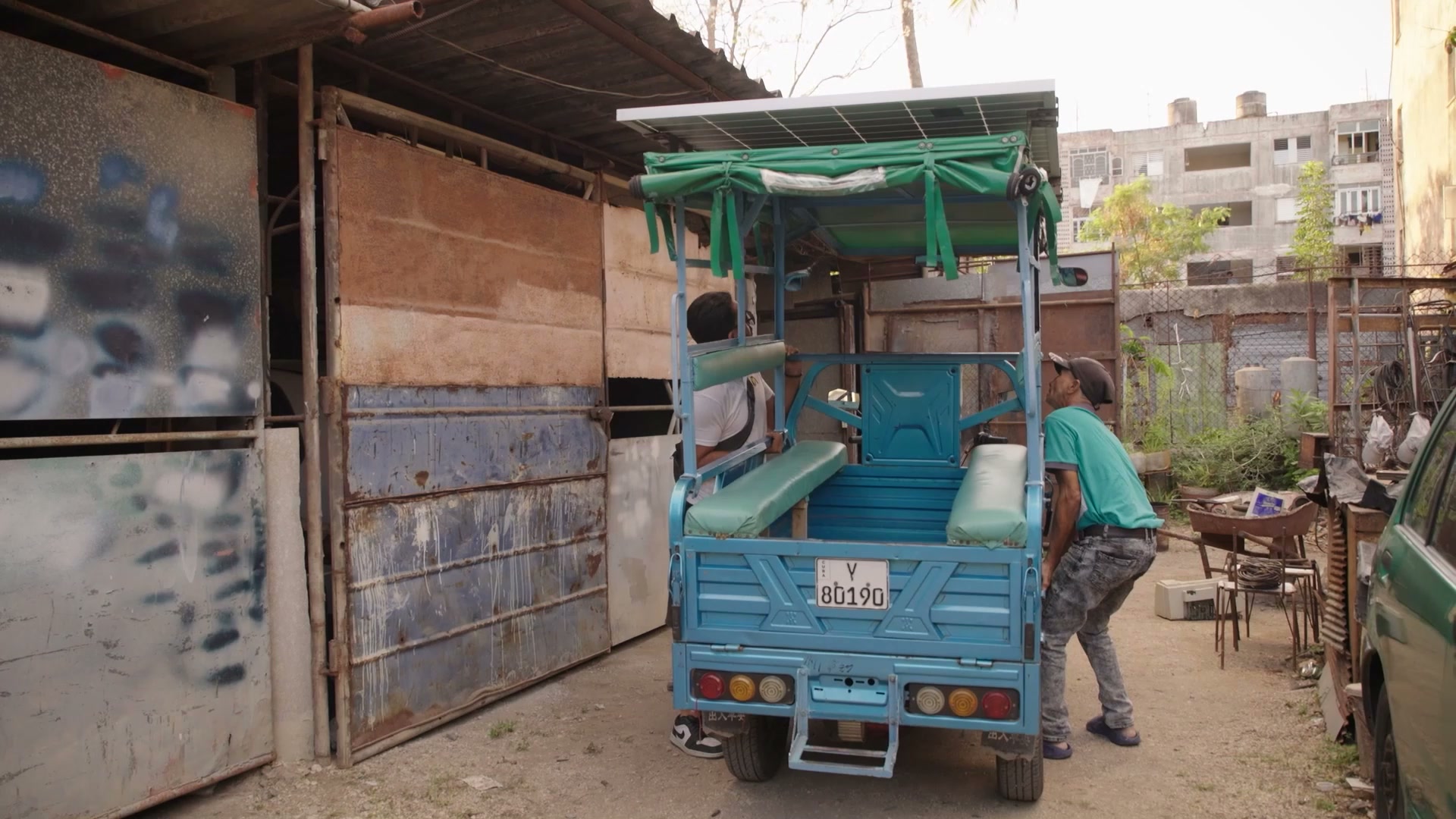
"Solar-powered tricycles have become an alternative form of transport in Havana, amid fuel shortages and failures in Cuba’s energy system. Footage recorded in Havana shows the tricycles equipped with photovoltaic panels, allowing them to operate for hours thanks to their battery autonomy, provided there is sufficient exposure to sunlight. "It allows you to work more than seven or eight continuous hours without stopping," noted tricycle driver Vladimir, adding that he is sure to “take advantage of as much sun as possible.” Drivers also explained that the efficiency of the tricycles depends not only on sunlight use, but also on speed and load management, which helps optimise performance throughout the day. "If there is downtime, you can take advantage of it and recover a bit more charge, and also without over-damaging the battery, because as long as you move at an average speed, it allows the charge to last longer, and also the number of passengers you pick up," Vladimir added. Locals already view the tricycles as an important form of public transport. "They are more like shared transport. Small collectives that help transportation," said Felix Aranda. The creators of the system said the project emerged in response to Cuba’s transport crisis and fuel shortages. "All of us initially started because of the problems that existed in the country with transport and the decline of oil," said Alexis Ruiz, an electric tricycle driver. “We did not have any.” Users also highlighted the positive impact of these vehicles on their daily lives. "I find it very beneficial because they work with solar charging, especially at times when we do not have electricity," said May, an electric tricycle user. Amid electricity limitations and fuel shortages on the island, solar tricycles have established themselves as an emerging solution that combines innovation with necessity, offering an alternative means of transport for the Cuban population."
Go to News Site