


 Axios
Axios
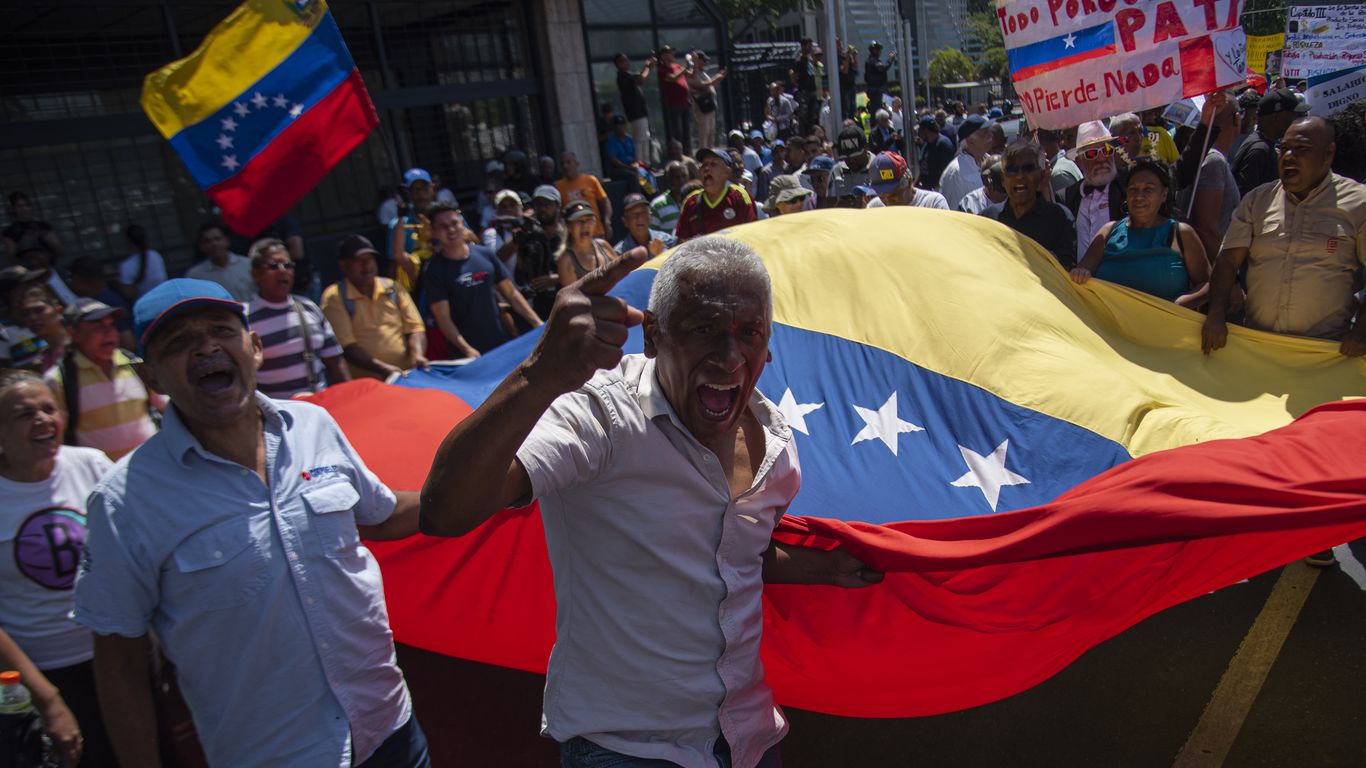
The Trump administration eased sanctions on Venezuela's state-run financial system Tuesday to try to boost the country's economy amid protests by public workers demanding higher pay. Why it matters: Venezuela's government-run bank and other large financial institutions can now begin legally using U.S. currency, directly receive billions of dollars in oil sales and reenter the U.S.-controlled global financial system to help its damaged economy. The action by the U.S. Treasury is also intended to help spur oil-sector development in Venezuela and stabilize the new government of acting president Delcy Rodriguez. Zoom in: The U.S. took control of Venezuela's oil revenue from its state-owned company after seizing socialist strongman Nicolas Maduro in a military raid Jan. 3. But since then, red tape from U.S. financial sanctions has delayed the disbursement of billions of dollars to Venezuela Central Bank, called Banco Central de Venezuela, and slowed development deals in the country. Last month, public workers angry about their wages began protesting in Caracas, the capital city. Many are paid about $160 per month, well below Venezuela's average private-sector wage of $237 a month, according to the Associated Press. Rodriguez promised last month to boost wages starting May 1, and on Monday she called on Venezuelans to demand the U.S. sanctions be lifted. Zoom out: The U.S. has steadily normalized relations with Venezuela since Maduro's ouster by lifting sanctions and strengthening economic ties through the Treasury Department's Office of Foreign Assets Control (OFAC). In February and March, OFAC granted licenses and authorizations to allow more U.S. businesses to deal directly with the state-owned oil company, Petróleos de Venezuela, S.A. Besides oil agreements, the U.S. oversaw a massive deal allowing more Venezuelan gold to be sold in the U.S, starting last month. Last month, OFAC dropped individual sanctions on Rodriguez herself. On Monday, Chevron struck an agreement with Venezuela t o expand oil production in the country. Friction point : Unable to use U.S. dollars at the central bank, Rodriguez was faced with the decision to essentially print money and cause the country's notorious inflation rates to spike, or hold the line on salaries until the sanctions were eased. "Delcy was between a rock and a hard place," one U.S. official said. "So she did the right thing and held the line. And then she got protested for it." "This action supports [President Trump's] objective to revitalize the Venezuelan economy by reintegrating Venezuelan citizens into the U.S.-led global financial system," another official said. The intrigue : The sanctions, placed on the Maduro government by the first Trump administration in 2019, were designed to cripple Venezuela's economy. But Maduro's regime turned to crypto and other financial maneuvers to avoid sanctions. That created an irony for Rodriguez when she ascended to power after Maduro's removal: She was being hurt by the same U.S. government that helped install her to normalize relations. Between the lines : Instead of lifting all sanctions, OFAC gave specific licenses to financial institutions to participate in the U.S. financial system. Those institutions are Banco Central de Venezuela; Banco de Venezuela, S.A. Banco Universal (Banco de Venezuela); Banco Digital de los Trabajadores Banco Universal C.A.; Banco del Tesoro, C.A. Banco Universal (Banco del Tesoro); or most institutions significantly controlled by the listed banks or the government of Venezuela.
Go to News Site