


 Ruptly
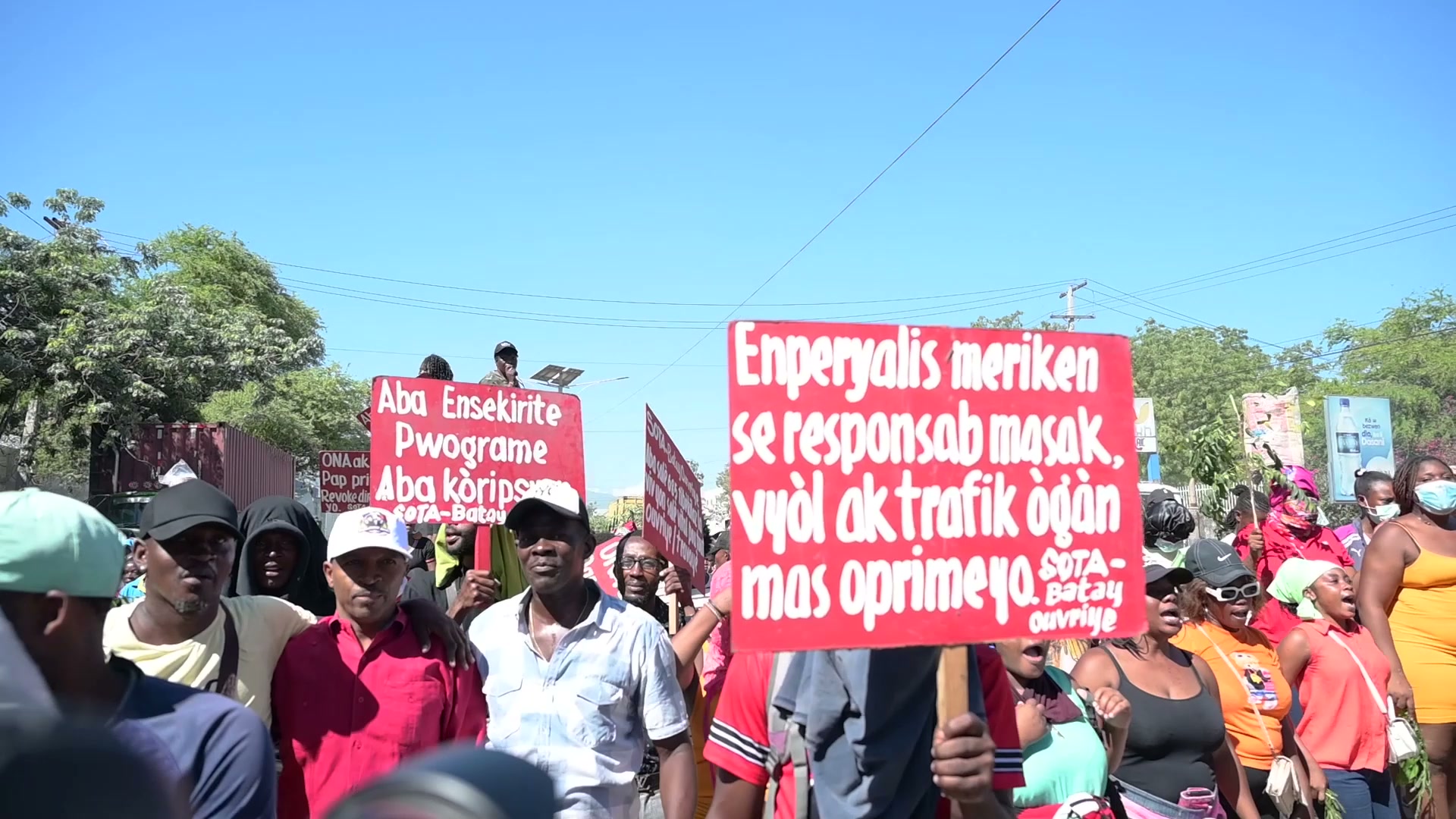
"Workers marched through the streets of Port-au-Prince on Wednesday to demand higher wages after fuel prices rose by more than 30 per cent amid shortages and soaring energy costs linked to the war in the Middle East. Footage shows protesters chanting and marching to music while holding signs. Demonstrators called for an increase in the minimum wage, saying higher gasoline prices were driving up costs across transport, agriculture, trade and other sectors. "Gasoline is a cross-cutting product, meaning that if the minimum wage is not adjusted, the price of fuel cannot increase," said Bonson Pierre, spokesperson of the Force of Socialist Organisations. "Despite rising fuel prices, our pay has never been adjusted. Today we affirm that those who work must enjoy the fruits of their labour. We are the engine of society. We are the ones who enrich the bosses," said Marie Carme Louissaint, spokesperson of the Revolutionary Workers Organisation (OTR). Several protests have taken place in the capital since last week after the government announced the fuel price increase, which took effect on April 2. Protesters said the demonstrations will continue until authorities respond. "we will return to the streets, because we cannot take this any more. We are at the limit. It is not normal that we work and produce, yet still cannot eat or send our children to school," added Louissaint. Under the measure, the price of gasoline rose from 570 gourdes a gallon ($4.36) to 725 gourdes ($5.54). Diesel increased from 620 gourdes ($4.74) to 850 gourdes ($6.50), while kerosene went up from 615 gourdes ($4.70) to 845 gourdes($6.46). Diplomatic efforts to solve Hormuz Strait blockade remain stalled following talks in Islamabad that failed to secure guarantees for long-term transit, although officials in Pakistan have indicated that a second round of negotiations could still be on the cards. International concern is growing, with no unified multinational naval mission yet established. The United Kingdom and France are expected to host discussions on a potential defensive operation aimed at restoring secure passage. The disruption is already affecting global markets, with constrained oil flows and sharp price volatility driven by fears of prolonged instability. Humanitarian agencies have warned of rising risks to food security, as delays to fertiliser, grain and bulk cargo shipments threaten to push up prices and inflationary pressures."
Go to News Site