


 Ruptly
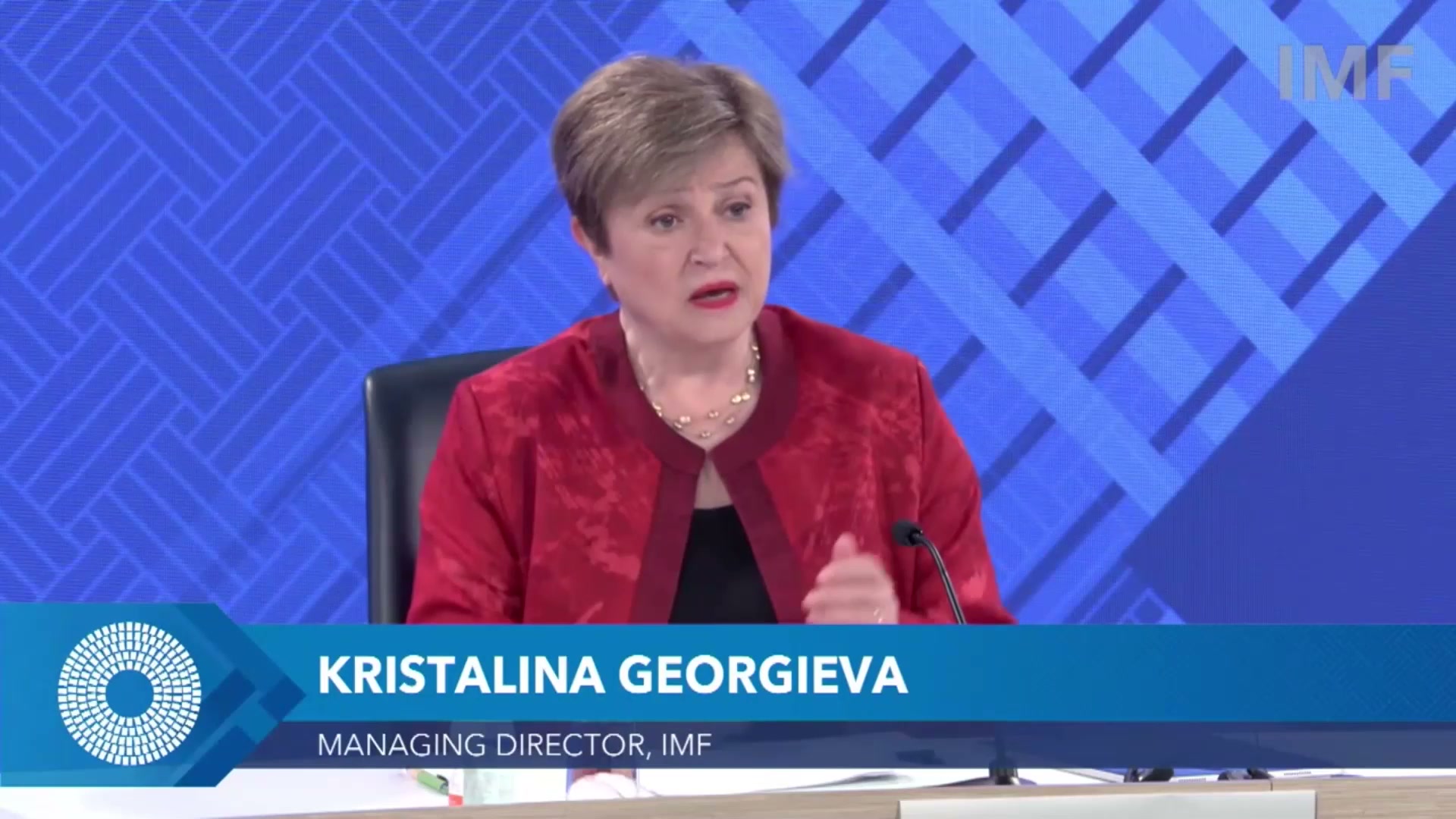
"Managing Director of the International Monetary Fund (IMF) Kristalina Georgieva has warned that the war in Iran is driving up prices and weighing on global growth, which is projected to ease from 3.4 percent last year to 3.1 percent in 2026, telling reporters in Washington DC on Wednesday that the world must "brace for tough times." "Extensive infrastructure damage and supply chain disruptions are pushing prices up and slowing global growth down from 3.4% last year to 3.1% in 2026," Georgieva said. She cautioned that a prolonged conflict in the Middle East could drag growth down further, to as low as 2 percent. “if the conflict persists and oil prices stay high for an extended period, we must brace for tough times ahead,” she said, adding, “And the shock is global.” "I want to stress what is different this time in comparison to COVID is the cumulative impact of shock upon shock," she added, noting that the ongoing crisis has pushed public debt to dangerously high levels. "Global public debt is on track to breach 100 percent of GDP in 2029, a level not seen since the aftermath of World War II." “We serve as the firefighter for our member countries, and we are committed to helping them navigate this complex landscape. We anticipate near-term demand for IMF financial support to range between $20 and $50 billion," she said, adding that the majority of sub-Saharan African countries are in a "quadrant of vulnerability." The IMF Cheif also noted that even if the war ended tomorrow, supply chains would be disrupted for weeks. "It would take 40 days [for a tanker] to get all the way to Fiji. So we need to be prepared that the impact of the supply disruptions in the weeks ahead is going to deepen," she said. She added that this could also lead to higher food prices due to a sharp increase in fertiliser costs, making low-income regions such as Sub-Saharan Africa and parts of Asia more vulnerable. The US-Israel war with Iran has disrupted supply chains due to the closure of the Strait of Hormuz, a central artery for global energy trade. Ship transits dropped from around 130 per day in February to just six in March, a decline of about 95 percent. UNCTAD says around 3.4 billion people live in countries that already spend more on servicing debt than on health or education, leaving little room to absorb new shocks."
Go to News Site