


 Daily Finland
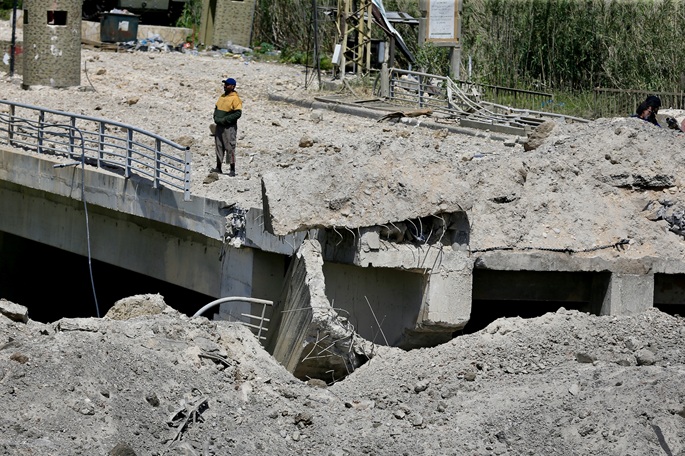
A 10-day ceasefire between Israel and Lebanon took effect at midnight between Thursday and Friday local time (2100 GMT), following an earlier announcement by U.S. President Donald Trump, reported Xinhua. The truce aims to end more than a month of deadly escalation between Israel and Hezbollah, which has claimed over 2,000 lives. In a statement, Israel's military said that it struck more than 380 Hezbollah targets in southern Lebanon over the past day, including militants, launchers and headquarters. Israel's rescue service Magen David Adom claimed that Hezbollah launched rockets into Israel during the final hours before the ceasefire went into effect, resulting in three injuries. Israeli Prime Minister Benjamin Netanyahu said in a videotaped statement that Israel will maintain a 10-km security zone in southern Lebanon during the ceasefire period. He cited security needs, rejected withdrawal, and highlighted a historic opportunity for peace between Israel and Lebanon, alongside a demand to disarm Hezbollah. Earlier, Israeli Prime Minister Benjamin Netanyahu on Thursday said that even after the ceasefire with Hezbollah takes effect, Israel will maintain a 10-km security zone in southern Lebanon. Netanyahu's videotaped statement followed U.S. President Donald Trump's announcement of a ceasefire, agreed to by Netanyahu and Lebanese President Joseph Aoun, set to take effect at 5 p.m. U.S. Eastern Time (2100 GMT). The Israeli prime minister noted that he had rejected Hezbollah's demand for an Israeli withdrawal to the international border, and that Israeli forces would remain in a security zone in Lebanon. He argued that this buffer zone would help prevent "invasions" and anti-tank fire into northern Israeli communities. Netanyahu also said, "We have an opportunity to make a historic peace agreement with Lebanon," adding that Trump intends to invite him and Aoun to advance such a deal. He claimed that this opportunity exists because Israel has fundamentally changed the balance of power in Lebanon, noting that Israel has received calls from Lebanon over the past month for direct peace talks. Meanwhile, U.S. President Donald Trump said Thursday the United States and Iran will "probably, maybe" resume in-person talks over the weekend as efforts continue to reach a deal on ending the conflict. "It's looking very good that we're going to make a deal with Iran and it's going to be a good deal, it's going to be a deal with no nuclear weapons," Trump told reporters at the White House. "We have a lot of agreement with Iran." "Iran wants to make a deal and we're dealing very nicely with them. We've got to have no nuclear weapon ... that's a big factor," Trump claimed. "And they're willing to do things today that they weren't willing to do two months ago." Meanwhile, Trump dismissed the reportedly U.S. 20-year timeline to suspend Iran's uranium enrichment. "We have a statement, very powerful statement, that they will not have, beyond 20 years, that they will not have nuclear weapons," Trump said, "There's no 20-year limit." He also claimed that Tehran has "agreed to give us back the nuclear dust that's way underground because of the attack we made with the B2 bombers," referring to Iran's enriched uranium. On Wednesday, Trump said that the U.S.-Israeli war with Iran is "very close to being over." Trump mulls visiting Pakistan if US, Iran reach peace deal U.S. President Donald Trump said Thursday he would consider visiting Pakistan if a peace deal is reached between the United States and Iran to end the weekslong conflict. "I would go to Pakistan, yeah," he told reporters at the White House. "If the deal is signed in Islamabad, I might go." He also said the two sides will "probably, maybe" resume in-person talks over the weekend. "It's looking very good that we're going to make a deal with Iran and it's going to be a good deal, it's going to be a deal with no nuclear weapons," Trump said. "We have a lot of agreement with Iran." Trump said he may not need to extend the current two-week ceasefire with Iran, which expires next week. "We're doing well, I can tell you," Trump said. "I'm not sure it needs to be extended." Meanwhile, Trump dismissed the reported U.S. 20-year timeline to suspend Iran's uranium enrichment. "We have a statement, very powerful statement, that they will not have, beyond 20 years, that they will not have nuclear weapons," Trump said. "There's no 20-year limit." The U.S. president also claimed that Tehran has "agreed to give us back the nuclear dust that's way underground because of the attack we made with the B2 bombers," referring to Iran's enriched uranium. However, Trump reiterated his threat to resume bombing if the talks fail. "If there's no deal, fighting resumes," Trump said. Israeli airstrikes destroy key bridge in Lebanon Israeli warplanes carried out two consecutive airstrikes on the Qasmiyeh Bridge over the Litani River in southern Lebanon on Thursday, completely destroying it, according to Al Jadeed TV. The bridge, part of the main coastal highway linking the city of Sidon and the Tyre area, was the last remaining passage to parts of southern Lebanon after earlier damage to nearby infrastructure. A drone had conducted a two-phase strike near the bridge before the air raids, the broadcaster reported. The destruction has severely disrupted traffic along the coastal road, a vital artery linking the southern regions to the capital of Beirut. Meanwhile, the Lebanese army evacuated a checkpoint at the bridge and closed roads leading to the area, according to the report. The strikes came amid ongoing hostilities along the Lebanon-Israel border, with continued air raids and exchanges of fire reported in recent days.
Go to News Site