


 Business Recorder
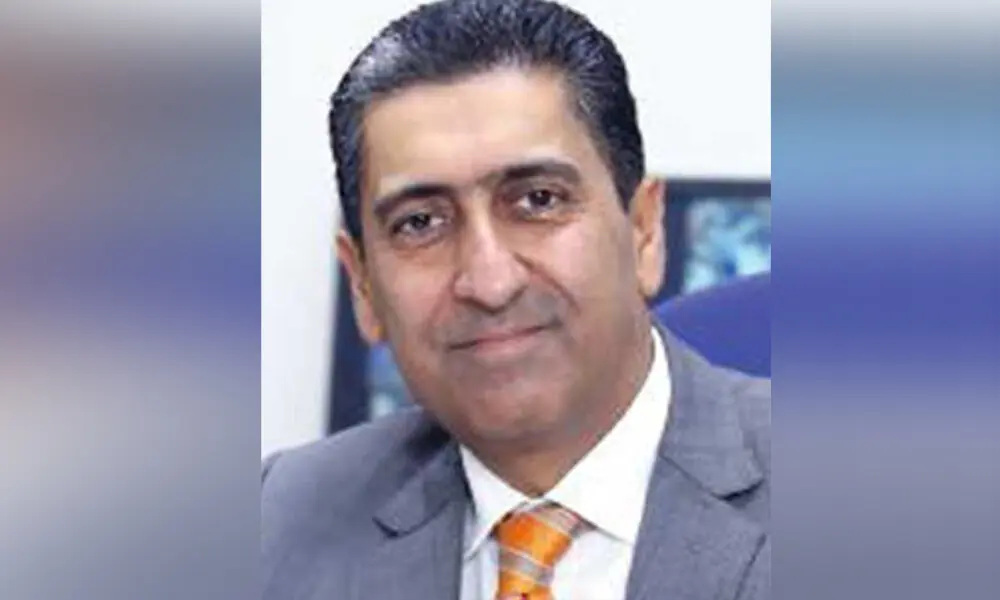
‘Levelling the playing field matters more than pricing power’ Mr. Adnan Afridi has over 30 years’ international experience in Change Management, business transformation, innovation and profitability enhancement in blue chip companies, public sector, and high growth situations. He has led a distinguished career in financial services and capital markets including serving as, Chairman and Managing Director of National Investment Trust Limited, Managing Director of the Karachi Stock Exchange, CEO, Overseas Chamber of Commerce and Industry (OICCI), CEO Tethyan Copper Company, Chairman of National Clearing Corporation of Pakistan (NCCPL) and Board of Directors of Central Depository Company (CDC). Mr. Afridi was also nominated by the Government of Pakistan as private sector nominee to the SECP Policy Board for a 4-year term that concluded in November 2022. He has served as Independent Director on the Company’s Board from June 2020 to April 2023. He is a certified Director of Corporate Governance from Pakistan Institute of Corporate Governance (PICG). BR Research recently sat down with Afridi and discussed industry dynamics, company plans and more. Below are edited excerpts of the conversation. BR Research: You have assumed leadership following a major ownership transition. How do you define your strategic priorities for Lotte Chemical at this juncture? Adnan Afridi: Our investment thesis is rooted in a long-term structural view of petrochemicals in Pakistan. For a country of over 250 million people, petrochemical consumption remains significantly below regional and global benchmarks across products such as PTA, PVC, PET, and polyester. If you look at peer economies like India, Indonesia, Thailand, and Vietnam, large-scale industrial ecosystems have been built around petrochemicals. Pakistan, by contrast, remains underpenetrated. That gap represents a compelling long-term opportunity, despite near-term challenges. This particular asset has a long history. Originally developed by ICI with an investment of around $500 million, it was among the largest foreign investments in Pakistan at the time. It later transitioned into PTA Limited and was subsequently acquired by the Lotte Group, which operated it efficiently for many years. However, as a commodity business, PTA is inherently cyclical. Over the past five years, the cycle has been particularly adverse, largely due to China’s scale-driven disruption of regional markets. Chinese producers have significantly compressed margins across the PTA value chain, not just for us but also for downstream industries. As a result, demand softened and plant utilization declined. Given that ours is a continuous process plant with a nameplate capacity of 500,000 tonnes, operating below optimal capacity raises per-unit costs and erodes profitability. Lotte’s decision to exit was part of a broader strategic withdrawal from the PTA business globally. For us, as a private equity-led consortium, this presented an opportunity to acquire a fundamentally sound asset at a cyclical low, with the potential to serve as a broader platform in petrochemicals. Our strategy rests on four key pillars. BRR: Could you walk us through these pillars in detail? AA: The first priority is operational stabilization through higher utilization. Increasing production is critical to lowering variable costs and restoring efficiency. A key development here has been the imposition of a provisional anti-dumping duty on Chinese PTA imports earlier this year, following detailed engagement with the National Tariff Commission. This should help restore a more level playing field and enable us to recover market share. At the same time, we are deepening engagement with our core customers. This is a concentrated B2B market, and our growth is directly linked to the health of downstream industries. A more collaborative approach is essential to drive mutual expansion. The second pillar is energy cost optimization, which is central to our margin recovery. Energy constitutes a significant portion of our conversion cost from paraxylene to PTA. We have implemented a multi-pronged strategy: transitioning to grid power, investing in solar capacity, deploying battery energy storage systems, and undertaking process-level efficiency improvements such as azeotropic distillation, which allows us to recover energy from waste heat. Taken together, these initiatives are expected to reduce our energy costs by approximately 40 percent. Encouragingly, we have already achieved about half of this reduction within a few months of taking over, and the remainder should materialize over the next year. The third pillar is fixed cost rationalization. In a downcycle, it is essential to operate with a lean cost structure. We are currently reviewing and restructuring key contracts across logistics, labour, and operations, targeting a 25 to 30 percent reduction in fixed costs. The fourth pillar, and perhaps the most strategic, is diversification and platform expansion. With a deleveraged balance sheet and strong cash flow characteristics, the company is well-positioned to function as an acquisition vehicle within the petrochemicals space. BRR: This ties into your proposed acquisition of Engro Polymer and Chemicals Limited. What is the strategic rationale behind this transaction? AA: The strategic fit is compelling on multiple levels. From a demand perspective, EPCL operates in the PVC segment, which is intricately linked to construction activity. While the sector has been subdued in recent years, we expect a cyclical recovery. Additionally, EPCL produces caustic soda, which has export potential, particularly in a lower energy cost environment. However, the most immediate and tangible synergy lies in energy. EPCL currently relies on captive gas, which has become significantly more expensive. In contrast, we have access to grid connectivity at Port Qasim. Integrating the two entities would allow us to extend this advantage to EPCL, resulting in estimated annual savings of Rs6 to 8 billion. This alone has the potential to materially improve its profitability. Importantly, the two businesses are not strongly correlated from a cycle perspective, which introduces natural diversification. Beyond that, there are operational synergies in areas such as supply chain, overheads, and management. BRR: Energy appears to be a central variable in your business model. How material is its impact on your cost structure? AA: Rather than express it as a static percentage, it is more useful to quantify the impact in unit terms. Our energy optimization initiatives are expected to reduce conversion costs by approximately $40 per tonne. At full capacity, which translates into roughly $20 million in annual cost savings. Roughly half of this benefit comes from the shift to grid power, with the remainder driven by process improvements and efficiency measures. BRR: How do you assess current PTA demand dynamics, particularly across textiles and packaging? AA: PTA demand is primarily driven by two segments: polyester and PET, both of which have been under pressure. Polyester has been more severely impacted due to rising imports of finished products, including yarn and fabric. Domestic producers such as Lucky Core and Ibrahim Fibres are operating well below capacity, which directly affects upstream demand for PTA. PET demand is relatively more stable but remains highly price sensitive. While 2025 saw some disruption due to consumer boycotts affecting major beverage players, the situation has improved somewhat in 2026. However, competitive intensity and import pressures continue to weigh on margins. Another emerging factor is material efficiency. Manufacturers are increasingly reducing resin usage per unit, which structurally dampens demand growth for PTA. PTA demand is primarily driven by two segments: polyester and PET, both of which have been under pressure. Polyester has been more severely impacted due to rising imports of finished products, including yarn and fabric. Domestic producers such as Lucky Core and Ibrahim Fibres are operating well below capacity, which directly affects upstream demand for PTA. PET demand is relatively more stable but remains highly price sensitive. While 2025 saw some disruption due to consumer boycotts affecting major beverage players, the situation has improved somewhat in 2026. However, competitive intensity and import pressures continue to weigh on margins. Another emerging factor is material efficiency. Manufacturers are increasingly reducing resin usage per unit, which structurally dampens demand growth for PTA. BRR: Anti-dumping measures have been discussed for years. What changed this time? AA: The difference was in execution. While concerns around dumping have existed for a long time, a rigorous, data-driven case had not been fully developed. We undertook a detailed nine- to ten-month process, collaborating with external consultants and internal teams to compile and present evidence to the National Tariff Commission. This resulted in the imposition of a 9.5 percent anti-dumping duty. Our objective was not to increase prices, but to ensure fair competition. We have maintained pricing discipline and continue to align closely with customer dynamics. BRR: How do you see the broader macroeconomic environment shaping your outlook? AA: Prior to the recent geopolitical disruptions, the macroeconomic trajectory was broadly supportive. We were seeing signs of a stable exchange rate, improving external balances, and a gradual easing in interest rates. This would have supported construction activity and downstream demand. In the near term, recent developments may delay this recovery, particularly if interest rates remain elevated. However, our investment horizon is long term. A delay of a few quarters does not fundamentally alter the business case. BRR: What are your capital allocation priorities over the medium term? AA: Over the next 18 months, our focus remains on executing the ongoing optimization projects, with planned capital expenditure of approximately Rs5 billion. Beyond that, capital allocation will depend on the successful completion of the EPCL transaction and the subsequent integration strategy. BRR: Finally, how do you view the evolution of private equity participation in Pakistan through transactions such as this? AA: This transaction is a good illustration of how private equity can operate in Pakistan. The ownership and management functions are clearly delineated. The investment consortium provides strategic direction and capital, while execution is driven by an independent management team operating against defined performance metrics. This model, which is well established in more developed markets, is still relatively nascent in Pakistan. Over time, it can play a meaningful role in improving capital allocation efficiency and operational performance across sectors.
Go to News Site