


 Business Recorder
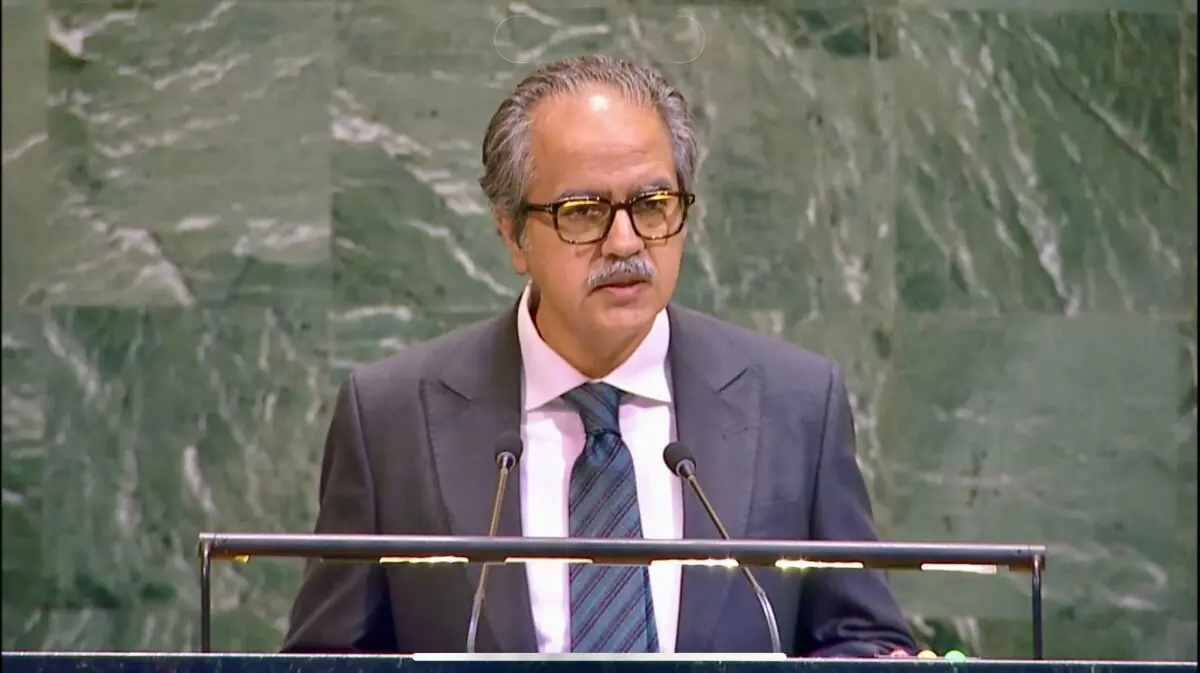
Pakistan has called for ensuring the security of ships and crew members in the Strait of Hormuz, urging the international community to guarantee the swift and safe passage of civilian vessels and restore normal maritime traffic through the Strait of Hormuz. At the General Assembly Veto Debate on the Strait of Hormuz, Ambassador Asim Iftikhar Ahmad stressed that the Middle East conflict had had far-reaching repercussions, impacting the entire region and extending well beyond it. “Pakistan’s clear and unequivocal position on the situation in the Middle East has been expressed in the Security Council and elsewhere. Pakistan remains deeply concerned at the developments over the past weeks in the region. This conflict, whose consequences have impacted everyone in the region, and beyond, should never have happened,” he said. From the outset, Ahmad said, Pakistan prioritised de-escalation, cessation of hostilities, and return to dialogue for a peaceful diplomatic solution to the crisis. “Pakistan successfully hosted the Islamabad Talks on 11-12 April. These talks were made possible by Pakistan’s engagement with the parties, as well as outreach efforts aimed at promoting immediate cessation of hostilities and achieving peace and stability in the region. Through the Islamabad Process, Pakistan is pursuing the objective of ending the war and ensuring long-term peace. “Pakistan supports the sovereignty, territorial integrity, political independence and security of all brotherly countries in the region. Pakistan has also expressed continued and unwavering support and complete solidarity with the fraternal GCC countries in these challenging times,” he said. The development comes as US President Donald Trump said Thursday that the United States and Iran were “very close” to a peace deal and that he would consider going to Pakistan to sign an agreement. Speaking to reporters at the White House, Trump added that Tehran had agreed to hand over its store of enriched uranium, as the two countries mull further talks in Islamabad. “We’re very close to making a deal with Iran,” Trump said as he left to board his helicopter for a trip to Las Vegas. “We had to make sure that Iran never gets a nuclear weapon… They’ve totally agreed to that. They’ve agreed to almost everything, so maybe if they can get to the table, there’s a difference.” Asked if he might travel to Pakistan to sign an agreement, Trump added: “I might go, yeah. If the deal is signed in Islamabad, I might go.” During his speech at the UN, Pakistan ambassador said Strait of Hormuz is an important international shipping route for goods and energy; and called for the security of ships and crew members, and the swift and safe passage of civilian ships, and restoration of normal passage through the Strait. “The situation in the Strait of Hormuz is adversely impacting countries around the world including Pakistan. The consequences for regional and global economy are evidently harsh. Pakistanis are also suffering. The impact is felt not only in terms of energy flows but also fertilizers and other essential commodities thus affecting food security, cost of living and squeezing the livelihood of the most vulnerable. “IMF has warned of serious risks, raising alarms about the rise in public debt, as countries around the world respond to the energy crisis. This was a headline on the front page of today’s New York Times . Interestingly another headline on the same page referred to the stock market scaling a new peak reflecting optimism that peace was near. This is just one perspective outside these halls as the international community follows this crisis. “The options are therefore clear. If the military escalation and disruptions persist, the suffering will prolong and extend far beyond the region, translating into widespread economic hardship. Return to peace on the other hand will benefit all,” he said. The ongoing Iran war, which began on February 28, 2026 following US and Israeli airstrikes on Iranian targets, has rapidly escalated into a wider regional crisis, disrupting critical shipping lanes, halting energy flows through the Strait of Hormuz, and sending shockwaves across global trade and financial markets. As hostilities intensified, Iran moved to restrict maritime traffic and target vessels, prompting a sharp decline in shipping activity and raising concerns over energy security, supply chains, and economic stability far beyond the Middle East. “We agree on the urgency of the situation and the fundamental objective of re-opening of the Strait of Hormuz and normalisation of the situation at the earliest. This is an important issue not only for the GCC countries but also for all other States in the region and beyond, including Pakistan. It is also logical that any discussion or arrangement related to the Strait of Hormuz will have to take into account the legitimate interests of the GCC countries. “We are grateful and humbled that Pakistan has been recognised for its constructive diplomatic engagement in supporting de-escalation, ceasefire efforts, and the broader pursuit of stability between the United States and Iran. Through sustained interaction at the leadership level with both Washington and Tehran, as well as with other partners in the region and beyond, notably Saudi Arabia, Egypt and Türkiye, and China and others, Islamabad has sought to encourage dialogue, facilitate the exchange of messages, and help create conditions and space conducive to meaningful negotiations,” the ambassador said. “Pakistan remains committed to continue playing its constructive role in promoting dialogue, fostering understanding, and supporting all efforts aimed at achieving lasting peace in the region,” Ahmad maintained.
Go to News Site