


 Axios
Axios
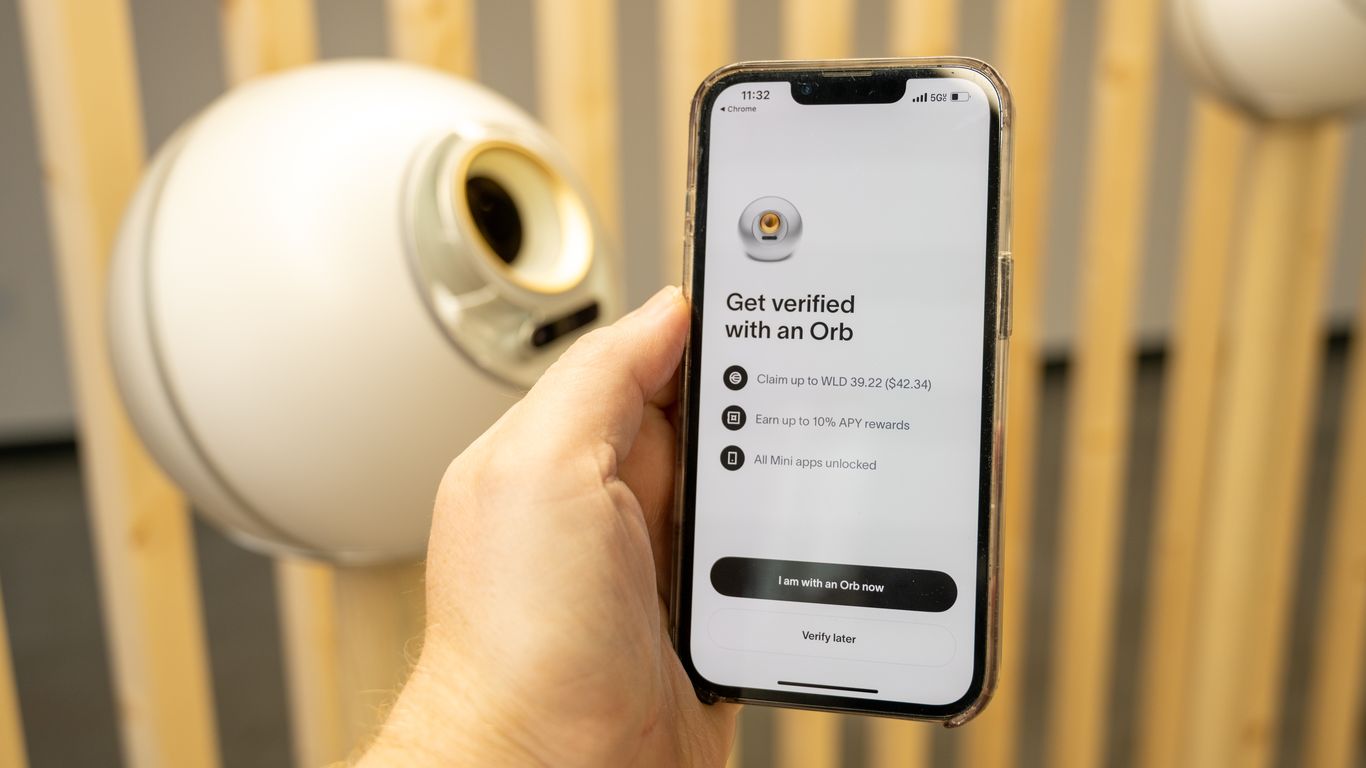
A company co-founded by OpenAI's Sam Altman and known for its iris-scanning orbs announced new and expanded integrations on Friday with companies including Zoom, DocuSign, Tinder, Okta, Shopify and VanEck as it looks to grow its user base. Why it matters: World , formerly known as Worldcoin , has struggled to convince everyday internet users to sign up for its identity verification system. But as AI agents proliferate, companies are increasingly looking for ways to verify not just who users are, but whether a real human is behind an online interaction at all . Driving the news: World upgraded the protocol behind its identity tool, World ID, and is open-sourcing it so any app can integrate it as an authentication layer. The company is also launching a standalone World ID app, where users can store credentials and use them to log into other services. Between the lines: The announcement bundles together a range of previously introduced ideas — from AI agent verification tools to non-biometric sign-in options — as World tries to push its technology into more mainstream use. World argues that verifying humans is becoming more urgent as AI companies roll out new agents and work towards AGI — making it harder to distinguish AI from real people. "When anything can be fake, you don't know who and what to trust," Tiago Sada, chief product officer at Tools for Humanity, which develops World, told Axios. How it works: World ID is designed to function more like a CAPTCHA replacement than a traditional identity system, Sada said. The protocol has three-tiers for how users can validate their identities: taking a selfie, submitting an official government-issued ID, and going in-person to an "orb" to scan your iris. Each company that uses World ID to verify someone's "humanness" decides which level of verification they require. Zoom in: World is now leaning on partnerships to drive adoption. Zoom plans to integrate World ID to help verify participants on video calls and guard against deepfake impersonation. DocuSign is testing World ID as a way to confirm that a real human — not a bot or compromised account — is behind a digital signature. Okta and Vercel are working with World on tools to verify that a real human approved certain actions taken by AI systems. Tinder is expanding a previous pilot in Japan to the U.S., allowing users to verify that a real person is behind a profile. VanEck is testing an in-office "orb" for employee verification. World is also launching a "Concert Kit" tool designed to help artists reserve tickets for verified humans and cut down on bot-driven ticket scalping. By the numbers : About 17.9 million people have signed up for World ID globally, according to the company . The Wall Street Journal reported last month that roughly 1.1 million of those users are in North America. Yes, but : Analysts have called the program "problematic on many levels," due to the security and governance concerns. What to watch : World will soon expand the number of "orbs" available in San Francisco, New York City and Los Angeles so most people in those cities are within about 5-10 minutes from one, Sada said. World also plans to bring its "orb-on-demand" service to San Francisco after piloting it in Argentina last year, Sada added. Go deeper : New cybersecurity risk: AI agents going rogue
Go to News Site