


 Dawn Business
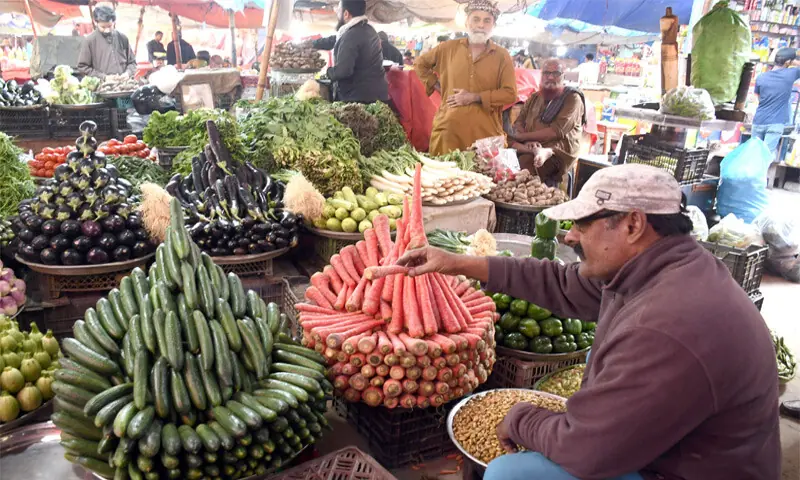
ISLAMABAD: Short-term inflation, measured by the Sensitive Price Index (SPI), rose 12.16 per cent year on year in the week ending April 16, driven largely by higher retail prices of petroleum products and perishable food items, according to official data released on Friday. The surge in fuel prices pushed transport costs to unprecedented levels, affecting both perishable and non-perishable goods and raising production costs for manufacturers, which were ultimately passed on to consumers. Although petrol prices saw a slight reduction and diesel rates registered a sharp cut, overall fuel costs remain significantly elevated compared to pre-conflict levels in the Middle East. Prices of both food and non-food items showed no meaningful easing during the week under review. The SPI has now increased for the 36th consecutive week, though the pace of rise has slowed, indicating persistent pressure on household budgets. On a week-on-week basis, however, the index declined by 0.69pc compared to the previous week, the Pakistan Bureau of Statistics said. The conflict in the Middle East has deepened short-term inflationary pressures by disrupting supplies of essential commodities, particularly petroleum products. The inflation outlook will now hinge on the outcome of the expected deal between the United States and Iran in the coming week. Weekly inflation peaked at a historic high of 48.35 per cent YoY in early May 2023. It subsequently moderated in the following years. The latest movements in sugar, edible oil, pulses, and meat prices suggest that volatility in essential food commodities continues to shape short-term inflation trends, with consumers facing recurring price spikes. The items, whose prices increased the most over the previous week included tomatoes (6.27pc), bread (3.27pc), eggs (2.09pc), milk fresh (1.15pc), lawn printed (1.06pc), washing soap (0.66pc), long cloth (0.52pc), curd (0.46pc), shirting and mutton (0.21pc) each, powdered milk (0.16pc) and vegetable ghee 2.5 kg (0.07pc). The items whose prices saw a decline week-on-week included diesel (25.77pc), chicken (10.07pc), onions (6.63pc), LPG (4.15pc), wheat flour (3.34pc), petrol (3.10pc), bananas (2.78pc), garlic (1.29pc), mustard oil (0.80pc), pulse mash (0.74pc), firewood (0.58pc) and potatoes (0.56pc). However, on an annual basis, the items whose prices increased the most tomatoes (69.35pc), LPG (60.40pc), diesel (49.22pc), petrol (44.10pc), onions (42.67pc), gas charges for Q1 (29.85pc), wheat flour (28.80pc), chillies powder (15.20pc), mutton (14.67pc), beef (13.27pc), powdered milk (10.41pc) and garlic (9.51pc). In contrast, the prices of potatoes dropped 45.43pc, followed by pulse gram (20pc), salt powder (12.78pc), sugar (11.65pc), pulse masoor (11.63pc), chicken (8.69pc) and pulse moong (1.87pc). The index, comprising 51 items collected from 50 markets in 17 cities, is calculated weekly to assess the prices of essential commodities and services at shorter intervals. Data showed that the prices of 17 items increased, 17 decreased, and 17 remained unchanged compared with the previous week. Published in Dawn, April 18th, 2026
Go to News Site