


 Ruptly
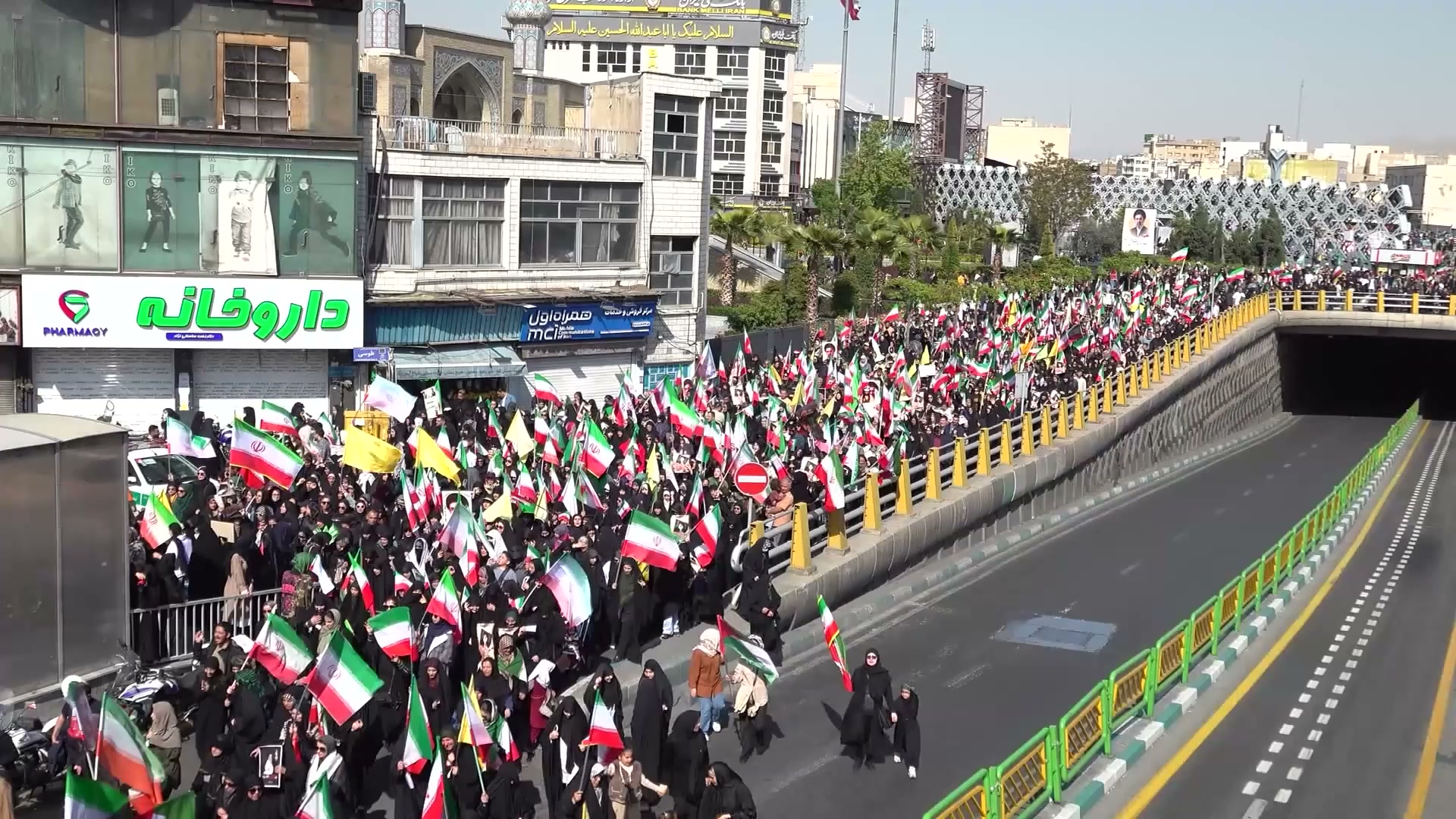
"Thousands of Iranian women took to the streets in Tehran to take part in the 'Sacrifice for Iran' campaign and to show their support for the new Supreme Leader Mojtaba Khamenei. Footage filmed on Friday shows protesters holding Iranian flags, while other scenes show young girls riding bicycles and forming a circle. "This time is different from all the protests and marches. We want to tell America, Israel, and all the mercenaries of the world: you want to bring 2,000 troops. Don't you see the population? Will your 2,000 troops really withstand this nation? If we each just breathe, we will blow you all away with a single 'ha'," stated Marzieh Mahboubi, a Tehran resident. "We have come to say that it is not just our men; it is us too. They killed our children in Minab; the youngest of them was martyred. We women will not sit idly by. We feel for those mothers whose youths and children have been killed. We are here too. It is not just our men," stated Kayvan, another participant. According to Iranian media, a large gathering of Iran's self-sacrificing daughters was held in Tehran, with the procession setting off from Imam Hussein Square and proceeding to the Wali al-Asr junction. Iranian President Masoud Pezeshkian posted on the X platform on April 7, prior to the ceasefire agreement with the United States, saying, "More than 14 million proud Iranians have, to this moment, declared their readiness to sacrifice their lives in defence of Iran. I, too, was, am, and will remain among those willing to sacrifice for Iran." Following the joint military operation launched by the US and Israel against Iran on February 28, Tehran subsequently announced the death of Supreme Leader Ali Khamenei and appointed his son, Mojtaba Khamenei, as his successor. Tensions in the Middle East escalated following these operations, with Tehran responding by launching strikes targeting Israel and US military sites in the region. The clashes extended to include Hezbollah in Lebanon after it announced its intervention in the war as 'revenge' for the Iranian leader. Shipping routes in the region, including the Strait of Hormuz, were left vulnerable following its closure. On April 8, the US and Iran reached a conditional ceasefire agreement for two weeks, followed by talks in Islamabad mediated by Pakistan, though these have not yet led to a final agreement between the two sides. Iranian Foreign Minister Abbas Araghchi announced on Friday that the Strait of Hormuz 'is now fully open', and US President Donald Trump welcomed the move, noting that an agreement with Tehran became close."
Go to News Site