


 Ruptly
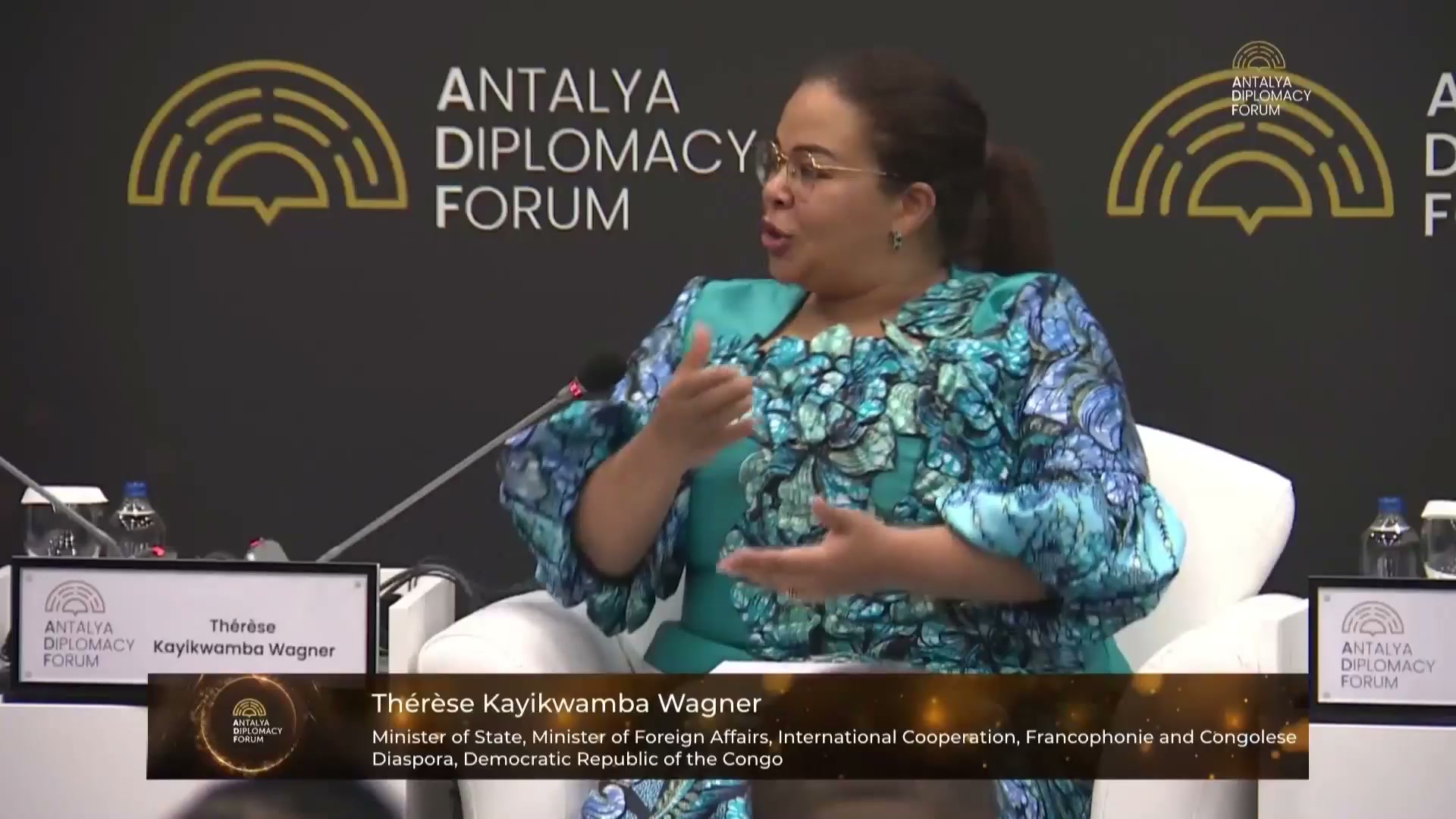
"Global South diplomats warned that rising geopolitical competition was turning strategic resources into tools of influence rather than shared development assets, demanding a fair economic framework taking into account the interests of producing countries, at the Antalya Diplomacy Forum on Saturday. "We do need, as a global community, an architecture that creates more space, more voice, more agency for stakeholders that for a long time have been excluded from these conversations," Democratic Republic of Congo's Foreign Minister Therese Kayikwamba Wagner said. "Tt's about seeing how do we create more space, how do we make the pie bigger, and not how do we all fight one another to have a seat at the table. Because then you end up with a very wobbly seat, and that's not what we want," Wagner added. Botswana’s Minister of International Relations Phenyo Butale highlighted that export controls, strategic stockpiling and exclusive supply agreements increasingly shaped global markets, adding that “critical minerals have become instruments of strategic influence.” Bolivia’s Foreign Minister Fernando Aramayo said critical minerals now represent 'a platform of structural power,' comparing their importance in the 21st century to oil in the previous century. “When we speak about critical minerals today, we must ask… critical for whom?” South Africa’s Deputy Foreign Minister Alvin Botes wondered, suggesting current structures risk reinforcing unequal economic pathways. The debate comes as global demand for critical minerals accelerates, driven by the energy transition and high-tech industries. According to the International Energy Agency, demand for lithium could grow by more than 40 times by 2040, while cobalt demand is projected to increase six to sevenfold and nickel roughly double."
Go to News Site