


 Business Recorder
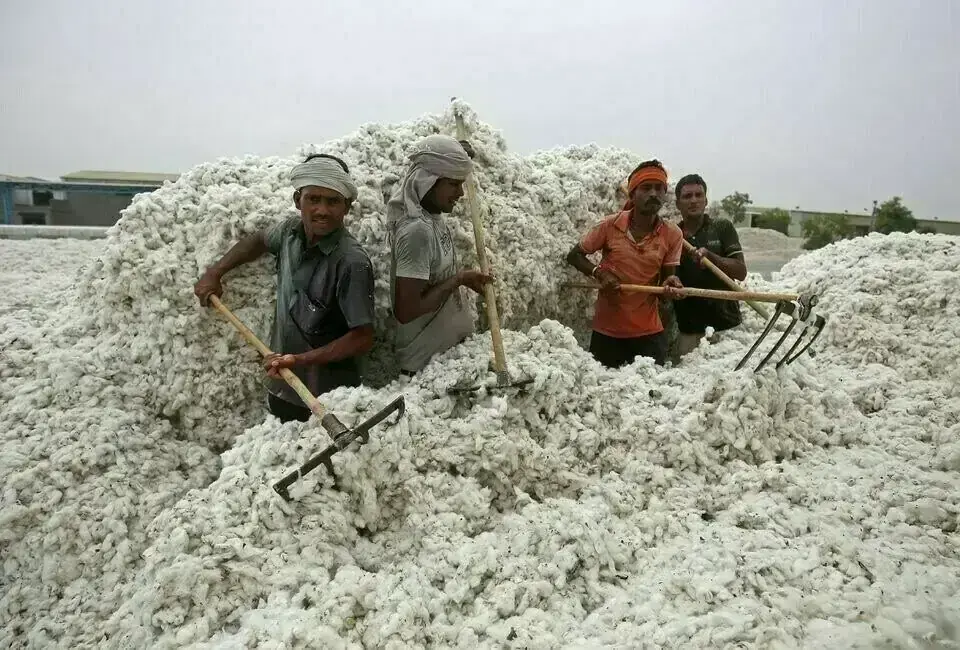
KARACHI: Pakistan’s cotton market witnessed a significant price surge this week, with rates for standard quality cotton rising by Rs1,000 to Rs1,500 per maund, although overall trading activity remained subdued. On the international front, New York Cotton futures also posted gains, with contract prices surpassing the psychological threshold of 80 US cents, reaching their highest level in 22 months. The Federal Committee on Agriculture has set a cotton production target of 9.64 million bales for the 2026-27 season, which are 1.46 million bales lower than the previous year’s target of 11.1 million bales. Meanwhile, the Central Cotton Research Institute (CCRI) has issued fresh guidelines to help farmers achieve higher cotton yields in the upcoming season. At an important conference held at Sindh Agriculture University, experts described Pakistan’s cotton crisis as severe and called for the formulation of a unified national strategy to address it. Syed Nadeem Shah, Senior Vice President of the Sindh Abadgar Board, identified substandard seeds, climate change, imbalanced use of fertilisers, and ineffective pesticides as the primary causes of farmers’ financial distress. He also criticised the persistent absence of stable agricultural policies and reliable agricultural data, and proposed the formation of a Breeders Advisory Board comprising retired agricultural experts. The All Pakistan Textile Mills Association (APTMA) has demanded a reduction in scanning charges levied on imported cargo. In a separate development, the Karachi Cotton Exchange building has remained sealed since December 12, 2025, following an action by the Evacuee Trust Property Board (ETPB) with the assistance of the Federal Investigation Agency (FIA). As a result, the daily cotton spot rate a critical market benchmark has not been issued, leaving the market in a state of continued uncertainty. The local cotton market witnessed a significant rise in quality cotton prices during the past week, with rates climbing by Rs1,000 to Rs1,500 per maund. Industry observers attribute this sharp increase to two primary factors. First, domestic cotton stocks have nearly been exhausted across the country. Second, escalating tensions in the Middle East have triggered a substantial surge in international cotton prices, with New York cotton futures rising by 6 to 7 US cents per pound. The government has set an ambitious production target of 9.64 million bales of cotton from 2.1 million hectares of cultivated area during the upcoming Kharif season 2026-27. This target comes at a time when Pakistan is grappling with a serious cotton crisis, largely attributed to the government’s disproportionate focus on industrial sectors while the concerns of farmers continue to be overlooked. The country produced only 5.67 million bales during 2025-26, a figure that stands in stark contrast to the record high of 15 million bales achieved in 2014-15, underscoring the severe decline the sector has endured over the past decade. The Federal Committee on Agriculture (FCA), established to oversee strategic measures aimed at ensuring food security, held its meeting on Tuesday under the chairmanship of Federal Minister for National Food Security and Research, Rana Tanveer Hussain. On the international front, ICE cotton futures surged to their highest level in more than 22 months, buoyed by rising crude oil prices and a weakening US dollar. Drought conditions prevailing across key cotton-growing regions in the United States further supported the fiber’s upward price trajectory, adding momentum to an already bullish global cotton market. The Karachi Cotton Exchange building has been sealed by the Evacuee Trust Property Board (ETPB) with the assistance of the Federal Investigation Agency (FIA) since December 12, 2025, as a result of which the critically important Daily Cotton Spot Rate has not been able to be officially issued. In the provinces of Sindh and Punjab, cotton is currently being traded at prices ranging from Rs. 17,000 to Rs. 21,500 per maund, depending on quality and payment conditions. Karachi Cotton Brokers Forum Chairman Naseem Usman reported a significant rise in international cotton prices, with New York cotton futures trading between 76 and 80 US cents per pound. According to the USDA weekly export and sales report, total cotton sales for the marketing year 2025-26 reached 161,100 bales. Vietnam led all buyers by purchasing 62,100 bales, followed by Turkey in second place with 49,000 bales, while Pakistan ranked third with purchases of 32,900 bales. For the 2026-27 marketing year, forward sales stood at 26,900 bales, with Vietnam accounting for 20,700 bales and Portugal purchasing the remaining 6,200 bales. On the export side, total shipments amounted to 305,000 bales. Vietnam topped the list of importing nations by receiving 110,400 bales, with Pakistan coming in second at 35,900 bales and Turkey in third place with imports of 31,900 bales. Leading national and international experts, policymakers and progressive growers on Tuesday voiced serious concern over the persistent decline in cotton production in Pakistan, urging a coordinated, multi-stakeholder strategy to revive the crop — once regarded as the backbone of the country’s agrarian economy. They were speaking at the opening session of Two-day international conference titled “Cotton Seed Production and Development: Issues and Solutions,” organised by the Department of Plant Breeding and Genetics at Sindh Agriculture University (SAU) Tandojam, with support from the Higher Education Commission (HEC), Islamabad. Participants emphasised the need for a robust, collaborative platform bringing together public-sector research and academic institutions, private seed companies and policymakers to tackle the multifaceted challenges facing the cotton sector. Experts attributed the continued decline to climate change, rising temperatures, limited technological innovation in seed development, escalating input costs, volatile market prices and increasing fuel costs. They warned that without farmer-friendly policies and timely interventions, the situation could deteriorate further. In his presidential address, SAU Vice Chancellor Engr. Prof Dr Altaf Ali Siyal described cotton as a strategic crop, contributing around one per cent to the national GDP and about five per cent to agricultural value addition, while supporting millions of livelihoods. He noted with concern that the area under cotton cultivation had shrunk from around three million hectares to nearly 2–2.2 million hectares over the past decade, with yields either stagnating or declining due to pest attacks, climate stress and poor-quality seed. Dr Siyal highlighted key challenges including the absence of certified and traceable seed systems, increasing pest pressure, climate variability and weak linkages between research and extension services. “Addressing these challenges requires a convergence of science, policy and practice,” he said, adding that the university had developed two cotton varieties and would continue contributing through research, innovation and partnerships. Director of the Nuclear Institute of Agriculture (NIA) Tandojam, Dr Mahboob Ali Sial, underscored the challenge of developing certified, climate-resilient seed, noting that Pakistan ranked among the most climate-vulnerable countries. He said research institutions and plant breeders had a critical role to play, adding that his institute was working on improved seed varieties for 41 crops. Senior Vice President of the Sindh Abadgar Board, Syed Nadeem Shah, pointed to multiple constraints — including substandard seed, climate change, imbalanced fertiliser use and ineffective pesticides — which, he said, were pushing farmers towards financial distress. He criticised the lack of consistent policies and reliable agricultural data, and proposed the formation of a breeders’ advisory board comprising retired experts. Chinese expert Wang Xin Chen said his team was collaborating with Pakistan’s private sector and research institutions to develop improved seed varieties for cotton and other crops, ensuring better access for farmers. Representing the International Center for Cotton Development & Sustainability (ICCDS), Senior Advisor Shahid Mansoor said that Sindh’s per-acre cotton yield remained higher than Punjab’s and urged agricultural graduates to focus on developing new crop varieties. Private sector representative Tariq Khanzada observed that while global cotton research had advanced to multi-gene technologies, Pakistan was still struggling with single-gene progress. “Without adopting modern technologies, cotton will continue to decline, and farmers will shift to alternative crops,” he warned. Earlier, conference secretary Prof Dr Shah Nawaz Mari, principal organiser Dr Wajid Ali Jatoi, Dr Shabana Memon and Dr Tanweer Fatah Abro also addressed the participants, while experts from various countries and institutions across Pakistan participated in the conference both physically and virtually, presenting their research papers during the technical sessions. Among those present were Chinese expert Mr Zhong Weisheng, Dean Faculty of Crop Production Prof Dr Inayatullah Rajper, Head of Rural Banking at United Bank Limited Syed Arif Ali Shah, noted agricultural expert Karam Khan Kaleri, and representatives from academia, industry and farming communities. Later, the vice chancellor, along with distinguished guests, inaugurated an agricultural exhibition featuring stalls from public and private organisations, followed by technical sessions. A large number of scientists, industry representatives, breeders, progressive farmers and students attended the conference. The All Pakistan Textile Mills Association (APTMA) has called on the authorities to reduce scanning charges on import containers used by export-oriented industries, stressing that such a measure is critical to sustaining Pakistan’s fragile export momentum amid rising production costs and persistent supply-side challenges. In a letter addressed to the Project Director of the Automated Exit and Entry System (AEES) at the Collectorate of Customs Appraisement (West), Customs House Karachi, APTMA Secretary General Raza Baqir cited Pakistan Customs’ notification dated April 4, 2026, under which scanning charges on export containers had been reduced. The association welcomed the decision, describing it as a timely intervention, particularly given that port congestion a factor largely beyond the control of exporters continues to disrupt supply chains. However, APTMA emphasized that similar relief must be extended to the import consignments of export-oriented units, which primarily consist of raw materials brought in on a temporary basis for the manufacture of exportable goods. The association noted that reducing scanning charges on such imports would directly lower input costs and ease the financial burden on exporters. The demand has come at a time when Pakistan’s textile sector is grappling with a range of difficulties. Industry players have identified high energy tariffs, expensive financing, currency volatility, and delays in the refund of duties and taxes as key factors undermining their competitiveness. These pressures have been further compounded by recent disruptions in global supply chains and a softening of demand in major export markets, which have squeezed margins considerably. Stakeholders argue that reducing port-related charges could provide immediate and tangible relief. With the overall cost of doing business rising across the board, even incremental savings on logistics and compliance expenditures could help Pakistani exporters remain competitive against regional rivals such as Bangladesh, Vietnam, and India. Exporters have also raised concerns that delays and additional costs at ports not only lengthen delivery timelines but also undermine Pakistan’s credibility as a reliable supplier in international markets. Against this backdrop, APTMA’s proposal is being viewed as part of a broader push for trade facilitation reforms aimed at improving operational efficiency and reducing transaction costs across the export supply chain. Copyright Business Recorder, 2026
Go to News Site