


 Forbes India
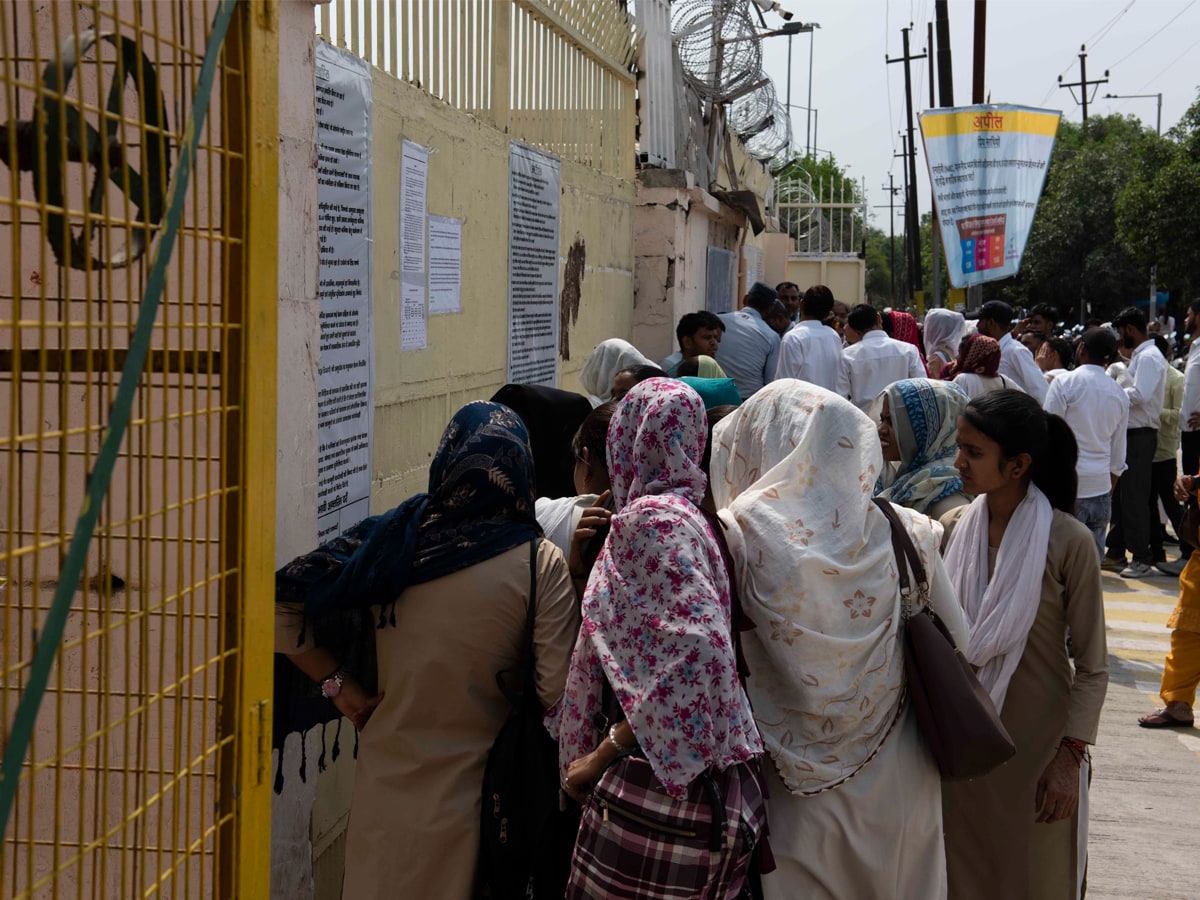
On April 17, around 9 in the morning, a road adjacent to Labour Chow in Manesar’s Sector 4 in Haryana is eerily quiet. Flanked by factories on either side, it is usually buzzing with traffic and people at this, with street-side food stalls serving everything from tea, breakfast and lunch meals to employees teaming in and out of the company gates. But on this April day—it’s a week after protests unfolded across Delhi-NCR, with workers demanding pay hikes—the roads are empty, the food stalls have disappeared, and there is barely a soul to be seen. Except for a police van with a handful of personnel positioned outside Richa Global’s garment manufacturing factory.Protests that began in Manesar’s industrial belt—about 50 km from Delhi—earlier in April, soon spread to other industrial neighbourhoods of Gurugram, Faridabad and Noida, with waves of agitation and violence, through which workers demanded an increase in minimum wages. The agitations in Manesar pushed the Haryana government to increase minimum wages by 35 percent, effective April 1, and this prompted workers in Noida, Uttar Pradish (UP), to take up the same demand. Under Haryana’s revised monthly pay structure, unskilled workers will get Rs 15,220, semi-skilled workers Rs 16,780.74, skilled workers Rs 18,500.81, and highly skilled workers Rs 19,425.85.In response to the protests in Noida, the UP government proposed a 21 percent hike in minimum wages. According to an April 17 notice on the UP government's Labour Department website, the revised wage rates in Gautam Budhha Nagar and Ghaziabad are Rs 16,868 for skilled workers, Rs 15,059 for semi-skilled workers and Rs 13,690 for unskilled workers. “A 21 percent wage hike is a meaningful corrective step, especially in response to immediate worker distress, but it is unlikely to fully bridge the underlying wage gap,” says Balasubramanian A, senior vice president, TeamLease Services.He says the gap is driven by structural factors such as inflation, regional disparities, skill segmentation, and pervasive informality in work arrangements that a single wage revision cannot resolve. “Sustained alignment with the cost of living, productivity, and formalisation of work arrangements will be key to genuinely narrowing the gap,” he adds.The wider squeezeRam Sahay, a contractual worker in one of the auto firms in the Industrial Model Township in Manesar, says the war in Iran was the tipping point for workers. “The wages were supposed to come into effect earlier. At that point, nobody said anything. But after the war broke out, its effects were being felt here. LPG prices shot up to Rs 400 per kg. Our daily wage is between Rs 500-700. How are we supposed to pay for the gas?” he says.In Noida’s Phase 2, 18-year-old Sonu Bharti waits for his lunch break to end outside an audio electronics plant, so he can collect his full-and-final settlement from his supervisor. Between low pay and a difficult supervisor, he’d simply had enough and quit his job three weeks ago. “I stayed at this unit for 4 months, which is more than what other workers do; most leave in a month because of low wages,” Bharti says. Now he is working as a delivery partner with Blinkit and earns Rs 1,200-1,500 a day, which is more than what he used to earn at the factory. Every rupee he saves is earmarked for his education, first to complete Class 12, and then to fund his medical entrance exams.A short walk from Bharti is Leela (name changed on request), heading home from her shift at the Samvardhana Motherson International automotive plant. “They have put up the new wage rates [printed on posters at the gate] but there was no meeting with the workers to inform us about it,” she says, unconvinced about whether the wage hike is real. “When I joined 8 months ago, I was told that I will get Rs 16,000 a month. But I get only Rs 9,500 after all the deductions. That is why I don’t believe it when they say they have increased our pay.”Leela can barely save anything after paying for rent, her children’s education and food. Her husband, a mason, hardly gets regular work. “I am not able to give my kids all the things they need,” she says.The squeeze is not being felt by workers alone; owners of smaller manufacturing units and contractors are also feeling it. Factory owners at some of the units, especially the smaller ones, in Manesar are treading cautiously. An executive at a small auto component firm, on the condition of anonymity, said that while firms understand the perspective of the workers, it might be difficult to keep up with rising wages. “The impact is directly felt by the company. The bigger firms can absorb these costs because they have a wide revenue stream. For smaller players, they have no choice but to pass on the costs to consumers. And when they do that, it affects the sales,” he says.At a garment export house in the hosiery complex area of Noida, Prakash (name changed on request), a senior manager, points to the bales of cloth in the storage rooms.“By now these should have been cut and stitched. We are weeks behind on our orders.” His factory is a major supplier to international fashion brands like Zara and Mango. “We have accepted the government hike in wages. All workers are back on the floor and there is no objection to the wage hike,” he says. “But we will hike the costs of new orders based on the high costs of raw material and wages.” Battling the dual blow of aggressive US tariffs and war-driven spikes in raw material prices, India’s textile sector is on edge. Prakash warns that the rising cost of labour will further squeeze margins that are already razor thin.Rahul Tiwari, a contractor who provides workforces to some of these units, says the new wages might also affect contractors in the ecosystem. “After the LPG crisis, a lot of workers returned to their villages, increasing the burden of those who stayed back. They were not paid properly for overtime. The government has now revised the wages and doubled the overtime rates as well. In such a scenario, what we get paid might also reduce. At the moment, contractors get roughly 5 percent of the workers’ salary. But with wages increasing, the firms might pay us less,” he says. Labourers, Workers and manufacturing units in the industrial hub of Manesar, HaryanaPhoto by Madhu KapparathLonger-term repercussionsSome media reports had suggested that higher minimum wages could push workers out of the provident fund (PF) net. Balasubramanian of TeamLease, though, is sceptical this will materialise. “This is a remote if not entirely unlikely scenario,” he says. “Provident fund is applicable across all formal sectors uniformly,” and the post-pandemic period has seen a sharp increase in formal enrolment. Recent reports suggest that the government is mulling increasing the wage ceiling for PF coverage to Rs 25,000 and Rs. 30,000 a month, from the Rs. 15,000 currently.Another point of discussion in the media has been whether worker unrest can accelerate a move towards automation to reduce dependence on human labour, or nudge employers toward offering more stable, permanent employment. “Organisations may review their contractual labour practices, including compliance and working conditions, while continuing to evaluate automation where it aligns with operational needs,” he says. “The eventual approach can vary across companies, shaped by cost structures, nature of work, and long-term workforce strategy.”A case for national wage ratesSimilar worker protests took place in 2024, with Samsung workers’ striking work in Sriperumbudur, Tamil Nadu, over low wages, unpaid overtime, and the company’s refusal to recognise unions. More recently, between February 23 and 28 this year, workers at the IOCL refinery in Panipat (Haryana) went on strike demanding an 8-hour workday, better wages, and safer working conditions, as did workers at the NTPC plant in Patratu (Jharkhand) on April 1, and Adani’s Raikheda plant in Raipur in March and April.The recent unrest reignited a long-running debate on whether different state-level minimum wages should be replaced by a single national rate. Proponents argue a universal minimum wage would eliminate the arbitrage that drives interstate labour migration and set a more predictable baseline for employers planning multi-state operations.Balasubramanian sees merit in the concept but flags the devil in the implementation. “A universal minimum wage can serve as a common floor to promote greater consistency in wage standards across states, while still requiring flexibility to account for regional economic differences,” he says.On whether wage parity would stem the flow of workers from poorer states to industrial clusters in UP, Haryana, and southern India, he says “Wage parity may influence decisions at the margin, but movement of labour is typically shaped by a broader set of factors such as availability of jobs, living conditions, and regional opportunities.”In other words, fixing the wage floor alone will not balance the migration equation, nor the underlying asymmetries of India’s labour market. For workers on the production lines, the pay hike is a beginning. Whether it leads somewhere lasting depends on decisions well above the factory floor.
Go to News Site