


 Ruptly
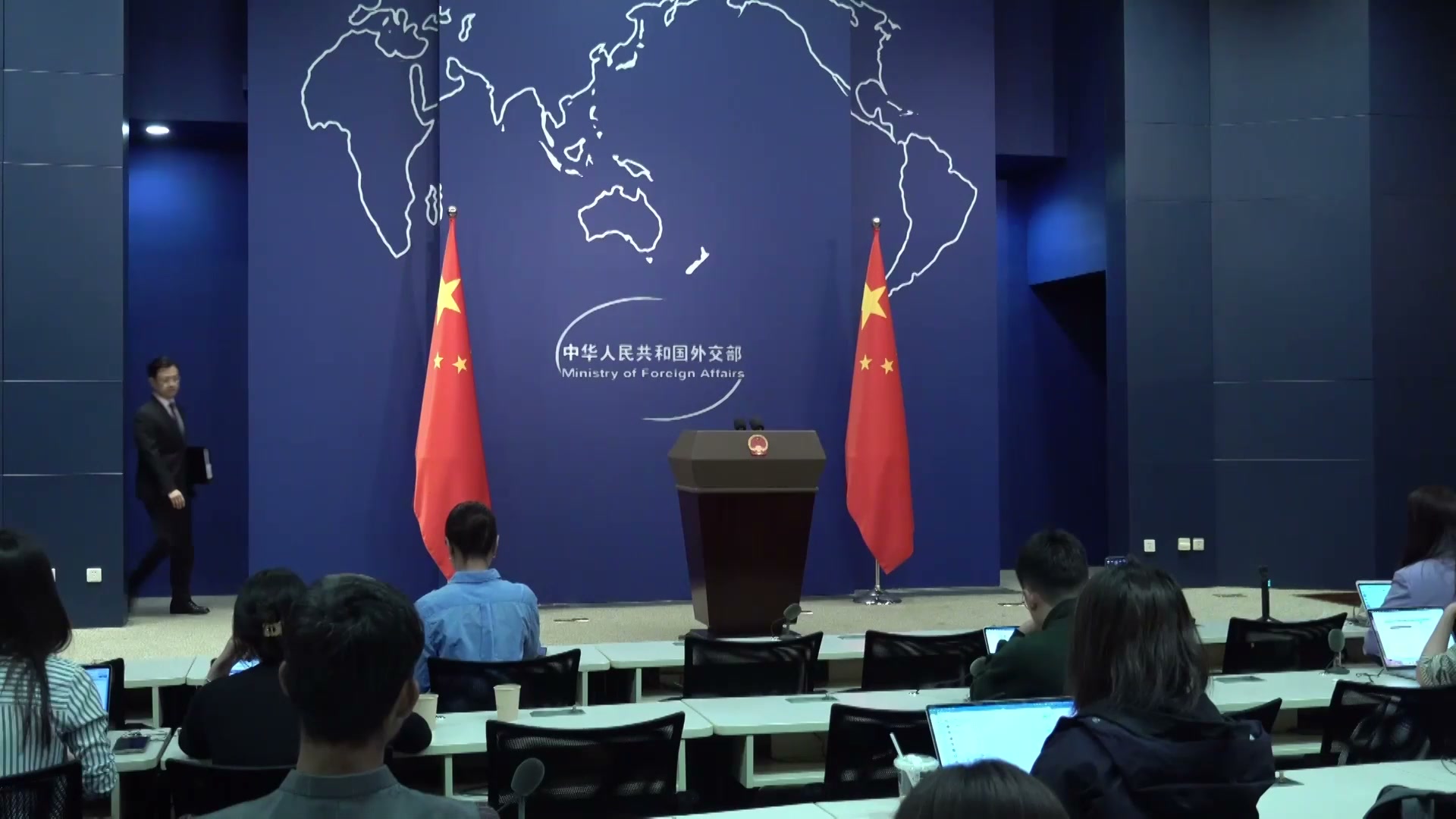
"China's Ministry of Foreign Affairs spokesperson Guo Jiakun said on Tuesday that President Xi Jinping outlined a four-point proposal to stabilise the Middle East and restore shipping through the Strait of Hormuz. "First, uphold peaceful coexistence. China supports regional countries in improving relations and promoting the building of a common, comprehensive, cooperative, and sustainable security architecture for the Middle East and the Gulf region," he said during a daily press brief in Beijing. "Second, uphold national sovereignty. The sovereignty, security, and territorial integrity of the Middle East and Gulf countries should be genuinely respected," he added. The proposal further emphasises the role of international law, with Guo warning against a breakdown of global norms. "We must safeguard the international system with the United Nations at its core […] and prevent the world from reverting to the law of the jungle," he stressed. The final pillar focuses on balancing development and security, with China offering to share opportunities tied to its economic model while calling for a stable environment across the region. His remarks come after Chinese President Xi Jinping on Monday held a phone conversation with Saudi Crown Prince and Prime Minister Mohammed bin Salman Al Saud, during which he stressed the need to maintain the normal passage through the Strait of Hormuz. Beijing's intervention comes amid renewed tensions despite a fragile ceasefire between the United States and Iran, which is set to expire on Wednesday. During the same briefing, the spokesperson also criticised Japan's recent move to revise its defence equipment transfer rules, describing this as a sign of 'remilitarisation'. "Japan's recent series of dangerous moves in the military and security fields have exposed the hypocrisy of its self-proclaimed 'peaceful nation' and 'exclusively defensive' principles," he stated. "Many experts and scholars worry that Japan is restarting its war machine and seeking war abroad. Japan's accelerated 'remilitarization' is a fact and a reality, with concrete plans and actions," he continued. On Tuesday, the Japanese government announced revisions that scrapped earlier limits on defence exports, which initially restricted them to five non-combat categories: rescue, transport, warning, surveillance, and minesweeping. Under the new rules, equipment will be classified simply as 'weapons' or 'non-weapons' based on lethal capability. While arms exports to conflict zones remain largely banned, exceptions may be allowed in 'special circumstances' tied to national security."
Go to News Site