


 Business Recorder
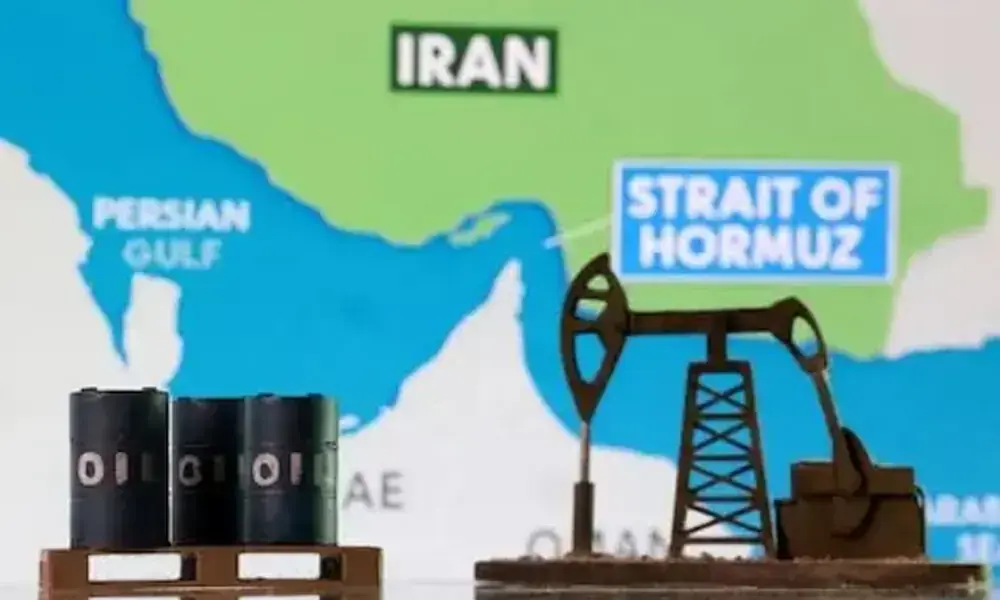
NEW YORK: Oil prices climbed about 3 percent on Tuesday after Iran said it had yet to decide whether to attend peace talks with the United States, with one day left before the ceasefire runs out in the Iran war. US President Donald Trump said he hoped to reach a deal to end the war, but he did not want to extend the ceasefire, and said the US military was “raring to go” if negotiations were not successful. Brent futures rose USD3, or 3.1 percent, to settle at USD98.48 a barrel, while US West Texas Intermediate crude rose USD2.52, or 2.8 percent, to settle at $92.13. Crude futures pared earlier gains of around 5 percent after reports US Vice President JD Vance, due to lead the US delegation, had yet to board a flight for Islamabad at midday on Tuesday. READ MORE: Oil steadies as markets await possible US-Iran talks Shipping traffic through the Strait of Hormuz, which normally handles about 20 percent of global oil and liquefied natural gas supplies, remained broadly halted on Tuesday with only three ships passing the waterway in the past 24 hours, shipping data showed. “You’ve already at this point lost a billion barrels, even if this resolves tomorrow. If it’s another month, it’s 1.5 billion barrels,” Saad Rahim, chief economist at commodity trader Trafigura, said at the FT Global Commodities Summit. Elsewhere in the Middle East, the Israeli military said Hezbollah fired rockets at Israeli troops in southern Lebanon, accusing the Iran-backed group of violating a ceasefire ahead of US-mediated talks between the Israeli and Lebanese governments this week. There was no immediate comment from Hezbollah. The European Union will provide guidance to airlines on how to handle issues such as airport slots, passenger rights and public service obligations in the event of jet fuel shortages because of the Iran war, the bloc’s transport chief said. German Economy Minister Katherina Reiche said supplies of jet fuel are not in danger as refineries adapt to increased demand, but added the government is monitoring the situation. Russian supplies Ukrainian President Volodymyr Zelenskiy said the Druzhba oil pipeline pumping Russian oil to Europe is ready to resume operations, signaling that Ukraine now expects a 90 billion euro ($106 billion) aid package to be unblocked. Three industry sources, however, said Russia is set to stop oil exports from Kazakhstan to Germany via the Druzhba pipeline starting from May 1. Russia’s energy ministry did not immediately reply to a request for comment. Kremlin spokesman Dmitry Peskov said he was not aware of a move to stop the oil exports. In Germany, the biggest economy in Europe, investor morale declined to its lowest level in more than three years in April as businesses started to feel the economic consequences of the Iran war far beyond price increases, the ZEW economic research institute said. In the United States, retail sales increased more than expected in March as the war in Iran boosted gasoline prices and led to a record surge in receipts at service stations, while tax refunds underpinned spending elsewhere. US oil storage reports awaited Those crude price increases came as the market waited for direction from weekly storage reports from the American Petroleum Institute trade group later on Tuesday and the US Energy Information Administration on Wednesday. Analysts projected that energy firms pulled 1.2 million barrels of crude from storage during the week ended April 17. If correct, that would be the first time energy firms pulled crude out of storage for two weeks in a row since February, and compares with an increase of 0.2 million barrels in the same week last year and a decline of 3.7 million barrels over the past five years (2021 to 2025).
Go to News Site