


 Business Recorder
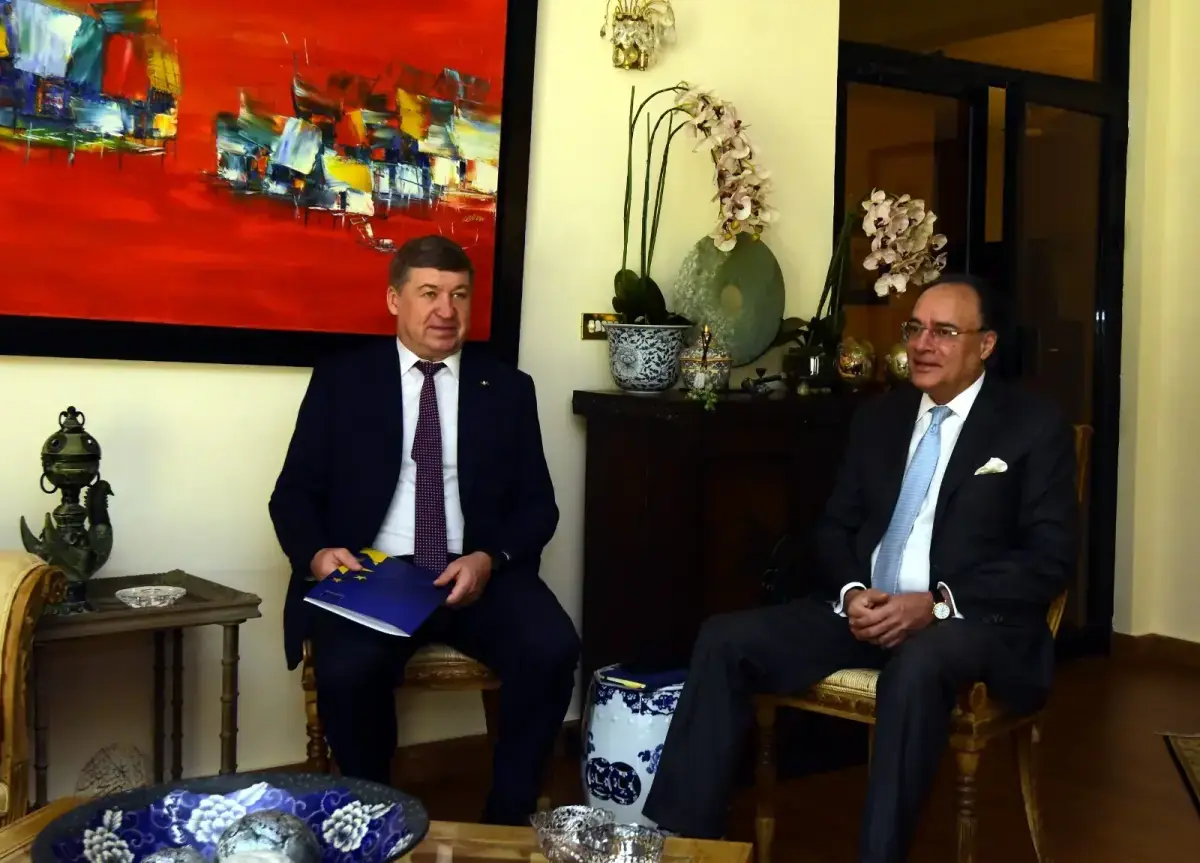
ISLAMABAD: Pakistan and the European Union (EU) on Tuesday shared a commitment to further strengthening Pakistan-EU economic relations and promoting increased trade, investment and business collaboration. Pakistan also conveyed hope for continued progress under the GSP+ framework, terming it an important pillar of Pakistan-European Union economic relations. Federal Minister for Finance and Revenue, Muhammad Aurangzeb, held a meeting with Raimundas Karoblis, Ambassador of the European Union to Pakistan, who called on Aurangzeb here on Tuesday. Both sides discussed economic cooperation and investment outlook. READ MORE: Investor confidence: EU urges Pakistan to ensure policy stability, transparency Aurangzeb underscored Pakistan’s steady return to macroeconomic stability and renewed engagement with international capital markets, highlighting growing investor confidence and the Government’s commitment to a structured and forward-looking economic reform agenda. He noted that Pakistan has recently re-entered international capital markets after a four-year hiatus through a privately placed Eurobond transaction, which witnessed strong investor interest and was successfully upsized. The Minister emphasized that this milestone reflects improving economic fundamentals and signals a positive trajectory for Pakistan’s global financial integration. Aurangzeb further shared that the Government is actively pursuing a diversified capital markets strategy, including future international issuances and innovative financing instruments, aimed at strengthening external buffers and ensuring sustainable financing. During the meeting, the EU Ambassador extended an invitation to the Finance Minister to participate in the High-Level EU–Pakistan Business Forum scheduled to be held on April 28, 2026, in Islamabad, which the Minister accepted. Senator Aurangzeb is also expected to deliver the keynote address at the opening plenary session on the theme “Pakistan Rising: Incentives, Reforms, and the Next Investment Frontier.” The Finance Minister appreciated the European Union’s efforts in bringing together a large number of international and domestic business representatives, noting that such initiatives provide a valuable platform to showcase Pakistan’s improving business climate and investment potential, while fostering meaningful business-to-business engagement. Aurangzeb also highlighted the Government’s broader efforts to maintain macroeconomic stability, strengthen foreign exchange reserves, and advance structural reforms to support sustainable and inclusive growth. He acknowledged the continued support of key bilateral partners in reinforcing economic resilience and emphasized the importance of sustained international collaboration in this regard. The Finance Minister expressed optimism about Pakistan’s external sector outlook and reiterated the Government’s focus on enhancing competitiveness, deepening investment inflows, and expanding trade opportunities. In this context, he also conveyed hope for continued progress under the GSP+ framework, terming it an important pillar of Pakistan-European Union economic relations. The future of Pakistan’s preferential trade access to the EU countries under the GSP+ scheme has come under fresh uncertainty, as the EU has reportedly conveyed that the status is “not automatically guaranteed, official sources told Business Recorder. Pakistan will have to demonstrate tangible progress on human rights commitments to retain the coveted GSP+ facility beyond its current term. “GSP+ status is not automatically secured for Pakistan,” an official said while quoting EU officials as saying. They are stressing that compliance with international obligations remains a prerequisite for the continuation of the trade regime. According to EU officials, Pakistan’s current GSP+ arrangement is set to expire next year. They cautioned that without GSP+, Pakistani products would face tougher competition in European markets due to higher tariffs, potentially eroding export competitiveness. They emphasized that adherence to UN conventions underpinning the scheme is essential for its continuation. Copyright Business Recorder, 2026
Go to News Site