


 Business Recorder
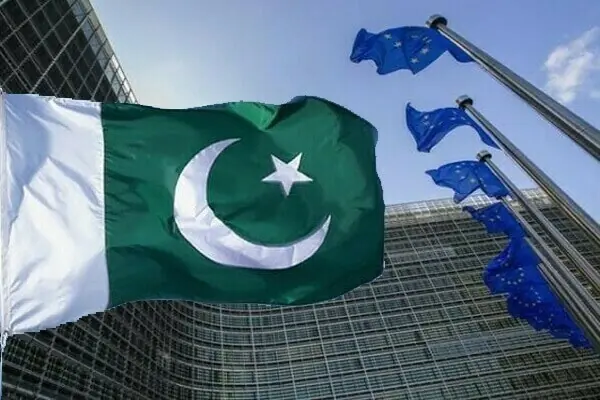
EDITORIAL: At a time when Pakistan’s external position remains fragile and export growth continues to lag, the decision to host the first high-level EU–Pakistan Business Forum later this month signals an attempt to reset one of the country’s most critical economic relationships. The European Union remains Pakistan’s largest export destination, and the shift being proposed, from a trade-heavy engagement to an investment-led partnership, reflects both opportunity and urgency. The opportunity is clear. The EU’s €400 billion Global Gateway Initiative offers access to capital, technology and integration into evolving supply chains at a moment when global production networks are being reconfigured. For Pakistan, which has struggled to attract sustained foreign direct investment, the forum represents a chance to reposition itself as a viable destination for long-term capital. The emphasis on sectors such as textiles, agri-business, digital innovation and green logistics aligns with the country’s stated economic priorities and its need to move up the value chain. Yet the context in which this forum is taking place is far less comfortable. Access to the EU market through the GSP+ framework remains a cornerstone of Pakistan’s export model, but it is explicitly conditional. The European Union has made it clear that continued preferential access depends on measurable progress in areas such as human rights, legal safeguards and governance standards. Concerns over blasphemy laws, enforced disappearances and the use of regulatory instruments like PECA have been flagged again, reinforcing that trade privileges are linked to compliance with international commitments. This linkage introduces a layer of risk that cannot be ignored. The same forum that promises new investment flows also highlights the vulnerabilities in the existing trade relationship. Preferential access to the EU market has supported Pakistan’s export sector for years, particularly in textiles. Any erosion of this access would have immediate consequences for export volumes, employment and foreign exchange earnings. The competitive landscape is also shifting. India’s deepening economic engagement with the European Union adds to the pressure. A more competitive Indian presence in the EU market would narrow the space for Pakistani exports, particularly if preferential access comes under strain. In such an environment, maintaining existing advantages becomes as important as securing new opportunities. The forum’s structure suggests a move beyond declaratory engagement. With hundreds of business-to-business meetings planned and direct interaction between investors and financial institutions, the emphasis is on tangible outcomes. This is a welcome shift. Pakistan has hosted numerous conferences that generated statements of intent but little follow-through. The current initiative, if executed properly, could break that pattern. However, execution will depend on more than facilitation. Investors are not only evaluating sectoral opportunities; they are assessing the broader policy environment. Issues of regulatory consistency, contract enforcement, transparency and governance will influence decisions far more than conference discussions. The EU’s insistence on aligning economic cooperation with governance standards reflects this reality. There is also a strategic dimension to consider. The Global Gateway Initiative is not merely an economic programme; it is part of a broader effort by the EU to shape global connectivity in line with its own standards. For Pakistan, participation in this framework carries both benefits and obligations. Aligning with these standards could enhance credibility and attract investment, but it also requires sustained policy reform. The immediate challenge is to approach this moment with clarity. The forum offers a platform to deepen economic ties, but it also exposes the conditions attached to those ties. Treating it as a routine diplomatic event would be a mistake. The stakes are considerably higher. Pakistan’s economy is operating with limited buffers. External financing needs remain significant, export growth is uneven and alternative sources of inflow have yet to scale up. In this context, both preserving GSP+ status and leveraging new investment opportunities are critical. The path forward requires coherence. Progress on governance and rights-related commitments must move in tandem with economic engagement. At the same time, the investment agenda must be supported by reforms that address structural constraints within the domestic economy. The window with Europe is open, but it is narrow. Whether it translates into sustained economic benefit will depend on the seriousness with which these parallel challenges are addressed. Copyright Business Recorder, 2026
Go to News Site