


 Autocar
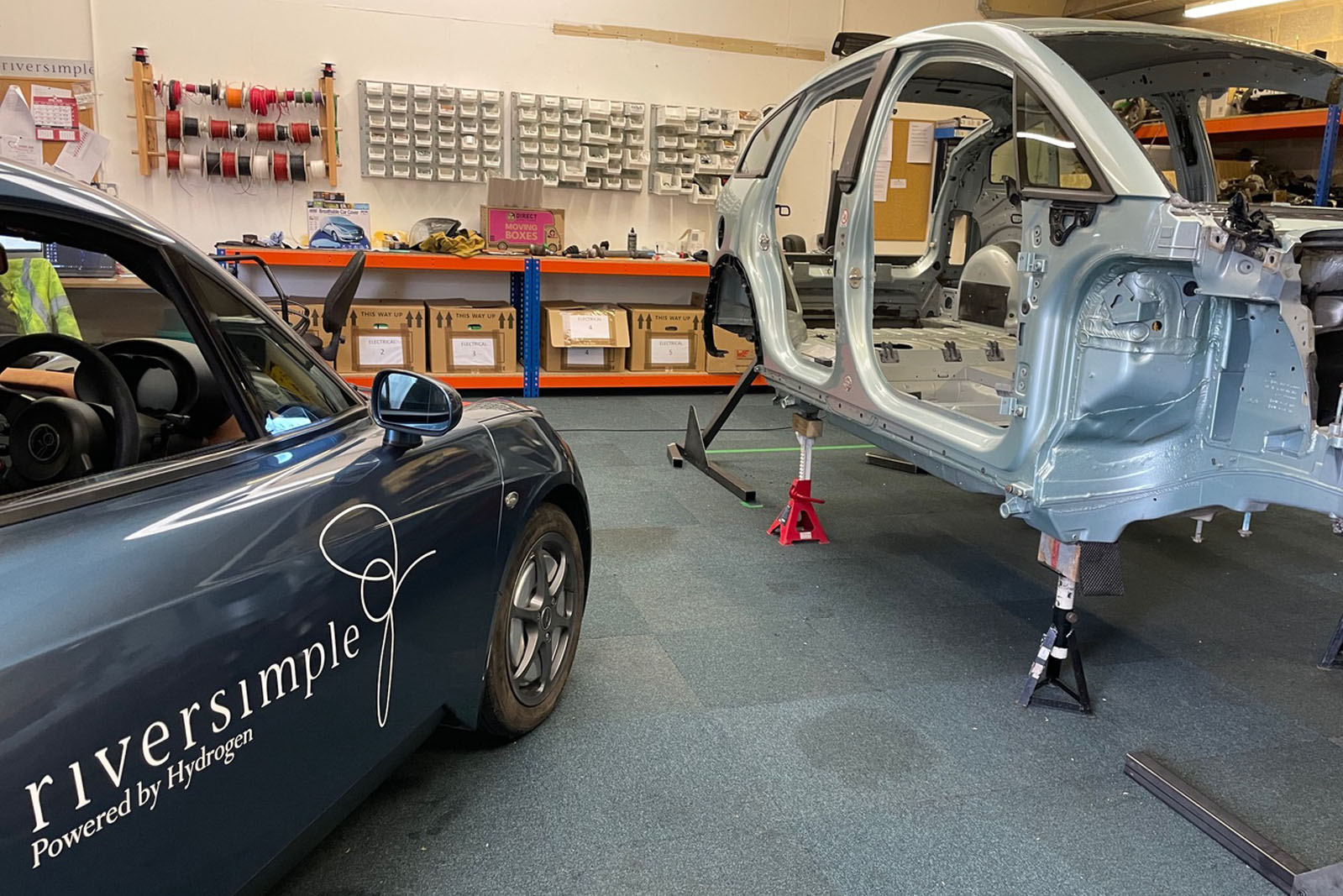
Audi A2s will form the basis for testing the Runabout, replacing the Riversimple Rasa (left) New project signals end of 10-year-old Rasa development car as firm switches to work on more practical Runabout Hydrogen car maker Riversimple has won a share of £1.7 million UK government grant to convert two old Audi A2s to demonstrate the viability of a lightweight fuel-cell EVs. The project signals the end of the 10-year-old Riversimple Rasa development car as the company switches focus on developing a new, more practical four-seat production car, codenamed Runabout. “The Rasa has been quite spectacular, and it attracts crowds wherever we go, but the feedback from beta testers is definitely to have something a little bit more practical. For example, you need a boot that a dog can jump into,” Fiona Spowers, head of communications and the wife of company founder Hugo, told Autocar. Under the so-called Zellor project (for 'zero-emission lightweight long range'), the A2s are having hydrogen tanks fitted in the space created by their ‘sandwich’ floor construction, which then feed a small fuel-cell stack. The electric motors will come from Essex-based GreenFlux Motors and the power electronic converters by TTPi of Nottingham under the project, which is funded by money from the government’s £4 billion Drive35 programme in partnership with the Advanced Propulsion Centre UK (APC) and Innovate UK. Riversimple has been plugging away at the idea of a lightweight, low-impact, hydrogen-powered car since 2007, partly backed by money from the Welsh government and from crowdfunding. However, it has struggled to achieve investment levels needed build a production car and is now ending developing of the carbonfibre Rasa, with its coupé shape and in-wheel motors, in favour of a more conventional hatchback with inboard motors. It will also have an optional a top speed of 70mph, up from the standard 60mph. The choice of the A2 is partly due to its lightweight aluminium construction and partly because Spowers himself is a long-term owner of a 2002 example of the ultra-efficient ‘3L’ model, which has now clocked up 345,000 miles. “In my view, this is one of the cleverest cars ever offered to the public,” he wrote in a Linkedin post last year. “The A2 will demonstrate that you can get a hydrogen package into a small, affordable, everyday runabout car,” Fiona Spowers said. One of the cars to be used in the project was rescued "from a hedge", she added. Its resurrection is in line with the company’s ingrained environmental philosophy, which advocates recycling and reuse as much as possible. The A2s have now been stripped back to their aluminium shells to begin their refit as FCEVs, ahead of their planned demonstration date in January 2027. Riversimple is sticking to a commitment to use low-powered (10kW) fuel-cell units to both reduce weight and increase range. It claims the cars will driver 400 miles on a full tank and weigh around 900kg – up from the projected 580kg weight of the Rasa but below that of EV city cars. “The automotive industry is struggling with a trilemma: zero emission, light weight, long range,” Hugo Spowers said in a statement. “This project is demonstrating that zero-emission vehicles need not be heavy.” However Riversimple needs to find another source for its small fuel-cell stacks after its supplier Cummins decided to end production. The stack produced by Toyota for its Mirai FCEV is too large. Riversimple has given no timing as when a production version of the Runabout will go on sale. “The timing is entirely contingent on having the scale-up funding,” Fiona Spowers said.
Go to News Site