


 Forbes India
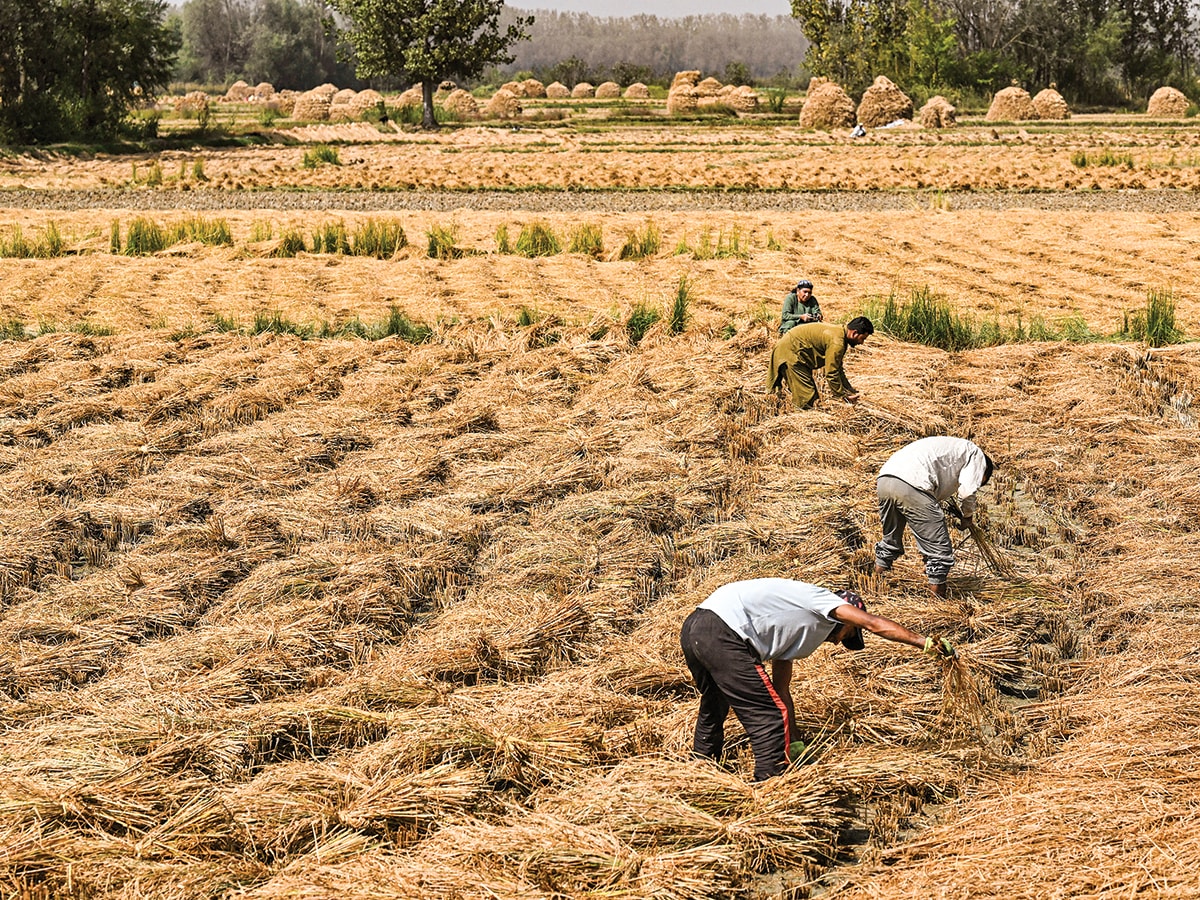
The monsoon season is forecast to deliver below-normal rainfall this year, arriving at the worst possible moment for a rural economy already grappling with disruptions to fertiliser and fuel supply caused by the war in West Asia. Together, the two risks threaten to lift food prices, curb farm output and weaken demand for goods ranging from tractors to biscuits.The India Meteorological Department (IMD) has forecast the June-September monsoon at 92 percent of the long-period average (LPA), the lowest first long-range forecast in at least 26 years, according to ICRA chief economist Aditi Nayar. Private forecaster Skymet put the figure at 94 percent.An El Niño event—which historically correlates with 20 percent of India’s droughts—is expected to develop and weigh on rainfall in the latter half of the season. What makes this year concerning is forecasters estimate a 25 percent chance of a “super El Niño”, potentially one of the strongest on record.The last time India had a below-normal monsoon was 2023, also an El Niño year. That season saw reduced kharif sowing—particularly in pulses and oilseeds—lower reservoir levels, slower tractor sales, higher demand under the rural employment guarantee scheme and elevated food inflation in rice and pulses, according to a Systematix Institutional Equities report.The government had responded by restricting exports of wheat, rice, sugar and onions.Why 2026 is TrickierThe weather risk this year is compounded by geopolitical pressures.“It (the monsoon forecast) is just coming at the worst possible time,” says Gaura Sengupta, chief economist at IDFC First Bank. “It adds to downside risks for rural demand and growth, and upside risks to inflation.”The US-Iran conflict has disrupted shipping through the Strait of Hormuz, a critical route for fertilisers and their raw materials. The IMF’s Fertilizer Price Index jumped to a 37-month high in March. Domestic fertiliser production declined 24.6 percent year-on-year in the same month, shows government data.Another headwind comes from diesel prices, which are widely expected to rise after elections. The agriculture sector is India’s second-largest consumer of diesel.“The crisis is impacting costs, as crude prices are rising. This will have a multifarious impact on input costs, including fertilisers, insecticides and herbicides,” says Dhananjay Sinha, CEO and co-head of institutional equities at Systematix Group. “We are already seeing physical shortfalls in urea. Acreage might shrink and the usage of productivity-enhancing inputs will reduce due to lower supply and higher costs. Overall, production is likely to take a hit through both lower productivity per acre and a reduction in net sown area.”Parts of India are already facing varying degrees of drought, though reservoir levels remain above the 10-year average. They have, however, been trending lower.Also Read: What a Below-Normal Monsoon Means for India’s Economy, Inflation and DemandWhat’s at stakeThe rural economy accounts for 18 percent of India’s economic output and employs half the country’s workforce. Around 50 percent of rural wages still come from agriculture.Kharif crops—generally harvested in September-October—contribute about 50 percent of India’s agricultural output, with the country the world’s second-largest producer of rice and cotton. Around 55 to 60 percent of kharif output is exposed to irrigation dependency.Any impact on kharif output directly hurts consumption.Rural India accounts for approximately 38 percent of FMCG demand. Companies that had been seeing rural growth outpacing urban trends are now bracing for a potential reversal.“The industry is currently grappling with rising production and packaging costs driven by fluctuations in crude oil and fuel prices,” says Mayank Shah, vice president at Parle Products, which derives half its sales from rural India. While margins are under pressure, Shah says most companies had held off on price increases given the uncertainty over whether cost spikes would persist. With Hindustan Unilever raising prices by 3 to 5 percent, others are expected to follow.Dabur, which gets half of its sales from rural India, says a longer and more intense summer is good news for categories such as beverages and glucose. “We are seeing encouraging demand trends across these portfolios and have proactively built inventories across retail and stockist channels to ensure seamless availability,” says Dabur India CEO Mohit Malhotra. “Overall, our approach is to stay agile, well-stocked and closely aligned with evolving consumer needs.”Harshal Dasani, business head of INVasset PMS, notes that the statistical correlation between monsoon performance and FMCG volume growth is a modest 20 percent, meaning one weak year rarely causes severe standalone damage. “The more relevant context is timing. Rural FMCG demand had only recently shown signs of recovery, with companies, including Dabur, Marico, Emami and Godrej Consumer Products, beginning to report rural growth outpacing urban trends. A below-normal monsoon can delay that recovery.”For the automobile sector, where rural accounts for 58 percent of two-wheeler demand, a good monsoon is important to maintain the sales momentum the sector has been witnessing after the cut in GST rates.Sales of both passenger vehicles and two-wheelers grew 13 percent in FY26, while tractors clocked a 19 percent surge, according to data from the Federation of Automobile Dealers Associations (Fada).Saharsh Damani, CEO of Fada, says India has good reservoir levels and the industry has structural momentum. “These don’t disappear overnight. The auto sector has far more structural legs today—premiumisation, electric vehicles, urban demand, exports—than it did during previous weak monsoon cycles. We are cautiously optimistic as of now.”But this year, purchases for entry-level vehicles are already being delayed due to the uncertainty surrounding the situation in West Asia, Shailesh Chandra, president of the Society of Indian Automobile Manufacturers, said at a press conference on April 14.Automobile demand impact typically lags the crop cycle. “A weak kharif season can compress farm incomes, affecting vehicle purchases in the following quarters. Q3 and Q4 FY27 retail data is where any deterioration would surface most visibly,” says Dasani of INVasset PMS.Rajesh Aggarwal, MD of Insecticides (India) Ltd, says the IMD forecast alone did not significantly alter agrochemical demand at this stage. Extremes—either too dry or heavy rains—create real challenges for the farmers, but this prediction remains manageable, says Aggarwal, who is also vice chairman of Crop Care Federation of India. “The real concern arises out of the rainfall gaps rather than overall below-normal totals. Too much dryness stresses crops early, while excess rain triggers other issues of crop damage. The moderate deficit allows normal crop protection cycles to continue.”Building BuffersUnion Agriculture Minister Shivraj Singh Chouhan said on April 18 that the government was fully prepared to address El Niño’s potential impact. He cited reservoir storage at 127.01 percent of the normal level for this period and pointed to expansion of micro-irrigation, crop diversification and improved seed technology as factors that had made farming more resilient since the 2000-2016 period when El Niño impacts were more pronounced.Buffer stocks of rice and wheat are at three times the norms, giving the government room to intervene to contain price spikes if needed.The Met Department will issue an updated forecast in late May, though both IMD and Skymet have a mixed track record on monsoon predictions.Another factor to watch out for would be Indian Ocean Dipole (IOD)—a positive IOD event in 2019 produced a very wet monsoon by September despite an anomalously dry June, demonstrating its capacity to neutralise El Niño effects.
Go to News Site