


 GB News
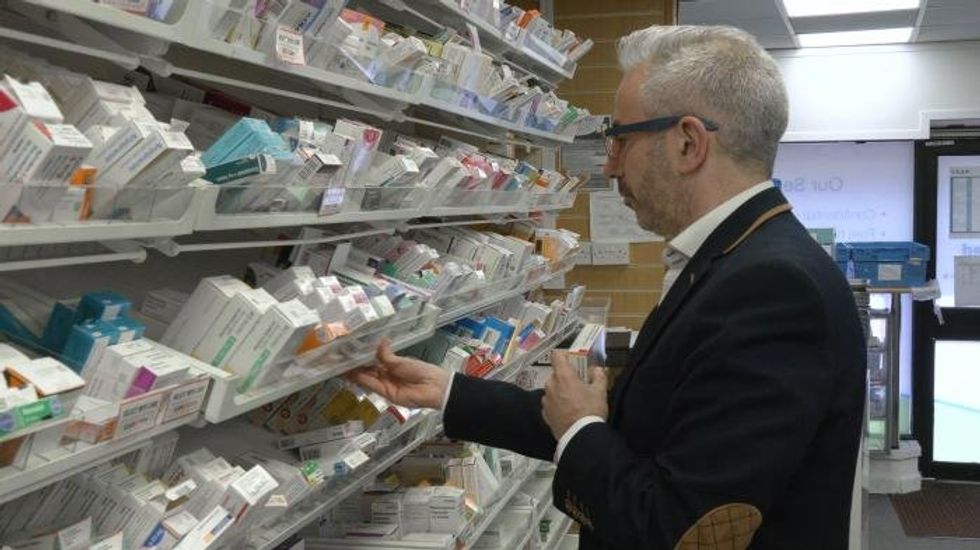
The ongoing conflict in Iran has sent the cost of everyday medicines soaring across England, with pharmacists reporting price rises of up to 30 per cent since February. Common painkillers such as paracetamol have become significantly more expensive at the till, according to the National Pharmacy Association, which represents 6,000 community chemists nationwide. Hay fever sufferers are also feeling the pinch, with cetirizine tablets climbing by a similar margin over the same period. The war, now approaching its eighth week, has created a perfect storm for pharmaceutical supply chains. Numerous pharmacies have found themselves unable to stock certain strengths of aspirin and co-codamol, leaving customers scrambling for alternatives during what should be routine purchases. TRENDING Stories Videos Your Say The disruption to global logistics has hit pharmacies particularly hard, with chemists now paying between 40 and 50 per cent more to replenish their shelves. Air freight costs have doubled since hostilities started, a significant concern given that one in five NHS medicines arrives by plane. Perhaps most critically, the conflict has choked off supplies of petroleum derivatives from the Gulf region, essential raw materials used in manufacturing many household medications. Paracetamol, aspirin and co-codamol all rely on these petrochemical components for their production. Generic drug manufacturers, already operating on razor-thin margins, have been forced to pass on these increased costs. The result is a mounting bill for both the health service and patients purchasing over the counter. Olivier Picard, chair of the NPA, described the volatility facing his Berkshire pharmacy. On 27 March, he found himself unable to order paracetamol at all. When supplies returned days later, "the [wholesale] price had doubled". A 100-pack of 500mg paracetamol tablets that cost 41p before the conflict reached £1.99 by late March, though it has since settled at £1.09. Customers are seeing this reflected at the counter, with one pharmacy raising its price for 32 paracetamol tablets from £1.19 to £1.50. LATEST DEVELOPMENTS 'I’m a GP - these are the workouts you should prioritise if you want to live to 100' Your pint may provide 'substantial levels' of vitamin B6, scientists say Up to a third of NHS scans 'fail' as thousands of patients left 'without answers' Cetirizine has followed a similar trajectory, with wholesale costs nearly doubling from 19p to 37p per 30-tablet pack, whilst some distributors are demanding as much as £3. With peak hay fever season approaching in May and June, further increases may follow. However, Picard urged customers not to stockpile, warning such behaviour would only worsen shortages and inflate prices further. The strain extends well beyond individual pharmacies to the NHS itself. In March, a record 230 medicines appeared on the government's price concessions list, permitting higher reimbursement rates. This compares with just 90 items during the same month last year. Blood pressure medications, antidepressants and anxiety treatments all feature, alongside painkillers such as codeine and co-codamol. Yet paracetamol remains excluded, despite 1.3 million packs being prescribed monthly across England. Pharmacies continue closing at a rate of one or two weekly, with 1,400 shuttering since 2020. Mark Samuels, chief executive of Medicines UK, offered a sobering assessment: "If the conflict continues, we will inevitably see rising prices or shortages of essential medicines. This could be as soon as the next few weeks." Our Standards: The GB News Editorial Charter
Go to News Site