


 Dawn.com
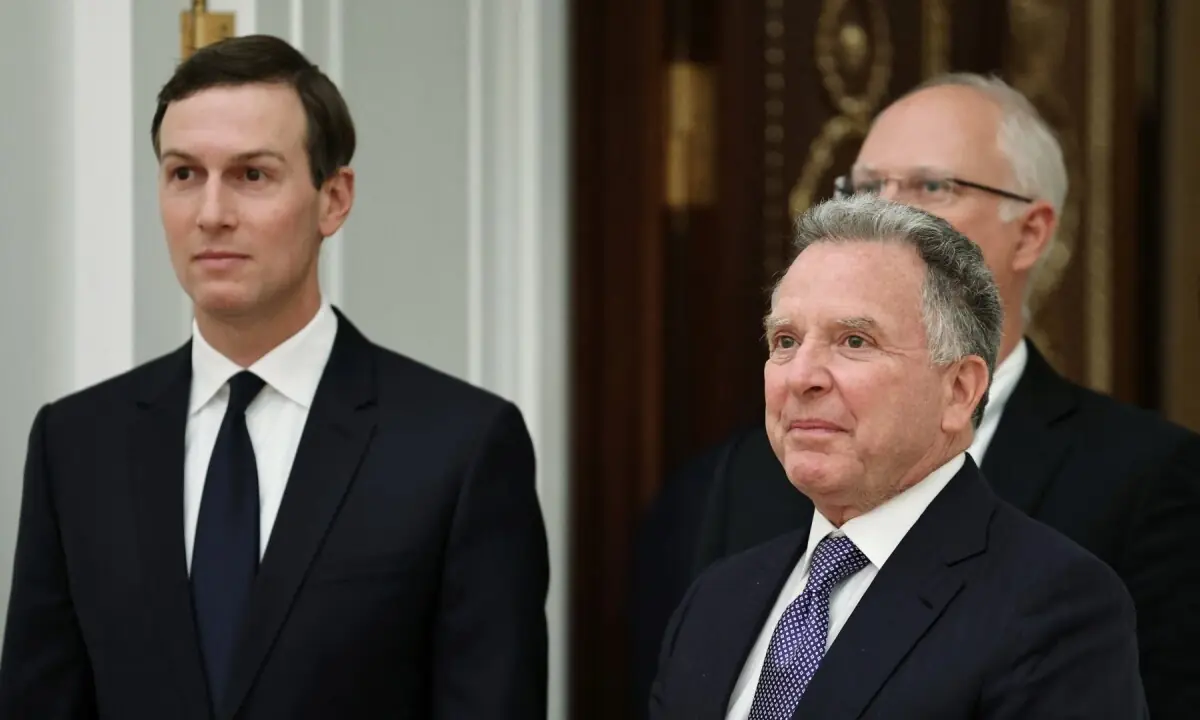
White House Press Secretary Karoline Leavitt said on Friday that US Special Envoy on the Middle East Steve Witkoff and President Donald Trump’s adviser Jared Kushner would be leaving for Pakistan on Saturday for a second round of talks with Iran. “I confirm special envoy Witkoff and Jared Kushner will be off to Pakistan again tomorrow morning to engage in talks — direct talks — intermediated by the Pakistanis who have been incredible friends and mediators throughout this entire process, with representatives from the Iranian delegation,” she told Fox News . “Everyone will be on standby to fly to Pakistan if necessary, but first, Steve and Jared will be going over there to report back to the president, the vice president and the rest of the team,” Leavitt said. “The Iranians reached out, as the president called on them to do, and asked for this in-person conversation,” she claimed. “The president always wants to give diplomacy a chance. It’s always his first option, and he’s willing to do that here again,” Leavitt said. The announcement comes as Iranian Foreign Minister Abbas Araghchi is expected to arrive in Islamabad tonight along with a small negotiating team. Pakistani sources said that a second round of peace talks with the United States was also expected. They also said that a logistics and security team from the US was already in the federal capital. However, Iran’s state media, while confirming the visit, said that Araghchi would hold “bilateral consultations”. “Iran’s foreign minister will begin a regional tour on Friday evening, April 24, travelling to Islamabad, Muscat and Moscow,” the official IRNA news agency said. “The purpose of this trip is to hold bilateral consultations, discuss ongoing developments in the region, and review the latest situation regarding the war imposed by the United States and the Israeli regime against Iran,” it said. Araghchi himself, in a post on the social media platform X, said that he was embarking on a “timely tour” of Islamabad, Muscat, and Moscow. “The purpose of my visits is to closely coordinate with our partners on bilateral matters and consult on regional developments. Our neighbours are our priority,” he said. The development comes hours after Deputy Prime Minister and Foreign Minister Ishaq Dar and Araghchi, in a phone call, exchanged views on the US-Iran ceasefire and Pakistan’s ongoing diplomatic efforts, according to the Foreign Office (FO). In a post on X, FO said, “Both sides exchanged views on regional developments, the ceasefire, and ongoing diplomatic efforts being pursued by Islamabad in the context of US-Iran engagement”. It added that Dar, for his part, stressed the importance of “sustained dialogue and engagement to address outstanding issues, in order to advance regional peace and stability at the earliest”. While his Iranian counterpart lauded “Pakistan’s consistent and constructive facilitation role in this regard”. The FO added that the two leaders agreed to remain in “close contact”. The first round of historic direct US-Iran talks was held in Islamabad on April 11 and 12, following a Pakistan-brokered ceasefire on April 8. It had ended without an agreement, but also without a breakdown . However, the expected second round of negotiations witnessed a delay due to continued friction between the US and Iran, particularly regarding Iran’s closure of the Strait of Hormuz and the US blockade of Iran’s ports. Over the past few days, Pakistan has ramped up its diplomatic efforts to bring the US and Iran back to the negotiation table. On Thursday, Naqvi held an “important meeting” with US Chargé d’Affaires to Pakistan, Natalie Baker, in Islamabad, where the two discussed diplomatic efforts regarding the possible second round of US-Iran negotiations in Islamabad. On Wednesday, Trump had hoped that a second round of talks could take place within two to three days, despite persistent mistrust. “It’s possible!” Trump reportedly told the New York Post by text message, after the newspaper reached out to him to confirm whether the talks were “expected in Islamabad within the next 36 to 72 hours”. Additional input from Reuters and AFP
Go to News Site