


 Business Recorder
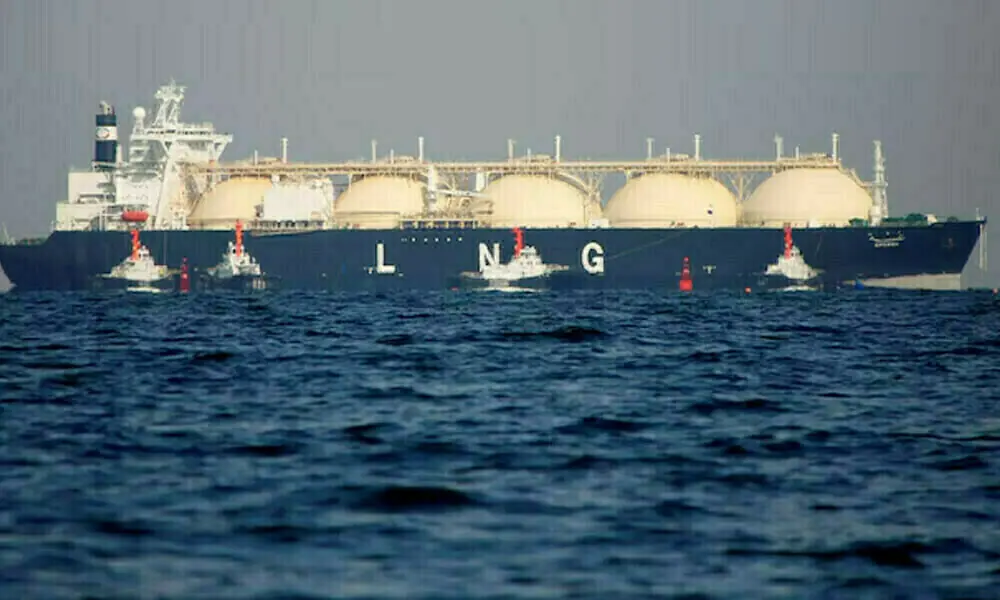
ISLAMABAD: The Petroleum Division has reportedly decided to float spot tenders for Liquefied Natural Gas (LNG) following a decision taken by the National Coordination and Management Council (NCMC), aimed at restoring operations of RLNG-fired power plants with a cumulative capacity of over 5,500 MW. These plants are currently shut down due to suspension of LNG supplies from Qatar owing to declaration of force majeure, well-informed sources told Business Recorder . Prime Minister Shehbaz Sharif had constituted the NCMC as a central platform, comprising representatives from federal and provincial stakeholders, to facilitate informed policymaking and ensure effective implementation in response to economic challenges arising from the Gulf conflict. Minister for Economic Affairs Ahad Khan Cheema and Lt Gen Zafar Iqbal have been appointed co-chairmen of the council’s executive committee, which includes representation from federal ministries, provincial governments, and special areas. READ MORE: Govt may place RLNG-fired power plants on preservation mode The shutdown of around seven RLNG-fired power plants, with a combined capacity of over 5,500 MW, has worsened the electricity demand-supply situation, prompting power distribution companies (DISCOs) to carry out load shedding in line with instructions from the Independent System and Market Operator (ISMO). On April 18, 2026, the Power Division wrote to the Petroleum Division, urging it to manage Qatar-contracted LNG cargoes to ensure fuel availability for RLNG-based plants in Punjab and one plant operated by K-Electric (KE). Sources said that power generation from Residual Fuel Oil (RFO) has surged significantly, doubling to around 400,000 tons from 200,000 tons in March 2026. The increased reliance on RFO will be passed on to consumers through the monthly Fuel Charges Adjustment (FCA). According to Minister for Power Sardar Awais Ahmad Khan Leghari, the FCA impact for April 2026 is estimated at around Rs 1.30 per unit. However, the government is trying to avoid electricity generation from High-Speed Diesel (HSD), as its cost is approximately Rs 100 per unit, which would be unaffordable for consumers. “Any shortfall in RLNG supply would necessitate increased reliance on expensive alternative fuels such as HSD. This would not only raise the overall cost of generation significantly but also result in prolonged load shedding and a substantial financial burden on consumers through FCA,” the sources added. The price of spot LNG cargoes is currently in the range of $18–22 per MMBTU, implying a generation cost of around Rs 30–35 per unit, which would ultimately be passed on to consumers. The country’s RLNG requirement for power generation is estimated at 400–450 MMCFD, which cannot be fully met until Qatar lifts the force majeure triggered by the closure of the Strait of Hormuz. Sources further stated that the Petroleum Division has responded to the Power Division’s letter and is using diplomatic channels to facilitate the arrival of four LNG cargoes from Qatar. “Power Division presented its demand-supply situation to the NCMC, following which the Petroleum Division was directed to issue tenders. Pakistan LNG Limited (PLL) is proceeding accordingly,” said an official on condition of anonymity. Meanwhile, a spokesperson for the Power Division said electricity demand in the country has increased, adding that higher water releases from Tarbela Dam during nighttime have boosted hydropower generation. Hydropower generation during last night’s peak hours reached 5,800 MW, against a total installed capacity of 11,500 MW. “With increased hydropower generation, an additional 500 MW was transmitted to the central grid due to improved stability in the southern transmission system,” the spokesperson said. Electricity transmission from the southern region rose by 100 MW compared to April 22. On Thursday night, DISCOs implemented load management of up to two hours during peak periods. The spokesperson further clarified that economic load management is being carried out on feeders with higher losses and is separate from peak-hour load management. “Due to LNG unavailability amid global conditions, power plants with a capacity of 5,500 MW remain non-operational. With the restoration of LNG supplies and increased water releases, the nighttime shortfall is expected to be eliminated,” the spokesperson concluded. Copyright Business Recorder, 2026
Go to News Site