


 Business Recorder
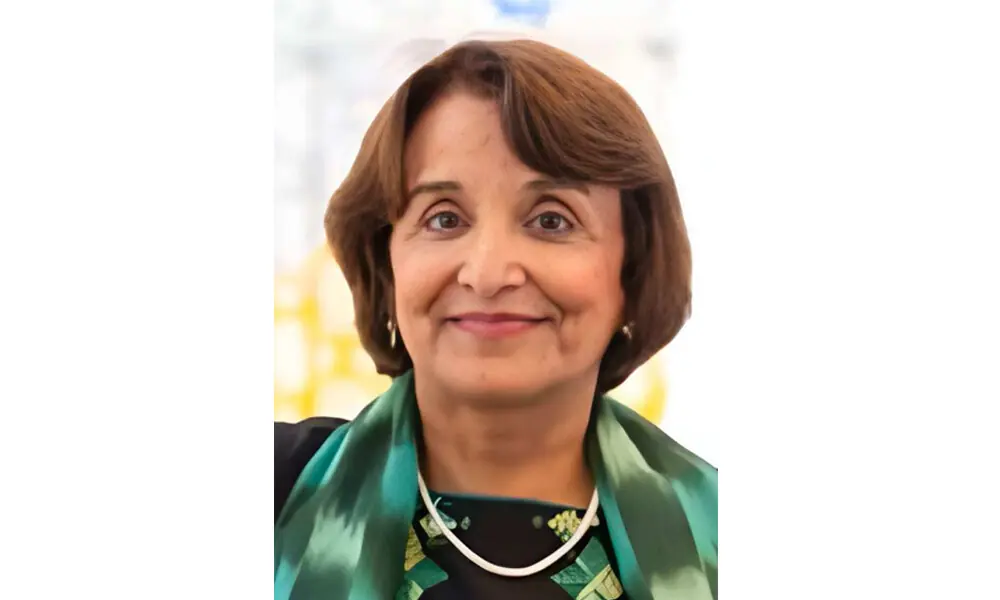
‘The higher education sector continues to have a strategic and key role in knowledge development and innovation’ Dr Anjum Halai is a leading educationist and academic, currently serving as Professor and Vice Provost at Aga Khan University. She was also the Founding Dean of AKU’s Faculty of Arts and Sciences. Her work focuses on teacher education, mathematics learning, social justice in education, and education reform in low- and middle-income countries. She holds a DPhil in Education from the University of Oxford and has led major international research collaborations across Pakistan, the UK, Canada, and Africa. Dr Halai is also a Fellow of the World Academy of Arts and Sciences and has contributed extensively to global scholarship and policy dialogue on inclusive, equitable education. Following are the edited excerpts of a recent conversation BR Research had with her: BR Research: In today’s fast-changing, post-pandemic world, how has the concept of lifelong learning evolved, particularly in the context of higher education? Anjum Halai: Indeed, the world is changing rapidly with disruptive technological developments, climate change, deepening inequities in the society and persisting conflict, among other drivers of change. These drivers of change have a significant impact on the traditional social and cultural mores and the economy, and the nature and future of work. The mechanical world of work with its highly specialised knowledge has given way to a technologically driven world of work taking strength from artificial intelligence. Youth and early-career professionals would potentially have to re-invent themselves, learn new skills or change jobs several times during a career, resulting in a great demand for lifelong learning. BRR: What key gaps do you see in traditional education systems that programmes like AKU LEADS aim to address? AH:Traditional programmes and education systems have played and will continue to play a strong role in creating new knowledge, promoting innovation, and in human development. Teaching, research, service and community engagement functions of universities and institutions of higher learning also play a key role in addressing contemporary global challenges such as climate change, rising inequalities, learning poverty and so on. However, going forward, these traditional programmes will have to be complemented with innovative, technologically driven, and competency-based short courses and programmes to enable youth and mid-career professionals to re-skill and upskill themselves, and respond to the changing needs of the labour market. In December 2024, Aga Khan University launched a programme of micro-credentials offered on the LEADS platform; a platform for Lifelong Learning Education and Development of Skills (LEADS). Micro-credentials on LEADS are largely online, short modules, providing targeted opportunities to acquire or update specific competencies. Typically, micro-credentials are awarded by credible providers such as universities and include a record of learning achievement and assessment. After successful completion of a course participants earn micro-credentials that have a standalone value or can be stacked to earn certificates or diplomas. These micro-credentials can be shown on participants’ social media through Digital Badges. I would add that international organisations such as UNESCO and several esteemed universities globally are looking at micro-credentials as an emerging policy option in response to the labour force needs of reskilling and upskilling the workforce. BRR: Could you walk us through the vision behind AKU LEADS and how it aligns with the broader mission of Aga Khan University? AH: Providing access to the most marginalised and under-served communities is an important aspect of the vision and mission of the Aga Khan University. The university largely operates in low-resource countries like Pakistan, Afghanistan,Syria and in East Africa. In these regions, there is a youth bulge and access to higher education is low. For example, in Pakistan access to higher education is only at around 12%. There is urgent need to widen access, prepare a skilled workforce responding to the needs for youth employment and bridge the labour market gaps. Micro-credentials on the LEADS platform enhance inclusivity by reducing barriers related to cost, time, and entry requirements, providing modular, flexible, and multiple pathways to those otherwise unable to access post-secondary education. For example, in Pakistan low female participation in formal employment is a well-documented issue. How do the micro-credentials on the AKU LEADS platform ensure inclusivity and accessibility for learners from underserved or remote communities? The LEADS platform is open to youth and other age groups who want to access short, modular online or hybrid courses. With careful inclusion of features, such as low-bandwidth solutions, inclusive teaching methods and systemic quality assurance, micro-credentials potentially fulfil their promise to enhance access. BRR: In your view, how can universities better adapt to the evolving demands of the modern workforce? AH: There are several strategic initiatives that the universities can take in order to meet the evolving demands of the workforce. First, the incoming students are likely ‘digital natives’ with expectations of digitally proficient teachers. There are immense possibilities to offer high-quality teaching through online modality. For example, highly interactive small and large group teaching is possible through interactive webinars on platforms such as ZOOM, TEAMS and Google Classroom. Technologies such as videos, podcasts, simulations, and virtual reality environments provide the opportunity to enhance the quality of education provided. Real-time mobile video tools and other applications can be used to teach and provide real-time feedback. Not to forget the Generative AI and the opportunities for teaching and learning that it opens. To embrace these tools and practices faculty and relevant academic staff in the university would need training. Universities would have to put systems and processes in place to ensure mandatory faculty development to equip them for a digital and AI driven world. Secondly, the needs of the workforce are changing rapidly. As I noted earlier, during a career youth would have to re-invent themselves, learn new skills or change jobs several times. Consequently, short, flexible, highly competency-based targeted micro-credentials have emerged as a response to the evolving needs and a widening skills gap in the labour market. However, quality assurance of the content, teaching and learning outcomes of micro-credentials would be important for their acceptance in the higher education and labour market. Universities can play a strong role in this regard. Well established universities have systems and processes in place for degree programmes, including fulfilling regulatory requirements and maintaining data and records. Similar coverage extended to micro-credentials would ensure that such programmes are consistent in quality, credible and well-recognised. Finally, learners benefit because they can combine digital badges with their job application portfolios to add value during the recruiting process. Blockchain technology in digital badges allows students to store, share and attest to their knowledge, and employers to assess the validity of applicants’ skills; students cannot alter the information in the blockchain. BRR:Can you share any early impact, success stories, or expected outcomes from micro-credentials programme of AKU? AH: Since its launch in December 2024, a variety of courses have been introduced on LEADS that serve marginalized youth and other age-groups who may not have had the benefit of post-secondary education. For example, those in the rapidly expanding service industry, such as the call centres and free lancers, benefit from the programme’s courses on English language skills development. Likewise, the course on Women’s Leadership Academy and Early Childhood Development are subscribed to by large numbers of women who run small business ventures or run Day Care Centres andare unable to participate in traditional in-person programmes. These courses focus on targeted skills and competencies such as developing digital and financial literacy. As the national report on ‘Status of women in Pakistan 2023’ notes, there is inequity in female access to the internet and devices such as smart phones. However, even those who do use the internet, use it largely for non-productive purposes (e.g., chats, movies).Therefore,digital, and financial literacy skills are important for women to increase their participation in formal employment. Likewise, professionals such as teachers and educators who may have received their initial teacher education degree but need to upgrade their knowledge and skills, such as in teaching robotics or the use of artificial intelligence, take courses on the LEADS platform and earn micro-credentials. Enrolments are from across various countries including Pakistan, Türkiye, Syria, Kenya, Tanzania, and Uganda. We have seen a substantial increase in enrolments on the platform with several thousand new viewers every week. BRR: Looking ahead, how do you see the future of flexible learning models shaping higher education globally, and what role will institutions like Aga Khan University play in that transformation? AH: As we look ahead, the higher education sector continues to have a strategic and key role in knowledge development and innovation. Going forward, the sector will have to transform itself and be nimble and responsive to emerging needs. Embracing innovations that are enabled through digital and technological advancements would be a key strategy. Flexible, multiple, and stackable learning pathways (both non-credit and for-credit) provide that offer of portability across countries and regions, and are an emerging response to democratise higher education, deepen access and align the sector closely with the employment needs. The Aga Khan University’s LEADS platform is a forerunner in the country and in the region. The micro-credential framework that we employ is well-aligned with global frameworks such as the one proposed by UNESCO and the European Common Micro-Credential Frame-work. Alignment with global programmes ensures greater portability and utility across borders.
Go to News Site