


 The Huffington Post
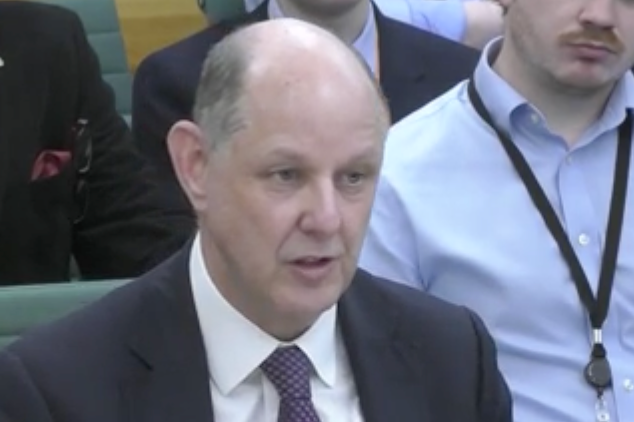
Sir Philip Barton in front of the committee. Sir Philip Barton became the latest former civil servant to give evidence to the Foreign Affairs Committee on Peter Mandelson’s appointment as UK ambassador to the United States. The former permanent secretary at the Foreign Office was quizzed on how the shamed former Labour peer got the role – and whether the rules were followed. Barton left his post on January 19, 2025, less than a month before Mandelson took up his job in Washington DC, but had been closely involved in the appointment process before then. Here are the five key things we learned from his 90-minute evidence session. 1) He Had Concerns About Mandelson’s Jeffrey Epstein links Sir Philip told the committee that he was worried that Mandelson’s known links to the convicted paedophile Jeffrey Epstein would prove problematic. Asked what concerns he had about the decision by Keir Starmer to give the then Labour peer the plum diplomatic post, he said: “I think it was very much ... around the possibility of his known connection to Epstein, causing an issue subsequently. “Obviously, I didn’t know what was actually going to happen, because Epstein was such a toxic, hot potato subject in US politics itself, including in the election campaign.” Mandelson was sacked by the prime minister after just six months in the job after further revelations emerged about the extent of his friendship with Epstein. 2) The Cabinet Office Did Not Think Mandelson Needed Top Security Clearance The Guardian revealed nearly two weeks ago that UK Security Vetting had recommended Mandelson not be given “developed vetting” status, which allows the holders to access top secret government information. However, he was granted it by Sir Olly Robbins, Sir Philip’s successor as permanent secretary in the Foreign Office. Giving evidence, Sir Philip confirmed that the Cabinet Office at first did not think that was a prerequisite for Mandelson to take up his ambassadorial role. He said: “The Cabinet Office initially said that as Mandelson was ‘a fit and proper person’ as a member of the House of Lords, he did not require developed vetting. “To be honest with you, I thought that was odd and insufficient. To do the job effectively you have to be party to some of the deepest secrets that the UK government holds.” He said the Cabinet Office later changed its view. 3) No.10 Was ‘Uninterested’ In Mandelson’s Security Status Sir Philip was asked if No.10 had a “dismissive” attitude towards Mandelson’s security status, as was claimed last week by Sir Olly Robbins. He replied: “I wouldn’t use the word dismissive. The word I would use is uninterested. “I think people wanted to know that all the practical steps required for Mandelson to arrive in Washington on or around the [Trump] inauguration date. It needed to be completed at pace, as it were.” 4) The Foreign Office Was ‘Absolutely’ Under Pressure To Get Mandelson In Place Sir Olly Robbins told the committee last Tuesday that there was “constant pressure” on Foreign Office officials from No.10 to get Mandelson in place. The PM appeared to contradict those comments at prime minister’s questions the following day, when he insisted no pressure was applied. Asked whether his department was under pressure, Sir Philip said: “There’s two possible questions here. Question one is, was there pressure on the substance of the [developed vetting] case? “Question two is, was there pressure to get the [developed vetting] case done in a particular timeframe? “Answer one is, during my tenure, I was not aware of any pressure on the substance of the Mandelson [developed vetting] case. “Question two, was there pressure? Absolutely.” He added: “I don’t think anyone could have been in any doubt in the department working on this that there was pressure to get everything done as quickly as possible.” 5) Starmer’s Claim That ‘Due Process’ Was Followed Thrown Into Doubt The PM faces a crunch Commons vote on Tuesday over whether he should be investigated for claiming “due process” was followed in Mandelson’s appointment. The Tories say that is untrue and Starmer has misled the Commons. Asked whether due process had been followed, Sir Philip refused to back the PM and instead said he would “dodge” the question. “I think the processes the [Foreign Office] ... followed up until I stood down on Sunday, 19th January, that was proper process, done at pace as we were asked,” he said. However, he did say it was “unusual” for Mandelson’s appointment to be announced before security vetting was carried out. 6) Morgan McSweeney Did Not Tell Him To ‘Just Fucking Approve It’ Sir Philip denied reports that Morgan McSweeney, the PM’s chief of staff at the time of Mandelson’s appointment, had told him to “just fucking approve it”. He said: “I didn’t receive any direct calls from the chief of staff during my time as permanent under-secretary. So there was no call at all. “My interactions were always when others were present in a general meeting, there weren’t very many of those either.” Sir Philip added: ”“I’ve really racked my brains and I cannot recall Morgan McSweeney swearing in a meeting at me, or indeed just in in general. “So I don’t see any substance in that part of it and I think it’s important I say that this morning, given how many people have come to think that might be true.” Subscribe to Commons People , the podcast that makes politics easy. Every week, Kevin Schofield and Kate Nicholson unpack the week’s biggest stories to keep you informed. Join us for straightforward analysis of what’s going on at Westminster. Related... Keir Starmer Set To Defeat Tory Bid To Hold Sleaze Probe Into Mandelson Scandal Keir Starmer To Face Crunch Peter Mandelson Sleaze Probe Vote Why Is Keir Starmer Facing A Possible Sleaze Probe Over The Peter Mandelson Scandal?
Go to News Site