


 Axios
Axios
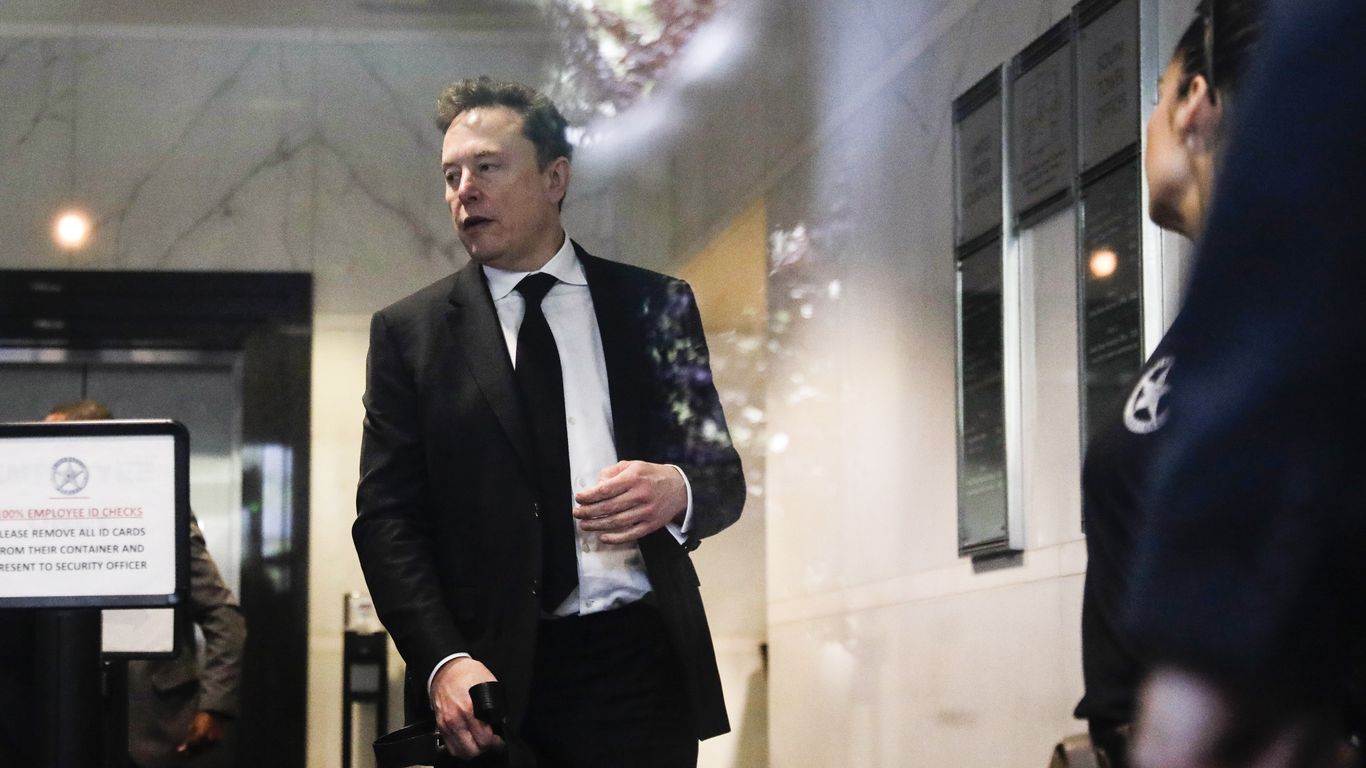
Elon Musk portrayed himself in court this week as a leading advocate for AI safety — in contrast to what he described as the profit-consumed OpenAI that he's suing. Why it matters: Musk's self-portrait as a guardian of AI safety clashed with OpenAI's counterargument: that Musk was fine with a for-profit OpenAI when he thought he could control it. How the debate over Musk's motivations is resolved could be key to the outcome of the lawsuit the richest man in the world is waging against OpenAI. The big picture: Musk was the first witness in his lawsuit against Sam Altman, Greg Brockman, OpenAI and Microsoft. Under questioning from his own lawyer, Steven Molo, Musk argued that the only way to keep AI from "killing us all" was to keep it out of the hands of anyone trying to make money on it. He later acknowledged that his own AI company, xAI, is a for-profit. Musk was able to avoid elaborating since SpaceX recently acquired xAI and the rocket company is in an SEC quiet period ahead of a planned public offering. Musk began by outlining his views about the risks of AI, repeating an oft-told story about how OpenAI wouldn't exist if Google co-founder Larry Page hadn't called Musk a "speciesist" — meaning that Musk cares more about the human species than a potentially sentient AI. Musk also claimed that he met with then-President Obama in 2015 to explain his fears. "I really just wanted to warn him about AI," Musk said on the stand. He said he talked to "anyone and everyone" about AI safety. "It's a buzzkill," he remembers his brother telling him. The path to safety, he said, is for the people building artificial general intelligence (AGI) to be "unencumbered by having to create financial returns." The other side: OpenAI lead counsel, William Savitt, drew a different picture in his cross-examination of Musk. Instead of attacking Musk's concerns about the dangers of AGI, Savitt made the case that Musk was at least as concerned — if not more concerned — with profiting from AGI than the team at OpenAI. Through hours of questioning, Savitt implied that Musk's safety concerns seemed to sharpen whenever someone else had the wheel. Savitt also challenged Musk's picture of himself as "the paladin of safety and regulation." "Has anyone but you ever made the claim that your meeting with President Obama was about AI safety?" Savitt asked. Yes, but: What hasn't yet been mentioned in this week's trial is the propensity of Musk's Grok chatbot to post racist messages, create non-consensual images of adults and generate explicit images of children. OpenAI and Microsoft might be waiting to bring up Grok's behavior or might be avoiding it since chatbot behavior is so legally murky . Savitt hinted at Grok's troubles, suggesting that the chatbot had been trained on racist and sexist content. To which Musk replied, "Just because you may read something that is racist or sexist doesn't mean you'll become racist or sexist." Zoom in: Savitt addressed Musk's concern about OpenAI's dedication to safety by asking him what he knew about the company's safety protocols. Musk responded that because the company sought to make a profit, it couldn't be safe. When pushed, Musk seemed to morph into his internet troll persona. Asked if he knew anything about OpenAI's "safety card," Musk smiled and replied: "Safety card? Why would it be a card?" "Safety card" is an informal way to refer to a system card, which documents a model's capabilities, limitations and safety evaluations. xAI calls its equivalent " model cards ." In a meeting with reporters after court adjourned, Savitt called Musk a "reluctant witness." What's next: Musk's cross-examination continues tomorrow in Oakland, California.
Go to News Site