


 Forbes India
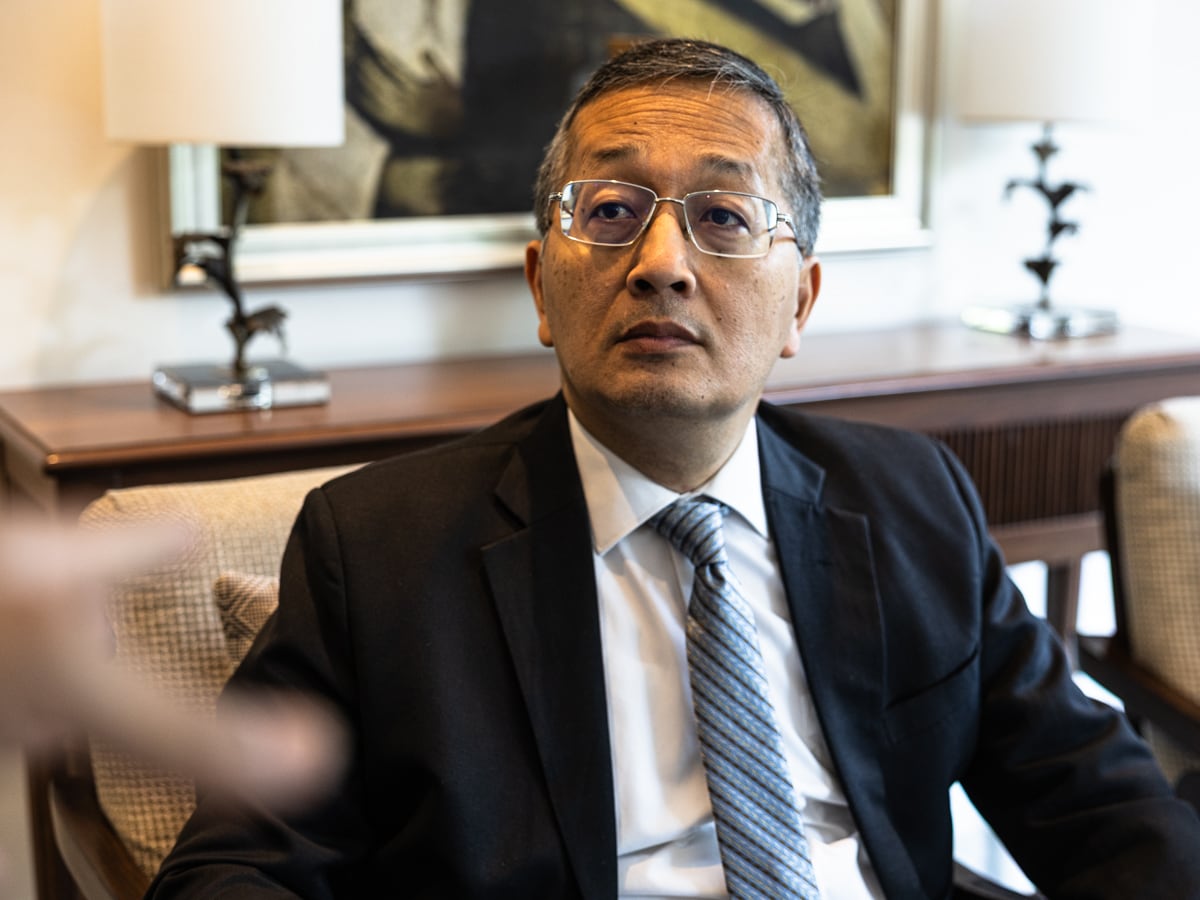
The government is firmly committed to preserving its Rs12 lakh crore capital expenditure budgeted for FY27 even as India navigates global uncertainty and mounting fiscal pressures, said Vumlunmang Vualnam, the expenditure secretary.He made these remarks at the Second Annual Isaac Centre for Public Policy Growth Conference on Friday, laying out the government’s spending priorities for the year while acknowledging that fiscal stress was “a reality”. “Capex could be a priority item which we would like to preserve and ensure that it continues at the budgeted level of Rs12 lakh crore," Vualnam said, adding that the department is ensuring that highways, railways, and the shipping and port sectors are provided with the required funds.Fiscal PrudenceHe added that it has helped that the focus of Union Budget 2026-27 was “fiscal prudence”, which made a deliberate choice to protect critical expenditure. “That has placed the country on a good footing in these unpredictable times when it is impossible to envisage what is going to happen the next day or the next hour,” he said.Also Read: GST collection surges 8.7 percent in April to Rs2.4 lakh croreLPG, Oil Prices and the Stress TestThe secretary pointed to India’s LPG supply chain as a pressing vulnerability. India imports 60 percent of its LPG requirements, and of that, 90 percent transits through the Strait of Hormuz.“It has been a challenging situation and the government has been proactive in trying to tackle the situation with agility, but there are systemic constraints… you cannot wipe away all the impacts,” Vualnam said, adding that the petrol and excise prices have been cut, but “fiscal stress is a reality”.Volatile energy markets and global instability have fuelled concerns over future revenue trends, adding to an already significant fiscal strain. “In this changed scenario, the buoyancy of the gross tax receipts in the coming months is a big question,” he said.Focus on R&DVualnam framed research and development (R&D) as a renewed national priority. He said that there is a modification in how R&D investments are made. “It is not funding to existing government scientific organisations but using new instruments like AIF to pick up promising projects, startups and entrepreneurs so that the projects which are at a higher level of maturity are picked up. And that should yield us good results,” he said.The combined public and private R&D spending in India stands at just 0.6 percent of GDP, a figure the secretary called plainly inadequate for the country’s developmental ambitions. “The government is fully focussed on streamlining procedures, making the single window system a reality and reduction of regulatory restrictions,” he said.
Go to News Site