


 Ruptly
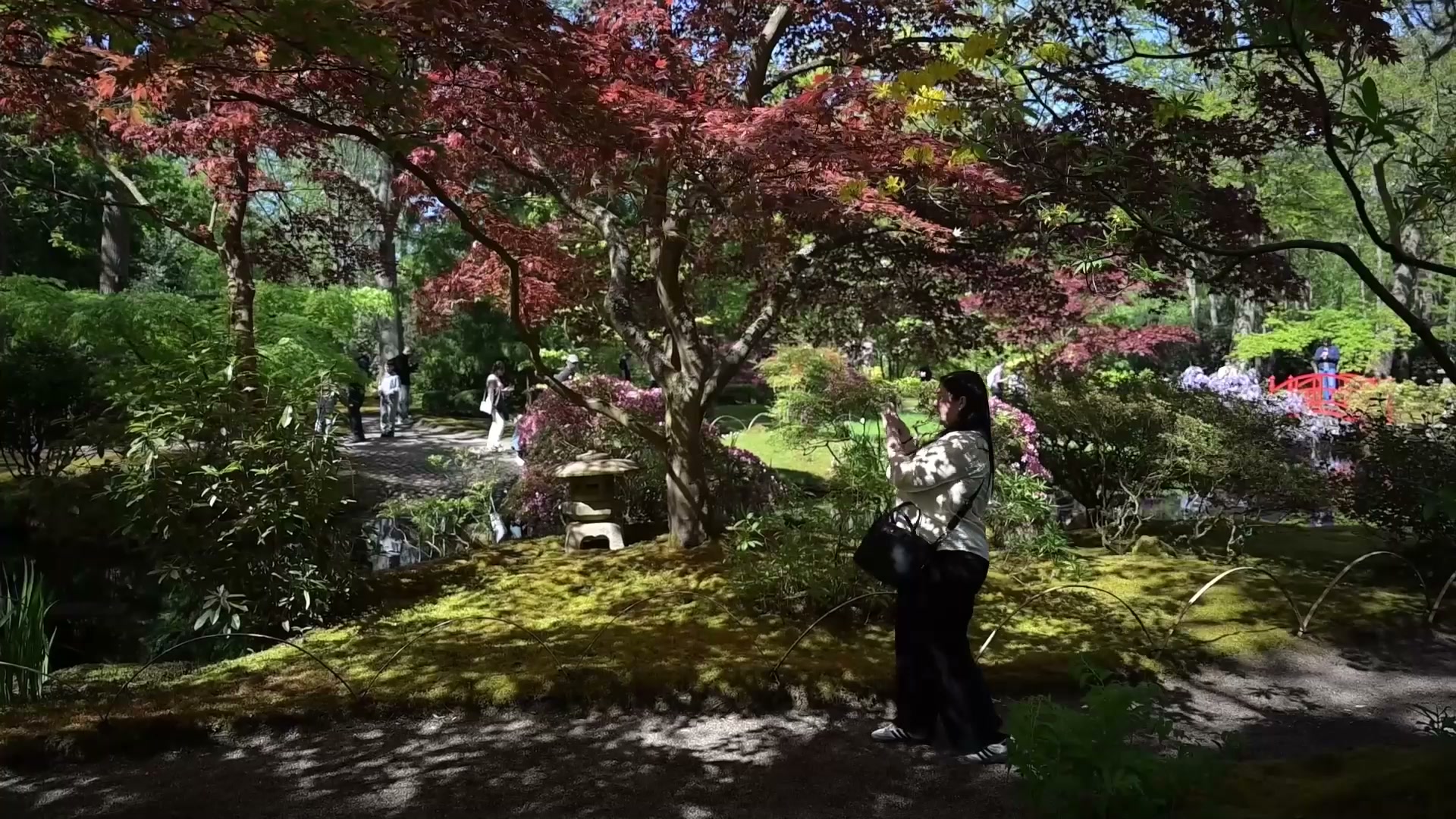
"Gardening and flower enthusiasts gathered at Landgoed Clingendael on a Saturday afternoon in The Hague as the country’s largest and oldest Japanese garden officially reopened its doors for the spring season. Footage shows visitors exploring the 6,800-square-meter historic garden, featuring stunning Japanese-inspired landscapes, including a variety of flowers, a gazebo, a Buddha statue, and pathways leading to a pond covered with lush green trees. "It's a very old garden, it's from 1915, and it's actually not really Japanese. It's a garden made by a Dutch lady who travelled to Japan, and in the time that it was made, it was a big hype to create Japanese-looking gardens, and she actually did a pretty good job," explained a visitor. The garden, owned by Baroness Marguerite Mary van Brienen in the early 1900's, was never built for public viewing until later on in the century. "It was made for one person, and she had very closed audiences. It's quite a new development since the 50s or even the 70s that it's opened, and since then it's open to the public, and it's very busy,” he added. "It has a very peaceful vibe," expressed a visitor from China. "The aesthetics of the way they (Japanese) see nature, how they want to emphasise all plants, all positions of the plants, and the flowers they give space to thrive, and to really focus on the individual plants, and I think that’s something you don’t really see that often in European parks." The garden, founded in the early 20th century, features Japanese garden artefacts brought by van Brienen from Japan, including lanterns and bridges. The meaning of Clingendael translates as 'valley between the dunes', and is unique in the Netherlands. It is a protected national monument (since 2001) and opens only eight weeks a year due to its fragility."
Go to News Site