


 The Guardian
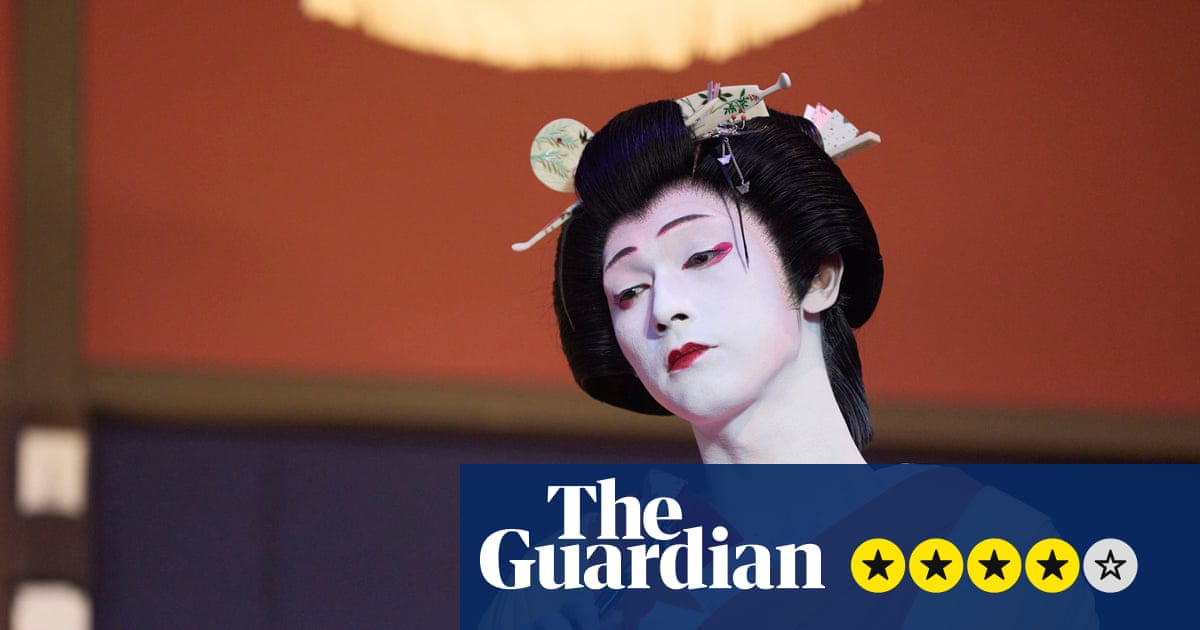
Lee Sang-il’s heartfelt drama spans 50 years following the bond and rivalry between two brothers who play the rigorously observed female roles in the traditional art form Lee Sang-il’s heartfelt and muscular epic (whose title means “national treasure”) was a box-office smash on its Japanese home turf, winning a host of festival awards and an Oscar nomination. It’s a mighty Cain-and-Abel drama spanning five decades, set in the rarefied world of kabuki theatre where some of the most exotically prized performers are the onnagata , the men who have mastered the rigorously observed discipline of playing women in classical kabuki roles, a convention which arose from Japan’s 17th-century banning of women on stage, rather as they once were in England 100 years before. It is a semi-intentional irony of this intensely and even passionately male film that actual women are of subordinate importance. The story begins in an outrageously melodramatic way, with a situation which might even itself have once been amenable to kabuki dramatisation. In 1960s Nagasaki, a yakuza gangster is holding a social event to underline his prestige; he has provided kabuki entertainment for his guests, and such is his reverence for this Japanese high-cultural form that he has permitted his teenage son Kikuo to perform as an onnagata . Kikuo’s performance stuns a renowned kabuki actor called Hanjiro, played by Ken Watanabe. But the event is chaotically attacked by a rival gang, the yakuza is killed, and Hanjiro offers to adopt Kikuo and train him up as a onnagata in his kabuki company, alongside his own son Shunsuke. Continue reading...
Go to News Site