


 Business Recorder
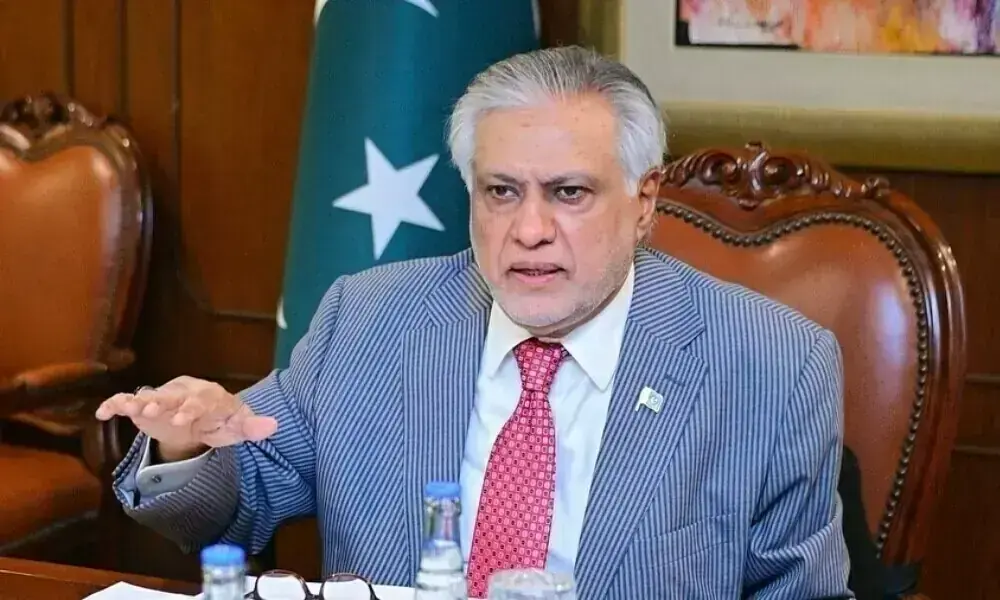
LAHORE: Underscoring Pakistan’s immense economic potential, the Deputy Prime Minister and Foreign Minister Senator Mohammad Ishaq Dar said on Saturday that strategic reforms, regional connectivity, fiscal discipline and institutional strengthening are positioning Pakistan as a strong and sustainable economy. While addressing the South Asian Federation of Accountants (SAFA) Conference in Lahore, Ishaq Dar emphasized that transparency, accountability and strong financial governance are essential for sustainable economic growth, investor confidence and resilience. Ishaq Dar also highlighted the transformative impact of digital technologies on the accounting profession and stressed the need to adapt to evolving global trends. He also highlighted Pakistan’s constructive role in promoting regional peace, stability, dialogue, and economic cooperation. READ ALSO: Aurangzeb reaffirms commitment to investor-friendly, transparent economy The Deputy Prime Minister emphasized regional collaboration through SAFA, youth empowerment and the Government of Pakistan’s commitment to reforms that promote efficiency, accountability, sustainable development, and shared prosperity. He also congratulated Institute of Cost and Management Accountants Pakistan on completing 75 years of excellence in advancing the accounting and finance profession and contributing to institutional development in Pakistan. Addressing the moot, Federal Minister for Planning, Development and Special Initiatives Ahsan Iqbal said Pakistan must increase its exports to 400 billion dollars in the long-term and at least 100 billion dollars by 2030, describing it as a national mission as important as achieving nuclear capability for defence. “Pakistan had yet to develop a true export culture,” Ahsan said and stressed the need for value addition, branding, packaging and compliance with international standards. He highlighted the export potential of local industries and products, including Sialkot’s cutlery, Gujranwala’s fans, mangoes, dates, chillies, handicrafts and livestock products. He also underscored the importance of peace, political stability and continuity of policies, saying no country could progress amid political instability. Referring to the China-Pakistan Economic Corridor (CPEC), he regretted that opportunities created under the project were politicized despite strong Chinese interest in Pakistan. Calling for long-term commitment and reforms Ahsan Iqbal said, “Pakistan needed a sustained struggle of 10 to 15 years for economic revival without relying on shortcuts. The future belonged to the private sector, while the government’s role was to facilitate, empower and encourage businesses,” he said urged all stakeholders to work together for Pakistan’s prosperity and economic independence. According to him, Pakistan can achieve economic self-reliance and sustainable development through national unity, discipline, political stability and an export-led economy, as demonstrated by the nation and armed forces during the “Marka-e-Haq” on May 10, 2025. He said, “Pakistan had faced numerous challenges and many around the world believed that economic difficulties had weakened the country’s determination.” However, he said the nation proved its resilience when India launched aggression against Pakistan last year. He said Pakistan responded as a united nation and its armed forces displayed extraordinary professionalism through an integrated multi-domain strategy involving close coordination among all three military services along with civil and military leadership. Ahsan Iqbal paid tribute to the martyrs who sacrificed their lives during the “Marka-e-Haq” stating that their sacrifices raised Pakistan’s stature before the world. Highlighting the discipline of the armed forces, he said military officers immediately comply with transfer orders and report to difficult areas without hesitation, while such discipline was often lacking in civilian institutions. He stressed the need to adopt a mission-oriented work culture in the civilian sector as well. The minister expressed confidence that Pakistan could transform itself within the next decade if all segments of society collectively placed national interests above personal gains. Referring to global examples, Ahsan Iqbal said countries such as China and Vietnam achieved extraordinary economic growth through continuity of policies, exports, foreign investment and industrial development. He noted that while Pakistan and Vietnam had almost equal export volumes around the year 2000, Vietnam’s exports had now exceeded 480 billion dollars, whereas Pakistan’s exports remained around 40 billion dollars. Copyright Business Recorder, 2026
Go to News Site