


 Business Recorder
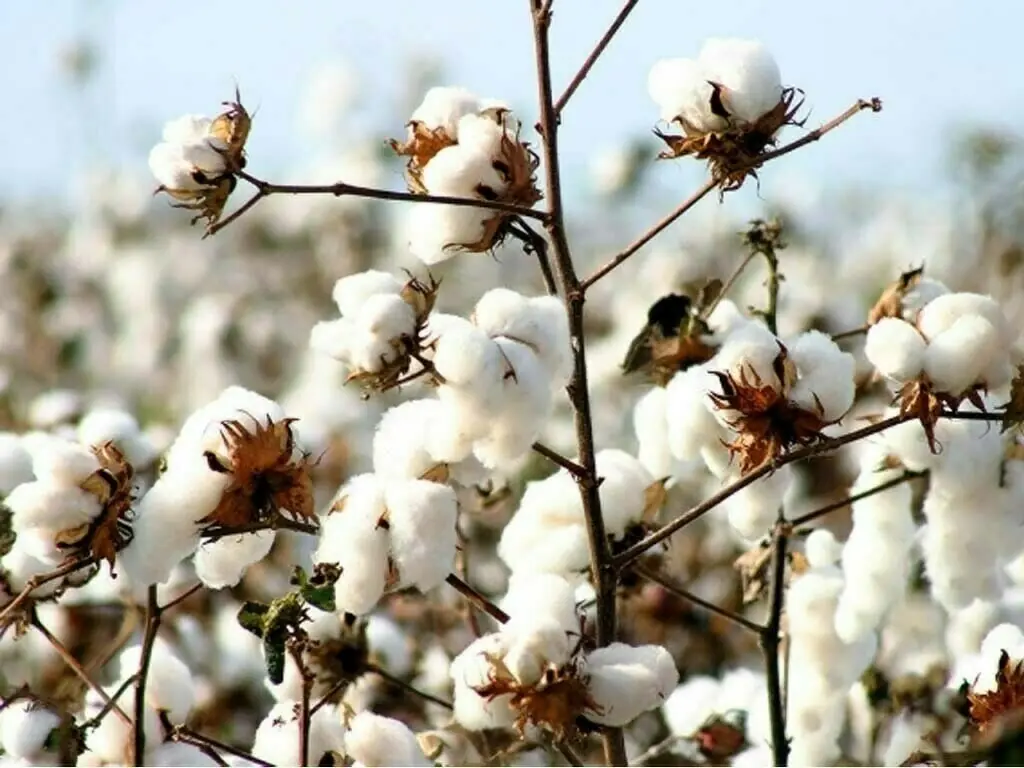
KARACHI: Pakistan’s cotton market is currently experiencing a sharp upward pressure on prices, influenced by fluctuations in quality standards and prevailing payment conditions. Market experts warn that available cotton stocks have reached critically low levels, creating a severe imbalance between supply and demand that continues to destabilise the market. Forward trading activity for the new crop has begun to gain momentum, with partial deals for early-arriving cotton now being finalized. The forward contract price for deliveries scheduled between May 20 and May 30 has been settled at Rs. 21,750 per maund, while seed cotton is trading at Rs. 10,000 per forty kilograms. Cotton farmers across the country are in a state of growing distress as production continues its prolonged downward spiral. Adding to their concerns is the rapid encroachment of sugar mills into areas that have historically been the heartland of cotton cultivation. Experts warn that this trend will cause irreversible damage to an already struggling crop. Fields that once bore the country’s prized white gold now stand occupied by sugarcane plantations, raising urgent questions not just about agricultural choices but about the direction of the nation’s economic priorities. Rana Shafqat, Chairman of the Pakistan Cotton Brokers Association, threw his full weight behind APTMA’s position on the matter. “APTMA’s demands are completely justified and we stand firmly with them,” he said, adding that the revival of cotton is inseparable from the broader economic revival of Pakistan itself. APTMA Chairman Kamran Arshad has formally called upon Federal Minister Rana Tanvir Hussain to ensure immediate implementation of decisions that were already approved by the Cabinet Committee for cotton sector restoration. Arshad cautioned that prolonged negligence and administrative delays are inflicting measurable harm on the national economy and that the situation has reached a point where further inaction is no longer acceptable. The contrast with regional competitor India could not be more striking. The Indian Cabinet has approved an allocation of Rs. 5,669 crore specifically aimed at boosting domestic cotton production. Separately, it has earmarked Rs. 1,768.56 crore for the Cotton Corporation of India to purchase cotton directly from farmers at the government-mandated minimum support price, offering them a vital financial safety net. Pakistan, by comparison, has yet to move beyond promises. While India backs its cotton farmers with billions in state funding, Pakistan continues to allow sugar mills to be established on land traditionally reserved for cotton, a move widely seen as a betrayal of the sector and a serious threat to the country’s long-term economic stability. The local cotton market recorded an overall bullish trend during the past week as stocks continued to remain scarce. Early arrivals of the new crop are expected from June, though initial prices are likely to be on the higher side. Cotton is currently trading between Rs 19,500 and Rs 23,000 per maund, depending on quality and payment conditions. Future contracts for new crop cotton have been settled at Rs 21,750 per maund, while 40-kilogram Phutti has been sold at Rs 10,000 with deliveries scheduled between May 20 and 30. On the policy front, recommendations have been forwarded to the government for the upcoming budget, urging a reduction and elimination of taxes on the cotton sector. APTMA has also submitted its budget proposals, and industry stakeholders expect the Karachi Cotton Association to follow suit with its own annual recommendations, as has been the tradition in previous years. Cotton growers and trade participants have long been voicing alarm over the unrelenting decline in cotton production. A growing concern is the rapid installation of sugar mills in traditional cotton-growing regions, which is progressively squeezing out cotton cultivation. What was once Pakistan’s white gold is now being described as a crop increasingly alienated from its own land. Fields that once shimmered with cotton are today carpeted with sugarcane. Industry voices are clear that this is not simply an agricultural shift but a question of national priorities. Cotton, they stress, sustains an entire ecosystem of livelihoods, binding together farmers, ginners, textile manufacturers, and exporters into a chain that supports millions of workers. Sugarcane, by contrast, is widely regarded as an industry concentrated in the hands of a powerful few, with its economic benefits rarely trickling down to those at the grassroots. When policymakers allow powerful interests to dictate agricultural direction, it is the smallholder farmer who ultimately pays the price, not just with a lost harvest but with a diminished future. Should white gold vanish from Pakistani fields, the loss would extend far beyond agriculture, taking with it an economy, a national identity, and the aspirations of countless families. The crisis is further deepened by an excessive tax burden on the textile sector and energy costs that remain the highest in the region. These compounding pressures have forced textile mills into closure at an alarming rate over recent years. According to APTMA, more than 150 textile mills across the country have already shut down, while several others are barely managing to survive under acute financial distress. Adding to the industry’s woes, the Evacuee Trust Property Board has been in occupation of the Cotton Exchange Building since December 12, 2025, having taken control with the assistance of the FIA. The occupation has rendered it impossible to issue the daily cotton spot rate, a publication that serves as a vital reference point for the entire trade. Cotton availability in both Sindh and Punjab remains extremely thin, with prices continuing to hover between Rs 19,500 and Rs 23,000 per maund, subject to quality and prevailing payment terms. International cotton prices continued their upward trajectory, with New York cotton futures hovering between 82 and 85 US cents per pound, according to Naseem Usman, Chairman of the Karachi Cotton Brokers Forum. The USDA’s weekly export and sales report revealed that 123,300 bales were sold for the 2025-26 marketing year, with Pakistan emerging as the top buyer, securing 38,800 bales. India followed in second place with purchases of 27,200 bales, while Vietnam rounded out the top three with 18,800 bales. For the upcoming 2026-27 marketing year, sales reached 48,400 bales. Guatemala led the pack by purchasing 35,200 bales, with Indonesia ranking second at 19,000 bales and Vietnam placing third with 5,800 bales. On the shipments front, total exports amounted to 327,500 bales during the reported period. Vietnam dominated as the largest importer, receiving 135,000 bales, while Bangladesh and Pakistan trailed closely behind with 29,600 and 29,100 bales respectively. The All Pakistan Textile Mills Association (APTMA) has sought the intervention of Minister for National Food Security and Research Rana Tanveer Hussain for the revival and implementation of key decisions related to the cotton sector. In a letter to the minister, APTMA Chairman Kamran Arshad drew attention to the approved minutes of the 6th meeting of the Cabinet Committee on Essential/Cash Crops, held under the chairmanship of the deputy prime minister. He highlighted several time-bound priority decisions that require urgent action by the ministry, including: (i) establishment of an industry-led governance structure through the transformation of the Pakistan Central Cotton Committee (PCCC) into the Pakistan Cotton Advisory Council (PCAC); (ii) collection of cotton cess through the Federal Board of Revenue (FBR); (iii) allocation of 70 percent of cess funds exclusively for cotton research and development (R&D); and (iv) inclusion of provinces, research institutions, farmers, and the seed sector in the new institutional framework. “Since the Cabinet Committee meeting, the APTMA has repeatedly urged the ministry to ensure swift implementation of all decisions made with the consensus of stakeholders. However, it is regrettable that no concrete measures have yet been initiated by the concerned authorities despite the passage of considerable time and repeated reminders,” the APTMA chairman stated. He warned that the inordinate delay in implementation is fraught with significant national loss, particularly as the cotton sowing season has already commenced in various parts of the country. According to him, continued inaction by the Ministry could further accelerate the persistent decline in cotton production, leading to increased imports and putting additional pressure on the country’s valuable foreign exchange reserves. In view of the foregoing, APTMA has called for immediate action on the following measures: (i) issuance of a notification for the operationalisation of PCAC; (ii) necessary legal amendments to enable the collection of cess through FBR; (iii) allocation of 70 percent of cess funds for R&D; (iv) establishment of the approved industry-led governance structure; and (v) sharing of a time-bound implementation plan with the APTMA. The textile industry, he noted, has consistently demonstrated its commitment to supporting national cotton revival efforts. However, without urgent and decisive policy and institutional actions, the agreed strategy cannot translate into tangible outcomes. He urged the minister to personally intervene to ensure immediate progress on these decisions in order to safeguard the cotton crop and the cotton-based industry, which provides employment to millions across the country. Rana Shafqat, Chairman of the Pakistan Cotton Brokers Association, has emphasized that the revival of the cotton sector is inseparable from the revival of the Pakistani economy, warning that any negligence in this regard will have serious consequences for the country’s overall economic health. Expressing his full support for a recent letter written by APTMA Chairman Mian Arshad Kamran to Federal Minister for Food Security Rana Tanveer Hussain, Rana Shafqat urged the government to move swiftly on implementing decisions that were taken under the chairmanship of Deputy Prime Minister Ishaq Dar concerning the Cotton Revival Programme. Rana Shafqat further appealed to the Federal Minister for Food Security to take immediate and concrete action, pointing out that the cotton sowing season is currently in full swing across the country. He noted that 30 percent of Punjab’s provincial sowing target has already been completed, stressing that the remaining window of opportunity must not be wasted. He called on authorities to accelerate measures for cotton revival without further delay, underlining that timely intervention is critical to ensuring a successful crop season and broader economic stability. Copyright Business Recorder, 2026
Go to News Site