


 Business Recorder
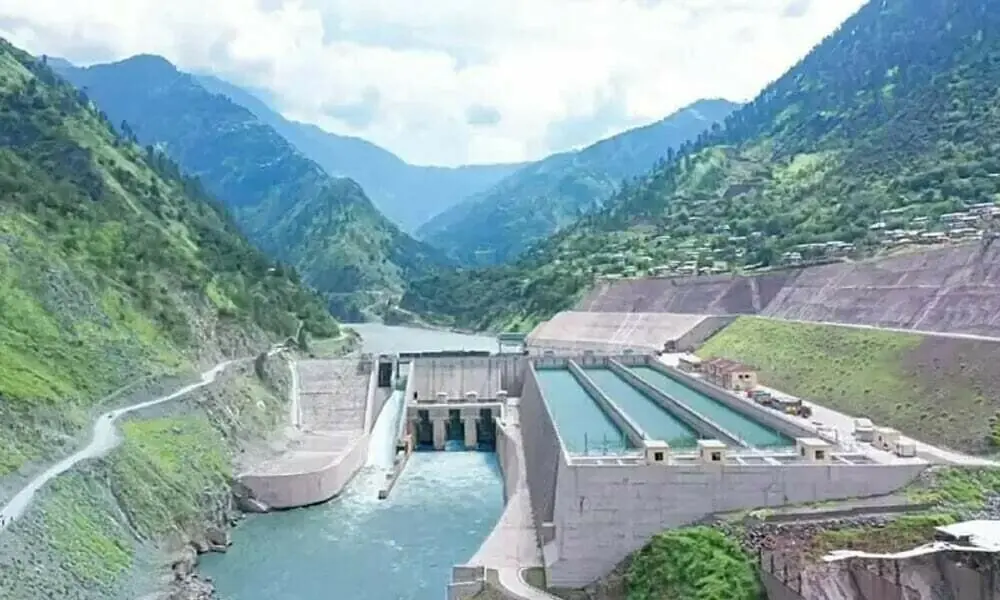
ISLAMABAD: The Pakhtunkhwa Energy Development Organisation (PEDO), a provincial entity mandated to develop hydropower and other renewable energy projects, has challenged the exclusion of its two hydropower projects from the Indicative Generation Capacity Expansion Plan (IGCEP) 2025–35 in the Islamabad High Court. The court has admitted the petition, filed through Advocate Irfan Muawar Gill, and issued notices to the federal government, Independent System and Market Operator (ISMO), and the National Electric Power Regulatory Authority (NEPRA). According to the petition, Pakistan’s power sector planning regime underwent a significant constitutional transformation in 2021 when the IGCEP was, for the first time, formulated in compliance with a binding decision of the Council of Common Interests (CCI). Prior to this, IGCEP functioned largely as a technical and advisory document without a firm constitutional basis or enforceable inter-governmental consensus. READ MORE: Official says KP completes 10 hydropower projects to generate Rs13bn annually The petition argues that the CCI’s intervention brought the IGCEP within the constitutional framework governing federal–provincial relations, addressing concerns regarding arbitrariness, lack of predictability, and unequal treatment of provincial projects. It further states that the move was aimed at restoring investor confidence and ensuring transparency and uniformity in decision-making. In its 48th meeting held on September 13, 2021, the CCI introduced a binding classification of power projects under IGCEP into two categories: “Committed Projects” and “Indicative/Candidate Projects.” The petition maintains that this classification carries constitutional force under Article 154(7), leaving no discretion to the federation, NEPRA, ISMO, or any subordinate authority to deviate from the approved criteria. PEDO contends that, under the NEPRA Act, 1997, the National Electricity Policy 2021, and the National Electricity Plan, the designation of a project as “Committed” has significant legal, financial, and regulatory implications. Such projects must have PC-I approval, secured financing, and regulatory clearances, thereby creating binding obligations on the state and legitimate expectations for stakeholders. READ MORE: KP seeks inclusion of its hydropower projects in IGCEP 2024-34 The petition states that PEDO’s Madyan Hydropower Project (157 MW) and Gabral Kalam Hydropower Project (88 MW) fully meet all criteria for “Committed Projects.” Both projects received PC-I approval from the Executive Committee of the National Economic Council (ECNEC) on October 1, 2020, and secured concessional international financing prior to the March 2021 cut-off date through agreements with the World Bank under the Khyber Pakhtunkhwa Hydropower and Renewable Energy Development Programme. It argues that these facts were formally documented and never disputed by any authority, making the projects’ inclusion in IGCEP mandatory and constitutionally protected. The petition further highlights that both projects are flagship initiatives of the Khyber Pakhtunkhwa government and are designed as run-of-river schemes in Swat, generating clean and low-cost electricity without large dams. Their inclusion, it adds, would help reduce reliance on imported fuels, ease circular debt, and support national climate and energy security goals. The petitioner has requested the court to declare the exclusion of the two projects from the “Committed Projects” category in IGCEP 2025–35 as illegal, unconstitutional, and without lawful authority. It has also urged the court to direct NEPRA and ISMO to include and retain these projects as “Committed Projects” in the final IGCEP 2025–35 and future plans, unless their status is lawfully altered through a CCI decision. Additionally, the petition challenges the retrospective application of a new criterion requiring at least 10 percent physical and financial progress for maintaining “Committed” status, terming it illegal and ultra vires. The petitioner further requested the court to direct NEPRA to reject or remand the IGCEP 2025–35, or strike down its unlawful portions, and ensure reconsideration in line with the Constitution, relevant laws, and CCI decisions after granting a proper hearing to the petitioners. Copyright Business Recorder, 2026
Go to News Site